Steel Structure for a Waste-to-Energy Plant: Bunker, Boiler and Flue Gas Scope
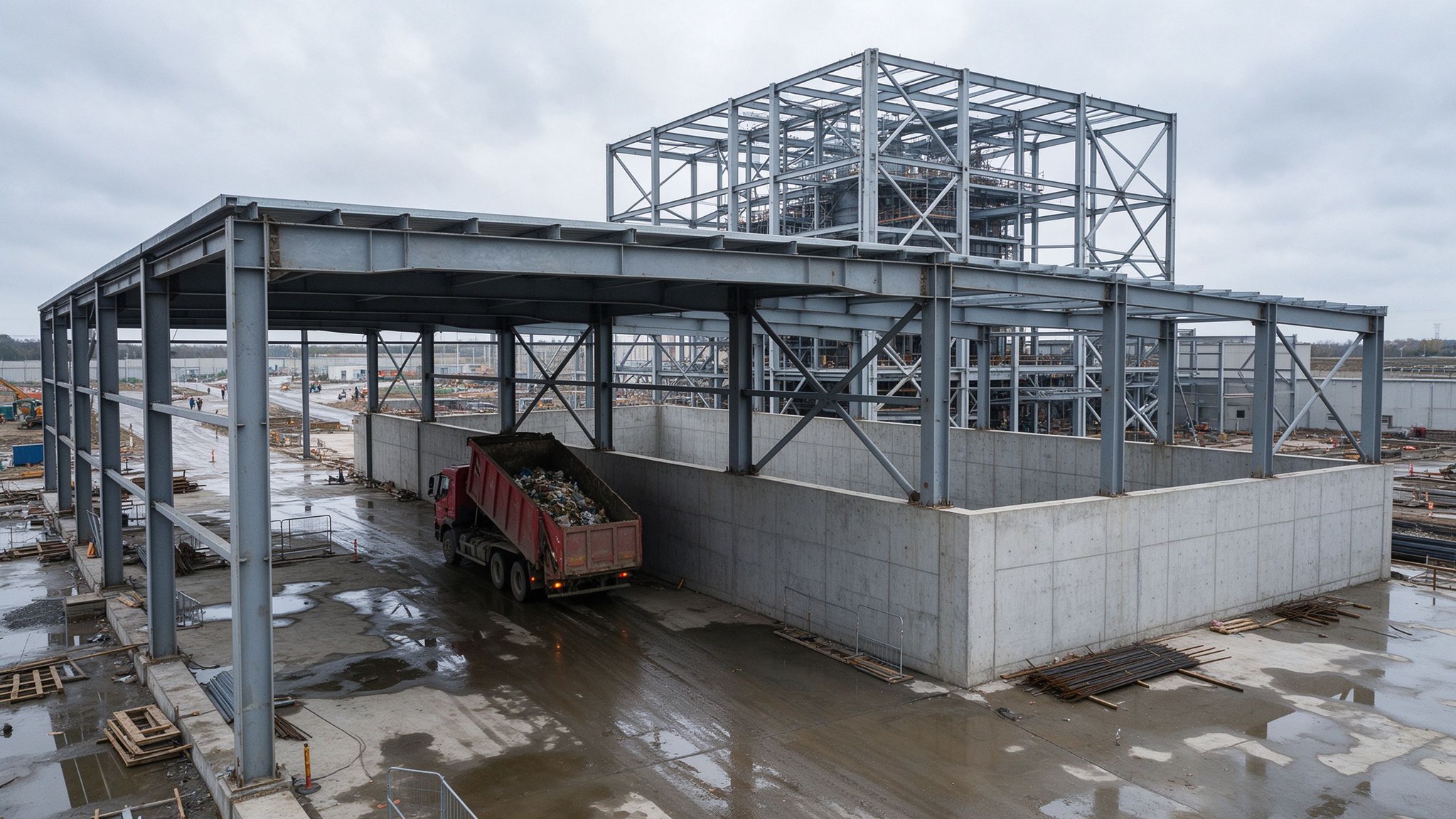
Direct answer: a waste-to-energy plant is not one steel building. It is a group of structures with very different loads: the tipping hall and waste bunker, the boiler house frame and boiler support steel, the flue gas treatment and stack area, the turbine hall, and the residue and auxiliary buildings. What decides the steel scope is four things — the furnace and boiler type with its load schedule, the bunker’s waste surcharge and crane duty, the chloride-rich corrosion class, and where the battery limits sit between the technology supplier, the EPC contractor and the structure fabricator.
Most enquiries for this plant type arrive as a boiler package plus a request to “quote the steel building”. That framing is where projects lose money, because the heaviest and most corrosion-exposed steel in the plant is not a building at all — it sits under the boiler, around the bunker and beside the flue gas train.
This guide sets out which structures carry load, which decisions are structural, and what a fabricator needs before a quotation means anything.
1. Which steel structures a waste-to-energy plant contains
A municipal solid waste plant typically has six steel scopes. Their loads and their design owners differ, and that is the root of most interface disputes.
| Structure | Dominant loads | Who normally owns the design | Steel role |
|---|---|---|---|
| Tipping hall | Roof and wall loads, truck impact at the apron, dust and odour containment | EPC / architectural | Portal or truss frame, large clear span, doors and airlock |
| Waste bunker | Waste surcharge against walls and hoppers, grab crane rails and dynamic loads, leachate pressure | EPC with geotechnical input | Steel wall framing, liner plates, crane runway beams, roof over the pit |
| Boiler house | Boiler dead and live loads, thermal movement, platform and stair loads | Boiler supplier for support steel, fabricator for the building frame | Support steel, columns, bracing, platforms, roof and wall |
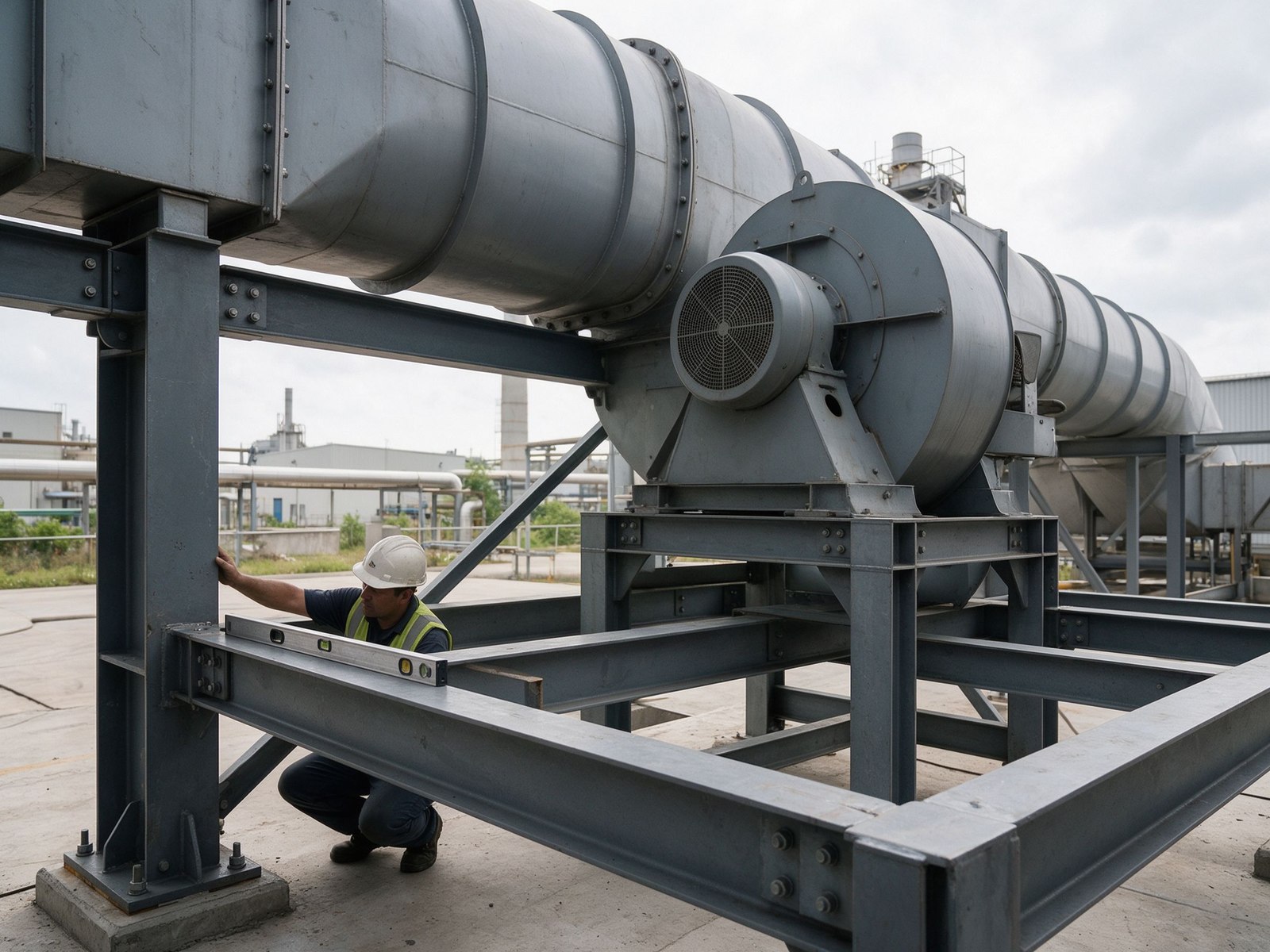
| Flue gas treatment area | Equipment and duct weights, fan vibration, reagent silo loads | Technology supplier for equipment, fabricator for supports | Bag house and reactor support frames, duct and fan supports, access platforms |
| Stack | Wind and seismic, liner and platform loads | Technology supplier or specialist | Base ring, flange and access steel, sometimes a free-standing steel stack |
| Turbine hall | Crane duty over the turbine, condenser and pipe loads, vibration sensitivity | EPC with turbine supplier input | Crane runway beams, columns, roof structure |
| Residue and auxiliary | Bottom ash and air pollution control residue handling, water treatment, weighbridge, admin | EPC | Small frames, silo and tank supports, canopies |
Two points follow from this table. First, the structural engineer of record is rarely one party. Second, every row is a battery limit question before it is a steel tonnage question.
2. The six drivers that actually set the steel scope
Furnace and boiler type. A moving grate boiler and a fluidised bed boiler produce different support arrangements, different ash handling and different thermal movement. The boiler supplier’s load schedule — dead load, live load, nozzle loads, thermal displacement — is the single document that most affects the steel design, and it usually arrives late.
Bunker geometry and crane duty. The waste bunker is a retaining structure with dynamic loading from the grab crane, not a shed. Wall pressure from compacted waste, rail loads from the crane, and the negative pressure needed to contain odour all change the steel layout.
Corrosion class. Flue gas, leachate and wash-down water put chlorides into the air. A plant in a coastal or humid location adds another layer. The coating system, the use of stainless or lined plate in the bunker, and the detailing of drainage all follow from the environment category, not from a default specification.
Fire requirement. Structural fire protection near the boiler and in the bunker area depends on the local code, the occupancy classification, the escape routes and the insurer’s requirements. It is a cost line that cannot be assumed.
Transport and erection limits. Module size is capped by what can be shipped and what the site crane can lift. On a plant site the crane is usually shared with the boiler and flue gas suppliers, so the steel erection window is negotiated, not chosen.
Site interfaces. Each junction — bunker to civil works, boiler support to supplier foundation, stack to its base — is a tolerance and responsibility question.
3. Tipping hall and waste bunker: the heavy end
The bunker is the part of a waste-to-energy plant where structural decisions are most expensive to reverse. Three arrangements are common, and none is automatically correct.
| Arrangement | Suits | What it changes |
|---|---|---|
| Concrete bunker with steel superstructure above | Sites with straightforward geotechnics and a civil-heavy contract | Civil contractor owns the retaining walls; steel scope is the hall, crane runway and roof |
| Steel bunker with liner plates and steel hoppers | Fast-track projects, sites where civil works are late, plants that may be relocated | Steel carries surcharge and crane loads; liner, hopper and leachate detailing become critical |
| Above-ground bunker with ramp access | Sites with high groundwater or limited excavation | Smaller excavation, larger steel walls and roof spans, different crane rail support |
The decision depends on the geotechnical report, the waste throughput, the crane type and the contract split. A fabricator cannot choose it alone, and a quotation issued before it is fixed will be revised.
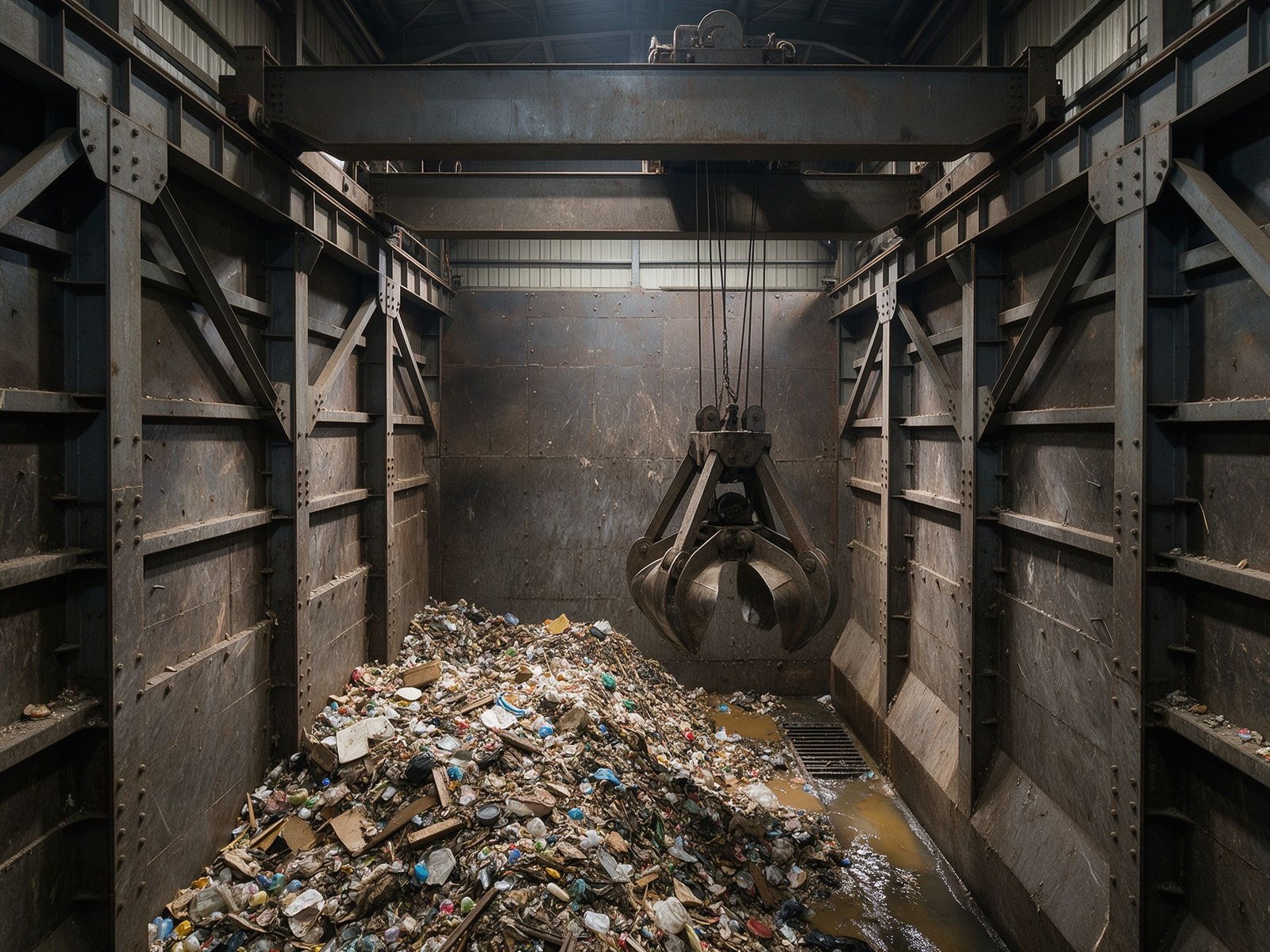
What makes a waste bunker different from a normal storage shed? Four things. The walls take horizontal pressure from compacted waste plus impact from the grab bucket. The crane rails carry a repeated dynamic load that governs the runway beam and its connection to the wall framing. The space is kept under negative pressure for odour control, so the enclosure and its openings must be airtight enough to make the extraction system work. And leachate must drain and be collected, which means the steel detailing has to allow water to leave without sitting on flanges or in trapped pockets.
4. Boiler, flue gas treatment and stack: where the interface bites
On a waste-to-energy project, most steel disputes happen in the vertical strip between the boiler and the stack. The table below is the split that should be agreed before fabrication drawings are issued.
| Item | Technology supplier | Structure fabricator | EPC contractor |
|---|---|---|---|
| Boiler support steel and load schedule | Defines loads, supplies or specifies support steel | Fabricates and erects to the agreed schedule | Coordinates foundations and interfaces |
| Flue gas treatment module supports | Equipment layout, anchor points, maintenance access | Support frames, platforms, bracing | Civil base and drainage |
| Duct and fan supports | Duct routing, weights, expansion joints | Support steel and restraints to the given data | Access and lifting plan |
| Stack base and flange | Stack design and base ring detail | Foundation interface steel, access platforms | Foundation and lightning protection |
| Expansion allowance | Thermal movement figures | Detailing that accommodates the movement | Erection sequence approval |
| Platforms and stairs | Access requirements | Design and fabrication to the local code | Site safety compliance |
Two habits prevent most of these disputes. Ask for the boiler load schedule and the duct weights in writing before detailing begins. And record thermal movement at each interface, because a support that is rigid where the boiler expands will crack its welds in the first year of operation.
5. Corrosion and fire: the two clauses that change the price
Corrosion. Waste-to-energy plants combine chlorides, moisture and heat in the same space. Flue gas treatment areas, bunker walls, ash handling and any point where wash-down water collects are the exposed zones. The correct approach is to classify each zone by environment severity and specify accordingly: coating systems suited to that category, stainless or lined plate where chlorides concentrate, and detailing that lets water drain and air move. Painting a C5 environment with a C3 system is a maintenance problem that starts within two or three years.
Why does a waste-to-energy plant need a different coating system than a normal warehouse? Chlorides from waste and flue gas attack steel from the surface inward and stay in crevices, flange faces and bolted connections after the air dries. The specification therefore has to cover surface preparation, edge treatment, bolt and weld protection, and repaint access, not just the topcoat colour.
Fire. Fire protection of structural steel depends on the local code, the distance to the boiler and fuel handling areas, the occupancy and the escape strategy. Options include intumescent coating, boards and concrete encasement, and the chosen route changes both the steel surface preparation and the erection sequence. Fire resistance must come from the project fire strategy.
6. Residue, water and auxiliary structures
Downstream of the boiler, the plant still needs steel. Bottom ash handling and air pollution control residue are abrasive and often classified as hazardous, so their silos, conveyors and shelters need access, containment and wash-down detailing. Water treatment and cooling systems need tank and pipe supports. The weighbridge, admin building and workshops are ordinary frames but sit near the waste reception area, so their corrosion exposure is higher than a warehouse elsewhere on site.
7. Erection sequence and transport limits
The plant erection sequence is driven by the boiler, not by the steel. A workable order looks like this:
- Civil works and anchor bolt handover, with the bunker walls or steel bunker base fixed.
- Bunker steel, crane runway beams and tipping hall frame, because the crane is needed to feed the boiler.
- Boiler support steel, erected and aligned to the supplier’s load schedule before the boiler is placed.
- Boiler, then flue gas treatment modules, ducts and fans with their supports.
- Stack, if freestanding, after its base and flange are accepted.
- Roof and wall cladding, fire protection and coating repairs last, once heavy lifts are finished.
Module size must fit the shipping envelope and the site crane chart. Field-welded joints in a chloride environment need a tested site coating procedure, because a weld that is painted once on site will not match a shop-applied system.
8. Responsibility boundary on an overseas project
| Stage | ZhongSai input | Local party input |
|---|---|---|
| Engineering coordination and detailing | Connection design coordination, shop drawings, interface schedule review | Registered engineer approval, local code interpretation |
| Fabrication and quality control | Fabrication, welding, dimensional control, mill certificates, inspection records | Third-party inspection if required by the contract |
| Marking, packing and container loading | Erection marks, packing list, loading plan | Import clearance, port handling |
| Export coordination | Shipping documents, booking coordination | Local customs and duty |
| Installation | Technical guidance, erection sequence advice | Local labour, site crane, physical erection, permits |
Unless the contract says otherwise, foundations, civil works, local authority submissions and physical erection stay with the local party. Making that explicit early avoids the assumption, common on plant projects, that the steel supplier will “sort out the site”.
9. What to prepare before a steel quotation
- Plant capacity and furnace type, with the boiler supplier’s name
- Boiler load schedule and thermal movement figures
- Bunker arrangement choice: concrete, steel or above-ground, with the geotechnical report
- Grab crane type, capacity and rail layout
- Flue gas treatment layout with equipment and duct weights
- Stack type, base ring detail and foundation interface
- Turbine hall crane duty and turbine supplier’s load data
- Corrosion environment classification per zone, and coating specification
- Fire strategy and required fire resistance period
- Site crane capacity, shipping constraints and required erection sequence
- Contract split: who supplies which support steel, and who signs the interface schedule
What documents are needed before a waste-to-energy steel quotation? At minimum the boiler load schedule, the bunker arrangement and geotechnical basis, the crane data, the flue gas equipment weights and the corrosion and fire requirements. Without those, a fabricator can only price a generic building, and the number will change once the real loads arrive.
10. FAQ
Does a waste-to-energy plant use a steel or concrete waste bunker? Both are used. Concrete bunkers are common where civil works are well advanced and the contract is civil-led. Steel bunkers with liner plates suit fast-track and relocation-friendly projects. The choice depends on geotechnics, groundwater, throughput, crane type and the contract split, not on a preference for one material.
Who supplies the boiler support steel? It varies by technology supplier. Some supply the support steel with the boiler, others provide a load schedule and expect the structure fabricator to design and fabricate it. The boundary must be written into the interface schedule, with the load cases and tolerances attached.
What steel grade is typical for this plant type? There is no single global grade. It depends on the design code, the loads, the seismic and wind requirements and the local availability. Common structural grades in export projects are specified by the engineer of record, and substitution requires approval with mill certificates and, where required, re-verification.
How long does fabrication take? It depends on tonnage, drawing approval dates, the number of interface revisions and the coating and fire protection scope. A bunker with liner plates and a heavy crane runway takes longer per tonne than a simple portal frame, so pre-approval durations are estimates.
Can steel fabricated in China meet the local code? It can, provided the design is checked by the local engineer of record, the welding and inspection follow the specified standard, mill certificates are traceable and any third-party inspection is agreed in advance. The risk is not the steel; it is a design that was never checked against the local code.
Is chloride corrosion only a coating problem? No. Coating is one layer. Geometry, drainage, edge treatment, bolt protection, the choice of stainless or lined plate in the bunker, and access for repainting all matter. A good coating on a detail that traps water will still fail.
Which parts of a waste-to-energy plant are most often missed in the steel package? Residue handling structures, water treatment supports, duct and fan supports, and stack access steel. They are small in tonnage, heavy in interfaces, and they usually get re-quoted late at a premium.
11. Next step
If you are preparing a waste-to-energy project, the useful first step is not a tonnage request. It is an interface schedule: which structures are in the steel scope, which loads each one carries, and which party supplies the support steel at every junction.
Send your project drawings or the boiler load schedule and we will come back with a scope breakdown and the interface list we need before pricing. For the adjacent plant type, see our guide to steel structure for a biomass power plant, and for the fuel and residue handling side, the conveyor gallery design guide covers the structural decisions in more detail. If your project includes pipe racks for water and steam, the steel pipe rack structure guide sets out the load cases, and the corrosion protection and coating guide explains how environment categories are translated into coating systems. Our engineering and detailing capability covers the coordination work described above, and the solutions overview lists the plant types we fabricate for.