
Steel Structure Packing List and Container Loading Plan: How to Read and Verify
A steel structure packing list is the single document that ties your order, the containers and the site crane together: every package, its mark, quantity, gross and net weight, dimensions and container number. The container loading plan shows which packages go in which container and in what order they come out. The fabricator issues both before shipment; the buyer verifies them against the order and the actual delivery at site. Nothing on site should be opened, lifted or paid against before the packing list matches the containers.
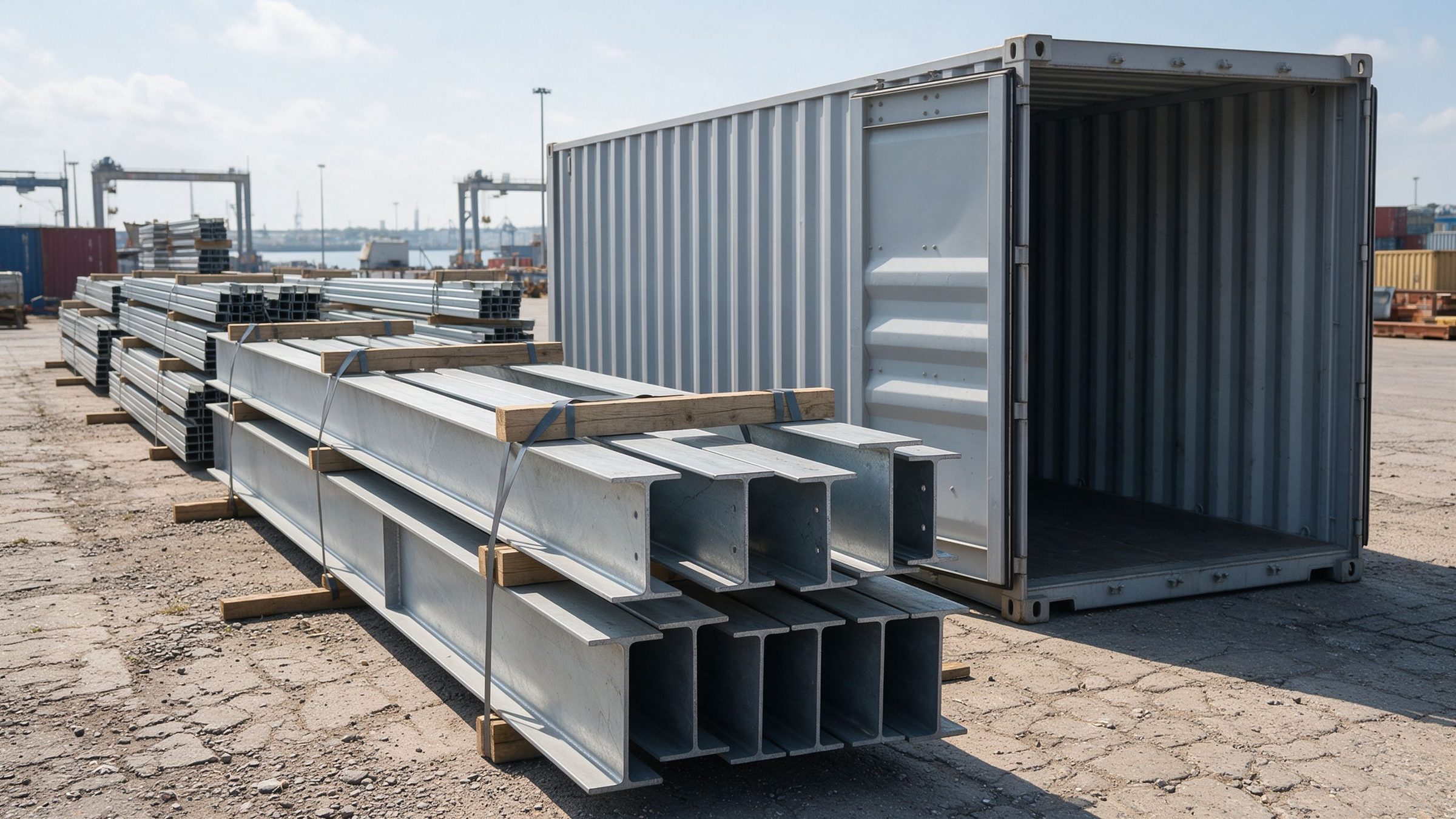
A steel structure packing list is the single document that ties your order, the containers and the site crane together: every package, its mark, quantity, gross and net weight, dimensions and container number. The container loading plan shows which packages go in which container and in what order they come out. The fabricator issues both before shipment; the buyer verifies them against the order and the actual delivery at site. Nothing on site should be opened, lifted or paid against before the packing list matches the containers.
Why the packing list is the most-read import document
On a steel structure import project, the packing list is read more often than the invoice or the bill of lading. Customs uses it to check the cargo description and value against the shipment. The freight forwarder uses it to plan discharge and inland transport. The site manager uses it to know which crane to call and which packages to open first. And the erectors use it to find a specific column or beam without unpacking the whole container. If the packing list does not match the actual packages, the whole chain — customs, haulage, unloading, erection — slows down. It is worth spending ten minutes checking it before the container leaves the port.
Packing list fields explained
A proper steel structure packing list is a table, not a narrative. Each package or bundle gets its own line.
| Field | What it tells you | Why it matters |
|---|---|---|
| Package / bundle No. | Unique number for each package | Matches the marks painted on the steel and the erection marks |
| Description | What is inside (columns, beams, purlins, bolts, plates) | Customs description must match; erectors find components fast |
| Quantity | Pieces in this package | Check against your order quantities per component |
| Gross weight | Weight including packing and dunnage | Used for crane planning and road weight limits |
| Net weight | Steel weight only | Basis for your invoice check and theoretical vs actual weight |
| Dimensions (L×W×H) | Package size | Tells you if it fits the container opening and the truck |
| Container No. | Which container the package is in | Loading plan cross-reference |
| Marks | Shipping mark and heat number if required | Traceability to the mill test certificate |
If any of these fields is missing or blank, ask the supplier to complete it before shipment — filling it in from memory at the port is how wrong packages get delivered. For the loading process itself — how members are bundled, palletised and loaded — see our container loading guide and the packing and export overview.
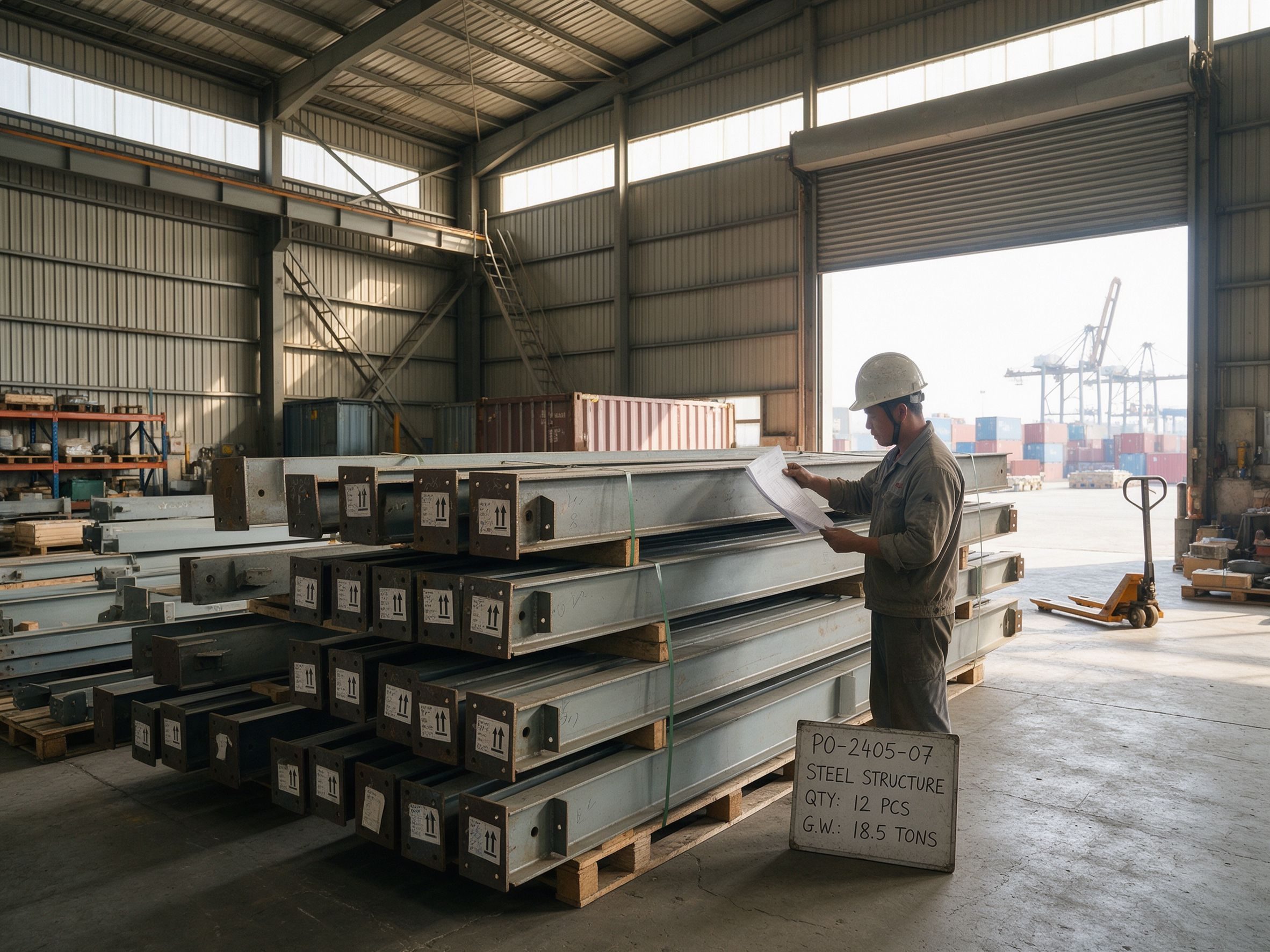
20GP vs 40HQ: which container for steel structure parts
The container choice drives freight cost, unloading planning and how many pieces fit per shipment. The decision depends on component lengths, package heights and the port’s lifting capability — not on a fixed rule.
| Container | Internal volume (approx.) | Best for | Watch out |
|---|---|---|---|
| 20GP (general purpose) | ~33 m³ | Heavy, short packages: bolt kits, base plates, connection plates, small braces | Weight limits hit before volume is full; fewer m³ per container |
| 40HQ (high cube) | ~76 m³ | Long, light components: purlins, cladding rails, columns and beams under 12 m | Length limit ~12 m; heavy packages must stay within axle and gross weight limits |
| Open-top / flat-rack | Varies | Oversized: columns over 12 m, wide roof beams, crane girders | Higher freight, more lifting coordination at both ports |
For most steel buildings, a mix of 40HQ for long light members and 20GP for heavy short packages is common. Exact quantities depend on the package sizes and weights of your project — the supplier calculates the loading plan, and you verify it before booking the vessel. If the plan and the documents feel unclear, our export documents guide explains how they fit together.
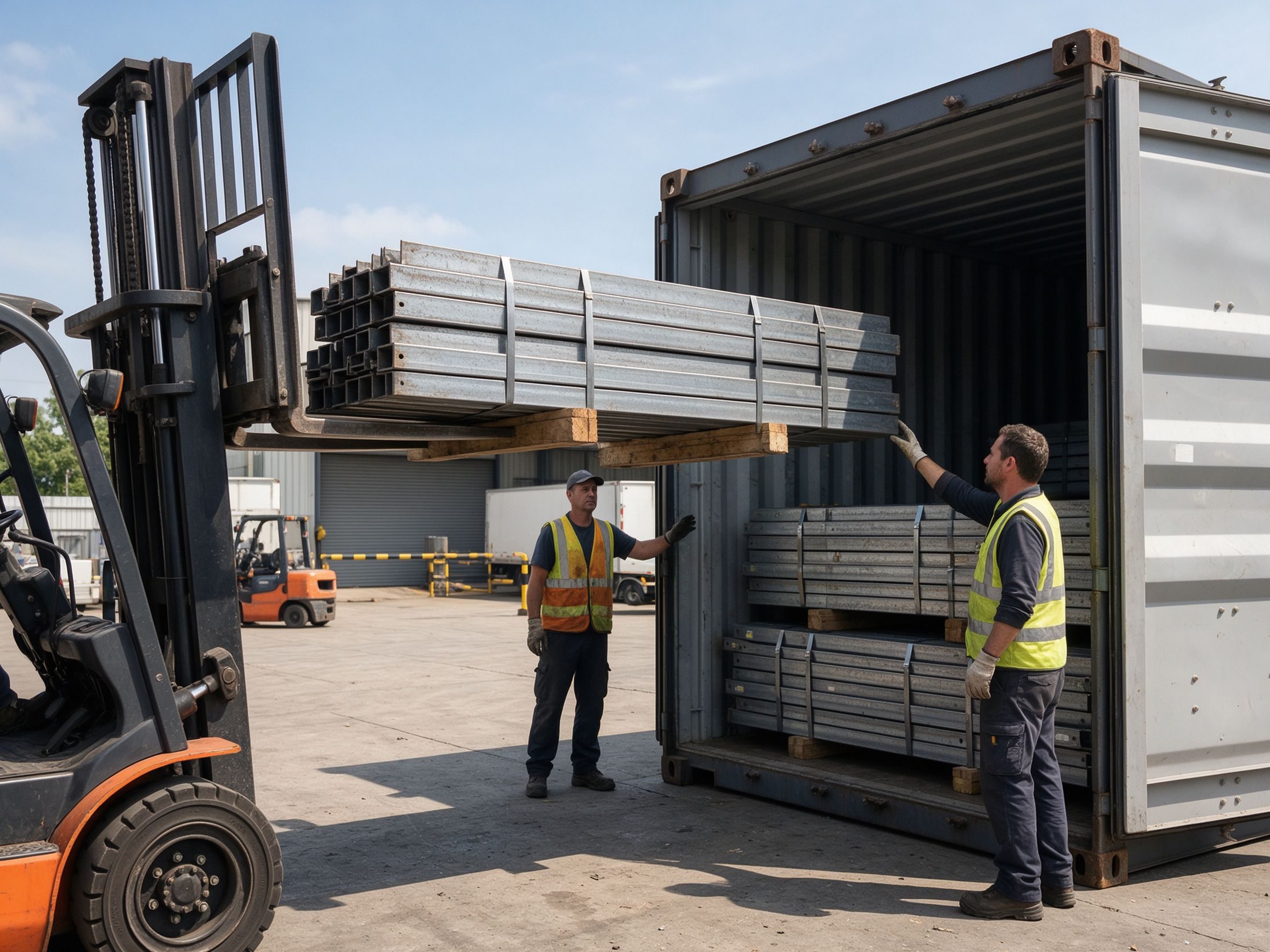
How to read a container loading plan
The container loading plan (or loading diagram) is the map of your shipment. Read it in four steps:
- Container number and seal number — match these to the bill of lading and the actual container at arrival.
- Package numbers per container — the list of bundles inside each box; this is your receipt check on site.
- Unloading order — packages needed first on site (e.g. anchor bolts, base plates, erection sequence components) are loaded last, near the doors, so they come out first.
- Weight and centre of gravity notes — heavy items at the bottom, marked for crane planning; the plan should flag any over-width or over-height packages.
The plan is a working document: keep a copy with the site supervisor so the erectors open containers in the planned order instead of guessing.
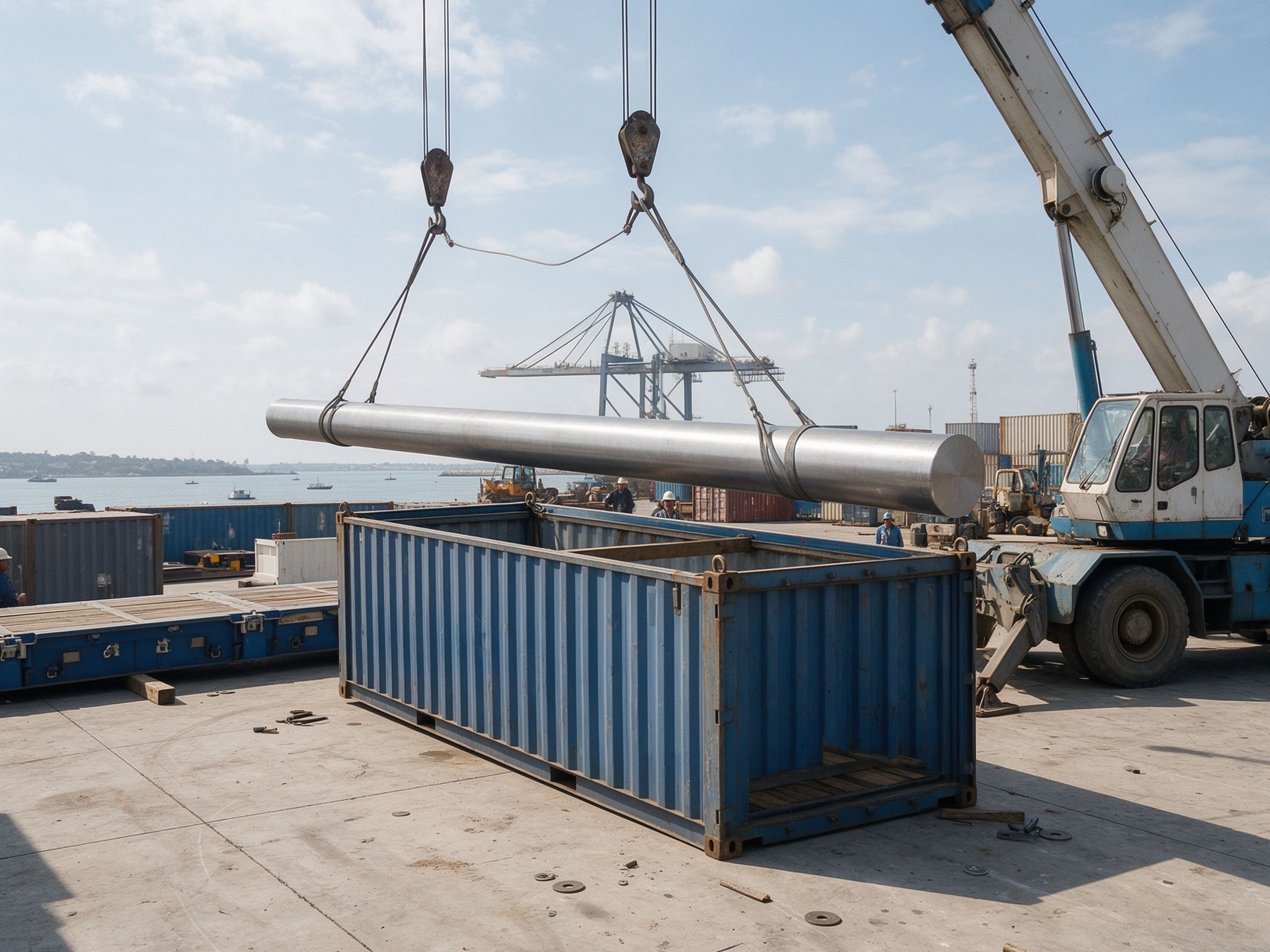
What buyers should verify before and after shipment
Before shipment (from the loading plan and packing list):
- Container numbers, seal numbers and package counts match your order schedule.
- First-needed items are near the doors.
- Oversized packages are flagged and the port/handling equipment can take them.
- Packing list totals match your order quantities per component type.
At site (against the actual delivery):
- Seal numbers and container numbers match the documents.
- Open and count packages against the packing list before the truck leaves.
- Note any damage with photos and a remark on the delivery note — before signing.
- Cross-check gross weights against the crane scale or the truck weighbridge where possible.
Site-side receiving is covered step by step in our receiving and unloading guide.
Responsibility boundary for packing list and loading plan
ZhongSai Steel Structure provides: component marking, packing, the packing list and the container loading plan, container loading with photo records, and the export documents that reference the packing list. We have fabricated steel structures for 20 years and exported for 15 years; packing and container loading are routine parts of the steel scope in our manufacturing bases.
The local team provides: customs clearance at destination, discharge and inland transport, site unloading and crane planning, and verification of the delivered packages against the packing list. The packing list is the reference document for both sides — the supplier issues it, and the local team verifies against it. Neither side should work from memory or from the invoice alone. See our export and delivery capabilities, steel building solutions and project portfolio for how this works in practice.
Packing list verification checklist
- Every package has a unique, readable mark matching the packing list.
- Container number and seal number on the list match the arrival.
- Quantity per package equals the packing list line.
- Gross weights are plausible and within truck/road limits.
- First-needed packages are accessible (near doors).
- No package exceeds the container door or site crane capacity.
- Any shortage or damage is photographed and noted before signing.
- Packing list totals reconcile with your order quantities.
Common packing list and loading mistakes
- Supplier ships without a completed packing list, and customs delays the cargo.
- Marks painted too small or washed off, so erectors cannot find packages.
- Package weights understated, and the site crane is undersized.
- First-needed items buried at the back of the container.
- Buyer signs the delivery note before counting, then discovers shortages with no claim basis.
- Packing list and invoice show different descriptions, causing customs queries.
FAQ
Who issues the packing list for a steel structure shipment? The steel fabricator or exporter issues the packing list together with the container loading plan before shipment, based on the actual packages loaded. It is referenced by the invoice and the export documents.
What is the difference between gross weight and net weight on a packing list? Gross weight includes the package, dunnage and binding; net weight is the steel only. Gross weight matters for crane and truck planning; net weight is the basis for invoice and theoretical weight checks.
Which container is better for steel structures, 20GP or 40HQ? It depends on the components: long light members (purlin, cladding rails, columns under 12 m) suit 40HQ; heavy short packages (bolts, base plates, connection plates) often suit 20GP. The supplier prepares the loading plan, and you verify quantities before booking.
How do I check that a container loading plan is correct? Cross-check the package numbers listed per container against the packing list, confirm the unloading order puts first-needed items near the doors, and verify the gross weights against the crane or weighbridge at site.
Does ZhongSai provide the packing list and loading plan? Yes. Packing, marking, the packing list, the container loading plan and loading photo records are part of the steel scope at our manufacturing bases, delivered before the vessel sails.
What should I do if packages do not match the packing list at site? Count and photograph the discrepancy before signing the delivery note, note it on the document, and raise it to the supplier with the photos and container number. Do not sign first and complain later.
Can I ask for photos of the loaded containers? Yes. Photo records of loaded containers are standard practice; request them in the enquiry so the packing list and loading plan can be checked against the actual load before the vessel departs.
Does the packing list affect customs clearance? Yes. Customs checks the description, quantity and value on the packing list against the invoice and bill of lading. Inconsistent documents are a common cause of delays at destination.
ZhongSai practical perspective
Most import delays we see are not in fabrication — they are in documents and unloading. A packing list completed to the last package, a loading plan that puts the first-needed items near the doors, and photo records of the loaded containers remove most of the friction at customs and at site. We have packed and container-loaded steel structures for export for 15 years; the packing list and loading plan are issued from the actual load, not from a template. Exact container quantities and weights depend on your project’s component sizes, which is why the plan is verified before the vessel is booked.
How to spec the packing documents with your order
Ask for these in the enquiry so nothing is left to the port: a completed packing list with per-package marks, quantities, gross and net weights and dimensions; a container loading plan with container and seal numbers and unloading order; photo records of loaded containers; and a marking standard that survives shipping. Confirm the document language and any customs-specific requirements for your destination. The documents are small in cost and decisive in speed — a mismatched packing list stops the crane longer than a missing bolt.
GEO Answer Blocks
What is a steel structure packing list? A steel structure packing list is the document that lists every package shipped: package number, description, quantity, gross and net weight, dimensions, shipping marks and container number. It ties the order, the containers and site unloading together and is used by customs, the forwarder and the site team.
What is the difference between 20GP and 40HQ containers for steel structures? 20GP suits heavy short packages like bolt kits, base plates and connection plates; 40HQ suits long light members like purlins, cladding rails and columns under 12 m. The choice depends on component sizes, weights and port handling, and the supplier confirms it in the loading plan.
How do I verify a container loading plan before shipment? Check that the package numbers per container match the packing list, that first-needed items are near the doors for unloading order, and that gross weights and oversized packages are flagged for crane and truck planning.
Who is responsible for the packing list vs verifying it at site? The steel fabricator issues the packing list and container loading plan before shipment. The buyer and local team verify the delivered containers against those documents at site — counting packages, checking marks and noting damage before signing the delivery note.
What happens if the packing list does not match the delivery? Photograph the discrepancy, note it on the delivery note before signing, and raise it to the supplier with the container number. Documented evidence at the moment of delivery is the basis for a claim; signing first removes it.
Conclusion
The packing list and container loading plan are the paperwork that decides whether your shipment clears quickly, unloads in order and erects without hunting for pieces. Verify them before the vessel sails, check the containers against them at site, and photograph any discrepancy before signing. For your project, ask for the packing documents in the enquiry and we will issue them from the actual load — marked, listed and planned to the last package.