
Steel Structure Receiving & Unloading: Delivery Checklist
Receiving a steel structure shipment is when the buyer takes responsibility for the goods. Check the packing list against what arrived, inspect for damage before signing, and unload with lifting equipment sized for each member. Damage claims depend on documented proof at delivery, so the receiving check matters. Unloading equipment and crew depend on the member sizes and the site.
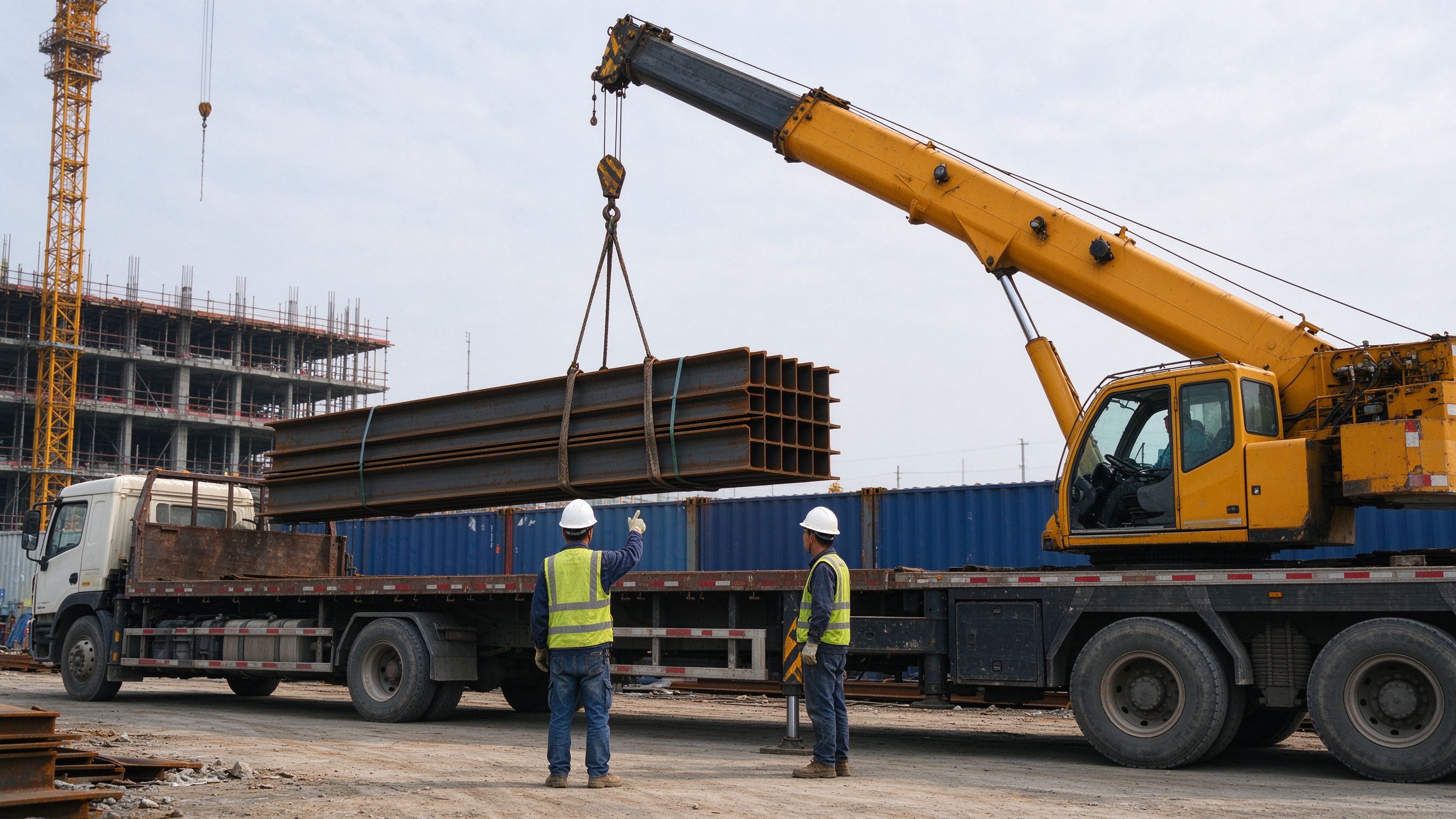
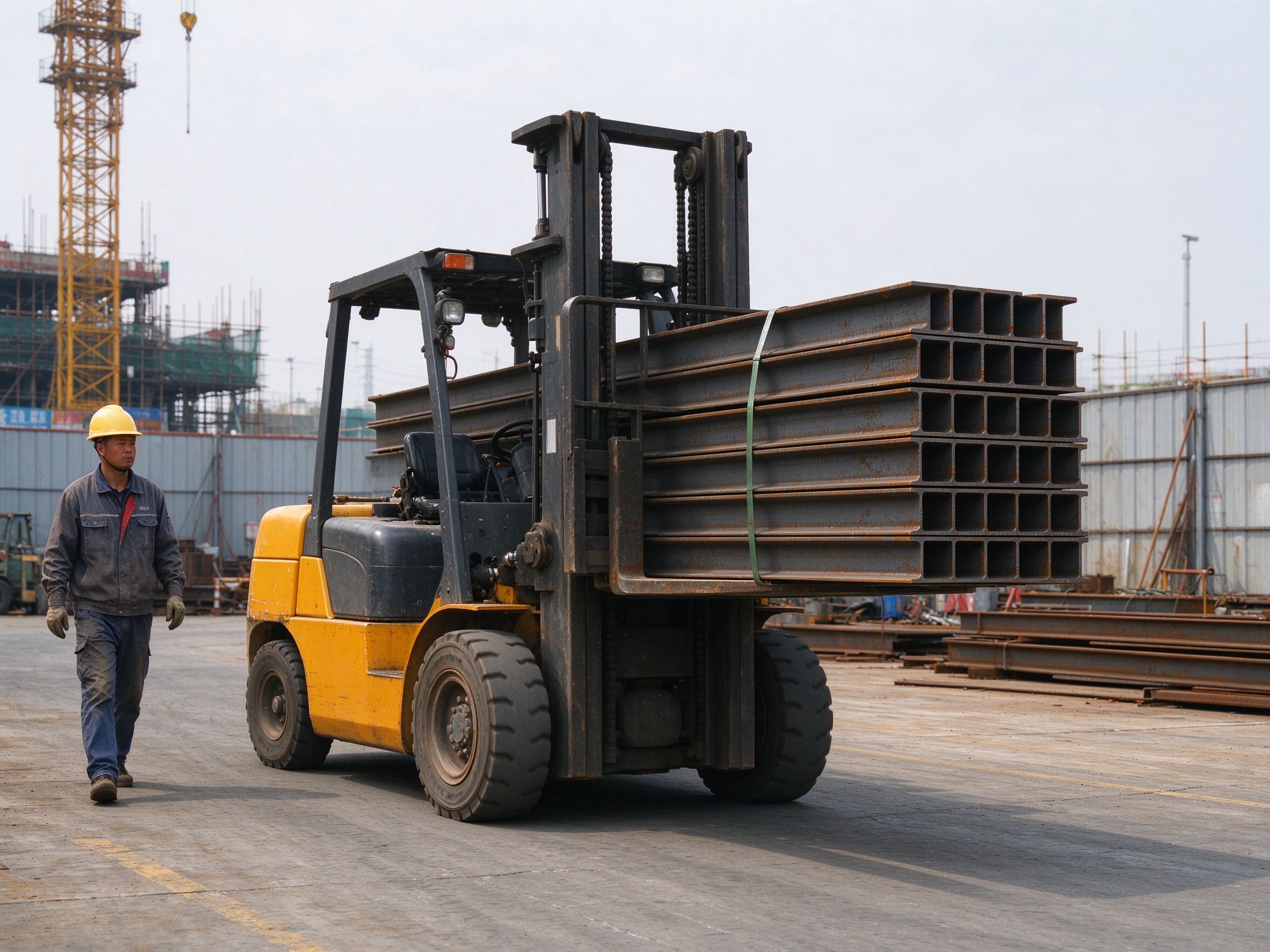
Receiving a steel structure shipment is the moment the buyer takes responsibility for the goods. Before unloading, check the packing list against what arrived, inspect for damage, and only then sign the delivery note. Unload with lifting equipment sized for each member — a crane, forklift or boom truck, depending on member sizes — and never drag steel members across the ground. Damage claims depend on documented proof at delivery, so photograph and record everything. The equipment and crew needed depend on the member sizes, weights and the site layout.
This guide explains how to prepare, unload, inspect, claim and store a steel structure delivery.
Part 1: Why the receiving check matters
When you sign the delivery note, you confirm the goods arrived in the stated condition. That makes the receiving check the control point:
- Quantity — the count is checked against the packing list, not assumed.
- Condition — visible damage is recorded before signing, not after the truck leaves.
- Claims — shipping damage claims need the delivery note marked, photos and supporting documents within the claim window.
- Fabrication claims — missing or wrong items are reported with photos and measurements so replacements can be scheduled.
Skipping the check costs more than the time it saves.
Part 2: Before unloading — prepare
- Confirm the delivery — arrival date, container or truck number, and the packing list.
- Arrange lifting — crane, forklift or boom truck capacity per member; ask for the member weights from the supplier if not on the packing list.
- Prepare the yard — hard, level ground; clear access for the truck and the crane; a dry storage area.
- Crew — riggers and a signal person for crane work; safety equipment on site.
- Site check — confirm the delivery is at the right site before unloading.
The lifting plan depends on the member sizes and the site; there is no one-size-fits-all method.
Part 3: Unloading — good practice
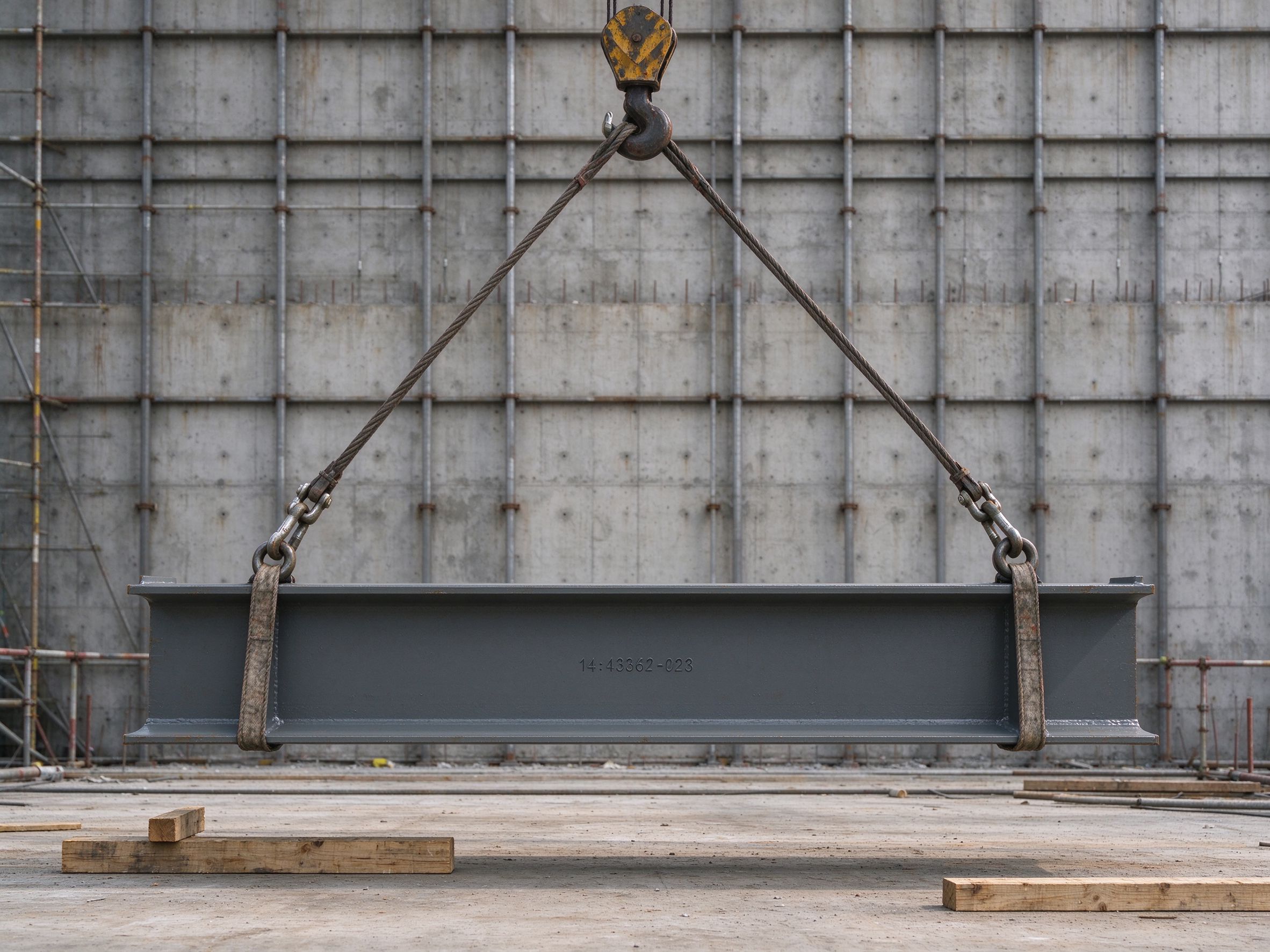
- Lift, do not drag — steel members are lifted with slings and spreader beams; dragging bends flanges and damages coatings.
- Protect the member — slings are positioned to avoid crushing or bending; packing straps are cut carefully.
- Keep the bundle together — lift small bundles with slings; separate members by bundle when storing.
- Watch the coating — coated members are handled without dragging; damaged coating is touched up promptly.
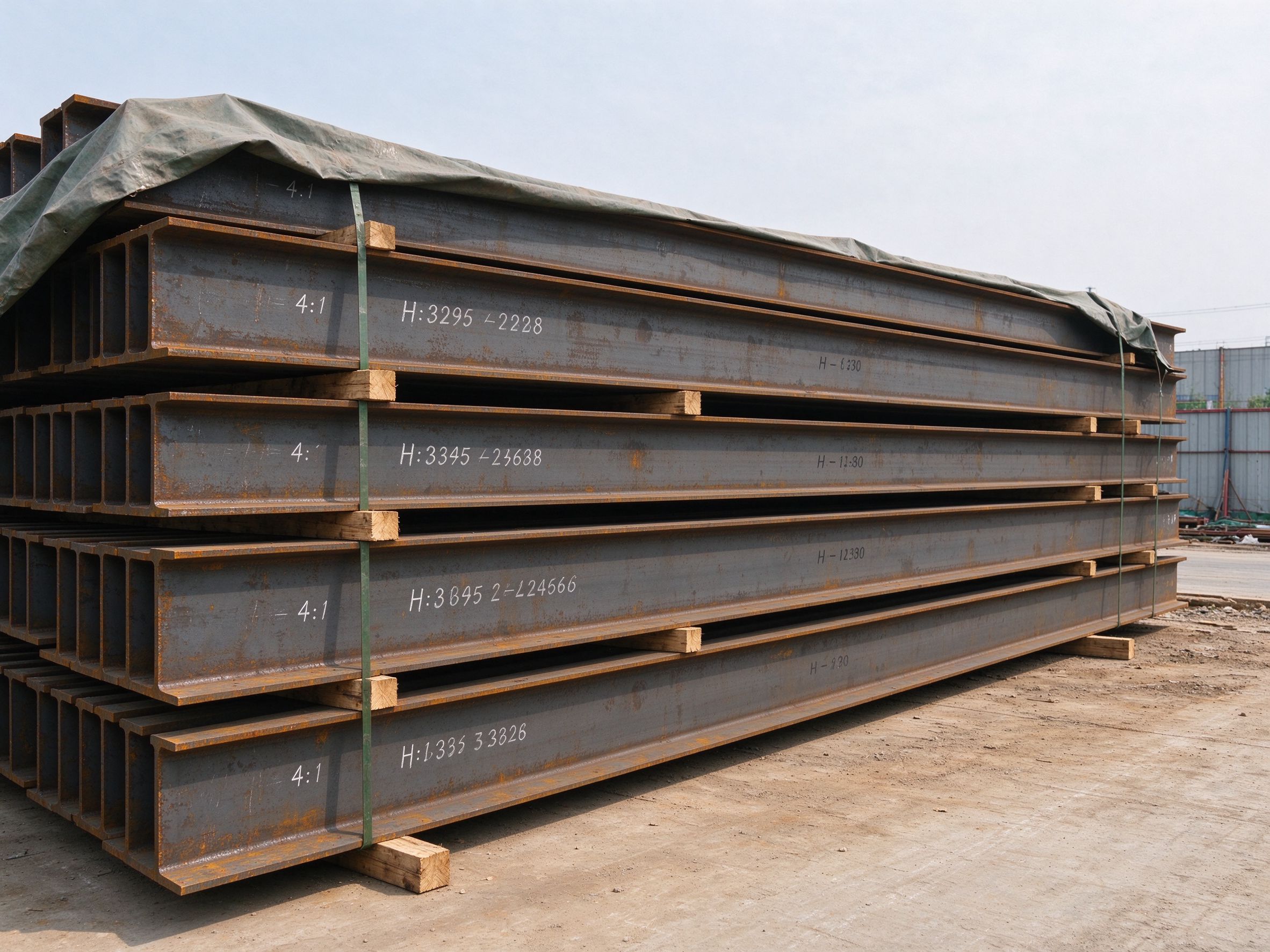
- Stack properly — members are stacked on timber dunnage, not directly on the ground, and not stacked higher than stable.
Part 4: Delivery inspection checklist
- Confirm the packing list matches the shipping documents before unloading.
- Count the bundles and check the member marks against the list.
- Inspect for transit damage: bent flanges, damaged coatings, crushed ends.
- Check welds, bolt holes and cut ends for obvious defects.
- Check packing and container condition; record wet or stained items.
- Photograph anything damaged or missing before signing.
- Mark the delivery note with any damage or shortage, and sign.
- Report damage or shortages to the supplier within the claim window with photos and measurements.

Part 5: If something is damaged or missing
- Mark the delivery note at the time of delivery — do not sign clean first.
- Photograph the damage, the container and the affected items.
- Collect documents — packing list, bill of lading / delivery note, photos.
- Notify the supplier within the claim window with the evidence.
- Keep the damaged items and packing until the claim is resolved.
Clear, dated evidence at delivery is what makes a claim valid.
Part 6: Storage on site
- Keep it dry — store members on timber dunnage off the ground, under cover or with tarpaulins.
- Separate by bundle — keep bundles and their marks together for erection.
- Protect coatings — avoid stacking that rubs or scratches coated members.
- Secure against wind — stack and tie members so they cannot move in wind.
- Keep hardware together — bolts, anchors and small items are kept in their packing until needed.
Part 7: Responsibility boundary — supplier vs local team
| Stage | ZhongSai (steel supplier) | Local team |
|---|---|---|
| Before delivery | Provides packing list, marks, documents and packing photos | Prepares yard, lifting equipment, crew and storage |
| Delivery | Coordinates the shipment and documents the packing | Receives, checks and signs the delivery note |
| Inspection | Provides member weights and documents on request | Counts, inspects and photographs before signing |
| Claims | Handles claims with documented evidence within the window | Marks the delivery note and provides photos promptly |
| Storage | Provides handling and storage guidance | Stores members safely until erection |
FAQ
What should I check when receiving steel structure?
Confirm the packing list matches the shipment, count the bundles and member marks, inspect for transit damage (bent flanges, damaged coating, crushed ends), check packing condition, and photograph anything damaged or missing before signing the delivery note.
Who is responsible if steel is damaged in transit?
Responsibility depends on the incoterm and the contract. Shipping damage claims are usually handled between buyer, seller and the carrier, and they require the delivery note marked at receipt, photos and documents within the claim window.
How are steel members unloaded?
Steel members are lifted with slings or spreader beams using a crane, forklift or boom truck sized for the member weights. Members are never dragged across the ground, and bundles are lifted together where possible.
What lifting equipment do I need to unload?
It depends on the member sizes and weights, the container or truck, and the site. Ask the supplier for member weights if they are not on the packing list, then size the crane, forklift or boom truck accordingly.
What is a packing list and why does it matter?
The packing list states every bundle, member mark and item in the shipment. It is the reference for counting on arrival and for any shortage claim.
What should I do if items are missing or damaged?
Mark the delivery note at delivery, photograph the damage and container, keep the packing, collect the shipping documents, and notify the supplier within the claim window with the evidence.
How should steel members be stored on site?
Store members on timber dunnage off the ground, under cover or tarpaulins, keep bundles and marks together, protect coatings, secure against wind, and keep hardware in its packing until needed.
Can coated steel be stored outdoors?
Coated steel can be stored outdoors for a limited time if raised off the ground on dunnage and protected with tarpaulins. For longer storage, keep it dry and touch up any coating damage promptly.
Preparing to receive a steel structure?
Ask ZhongSai for the packing list, member weights and handling guidance with your shipment, and follow the receiving checklist on delivery day.