
How Steel Structures Are Packed and Loaded for Export
How fabricated steel components are packed, marked, crated and loaded for ocean export. What buyers should check before shipment.
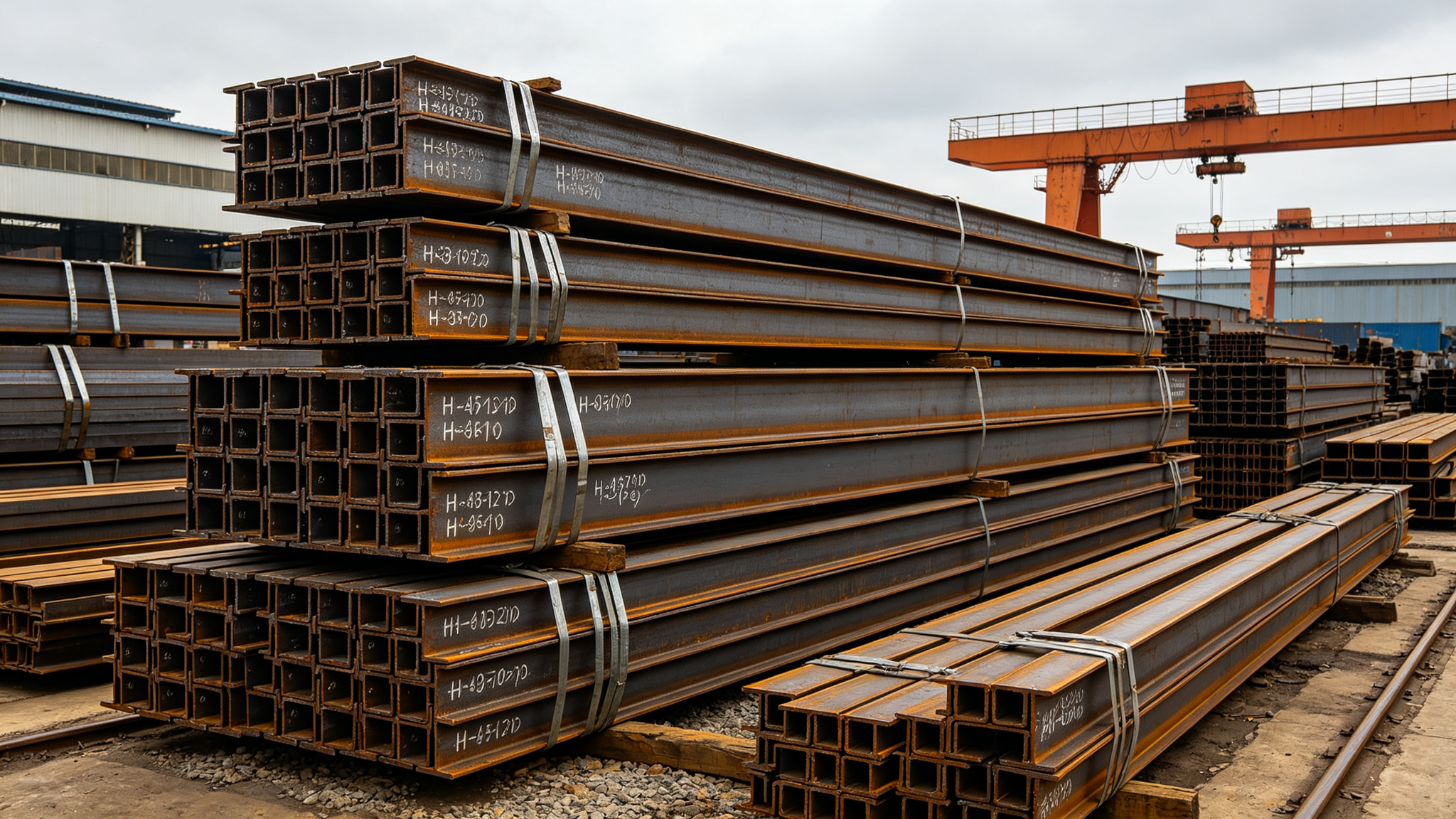
Steel structure export is more than fabrication. How components are packed, marked and loaded determines whether they arrive at site in usable condition, or buried under tangled bundles with missing bolts. This guide explains what a proper export packing and loading process looks like, and what buyers should verify before containers leave China.
Why Packing Matters in Steel Export
Steel components are heavy, sharp and corrosion-sensitive. Poor packing leads to:
- Bent members from shifting in containers
- Rusted surfaces from sea moisture
- Missing bolts or connection plates
- Time wasted at site sorting bundles
- Re-erection delays because components are unrecognizable
A professional export packing process protects both the steel and your project schedule.
Component Marking and Identification
Before packing, every component receives a unique mark that ties back to the erection drawing.
What a proper mark includes:
- Project number
- Building or bay number
- Component type (column, beam, brace, purlin)
- Piece mark (e.g., C1, B2, BR3)
- Assembly number if the part belongs to a sub-assembly
Marks are typically painted or stenciled directly on the steel, and sometimes on metal tags for small parts. Bolts and connection plates are packed separately but cross-referenced to the assembly they belong to.
What buyers should ask:
- Can you show the piece-marking system on a recent order?
- Are erection marks shown on the shipping list?
- How are bolts identified?
Packing Methods
Different components need different packing approaches.
Main Frames (Columns, Beams, Braces)
Large members are usually bundled by assembly. Strapping holds bundles together, with padding where sharp edges could damage coating. Bundles are weighed and dimensioned so they can be lifted safely.
Purins and Cladding Rails
Z-section, C-section and angle purlins are bundled in standard lengths. They may be strapped in layers or crated depending on length and surface finish.
Bolts and Fasteners
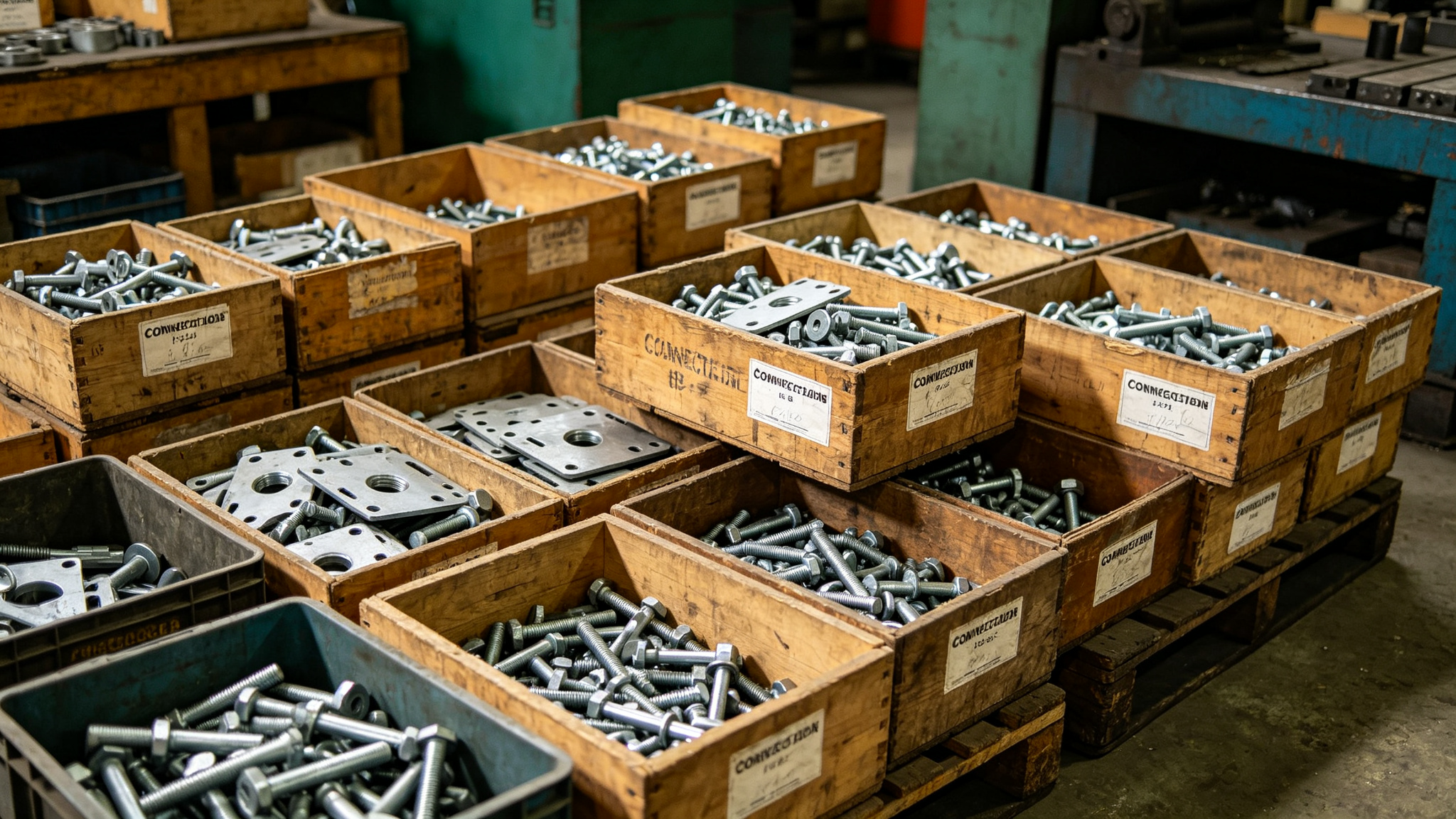
Bolts, nuts and washers are packed in small boxes or bags, labeled by assembly. High-strength bolts are kept separate from ordinary bolts. This is critical: mixed bolt boxes at site cause serious erection delays.
Connection Plates and Miscellaneous
Gusset plates, base plates, anchor bolts and small fittings are crated or boxed by assembly. Each crate has a packing list inside.
Roof and Wall Panels (if included)
If the supplier also ships cladding panels, they are packed flat in waterproof wrapping, edge-protected.
Container Loading
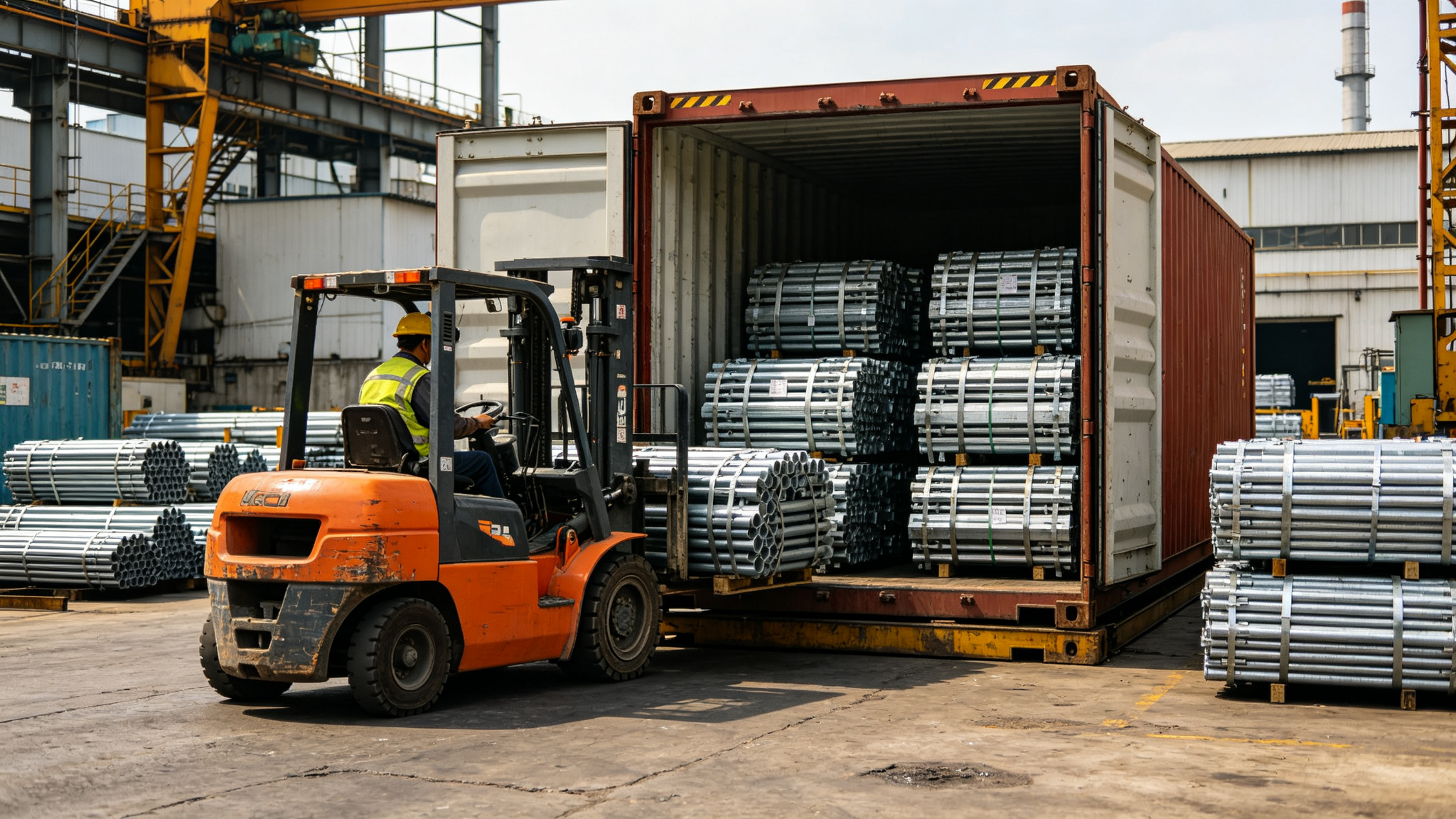
Loading is a skilled job. How steel goes into a container affects weight distribution and space.
What a good loading plan looks like:
- Heavy members on the bottom, lighter items on top
- Weight balanced left/right and front/back
- Dunnage used to prevent movement
- Nothing loose inside the container
- A loading photograph or video record
- A packing list matching every crate and bundle
For large projects, components may be loaded as breakbulk or on flat racks instead of standard containers. The loading method depends on member length, project tonnage and destination port.
Surface Protection Before Shipment
Export sea air is corrosive. Proper protection matters.
Typical protection:
- Shop primer applied and cured
- Chalkboard or sticker marks over primer (not paint that damages coating)
- Waterproof wrapping for small items
- Desiccant or sealed bags for bolts
- Touch-up paint provided for shipping damage
If the destination has a coastal or humid climate, ask whether additional protection is planned.
Shipping Documents
Every export shipment should come with documents that match the physical cargo.
Check for:
- Packing list (itemized by bundle/crate)
- Weight and measurement list
- Commercial invoice
- Bill of lading
- Certificate of origin if required
- MTC / material certificates if required
- Any destination-specific documentation (SASO, CE, etc.)
A mismatch between packing list and actual cargo is a red flag.
What Buyers Should Verify Before Shipment
Request these before the container is sealed:
- Loading photos or video — shows what actually went into each container
- Packing list — itemized, with marks and weights
- Bolt box labels — confirm bolts are sorted by assembly
- Surface condition — photos of primer and any damage
- Container number and seal number — for tracking
A manufacturer that resists pre-shipment photos is a risk.
Common Problems and How to Avoid Them
| Problem | Typical Cause | Prevention |
|---|---|---|
| Bent members at arrival | Poor strapping or overloading | Bundles strapped, weight distribution checked |
| Rusted surfaces | No surface protection | Primer + waterproof wrapping |
| Missing bolts | Mixed bolt boxes | Bolts packed by assembly, labeled |
| Unidentifiable pieces | No piece marks | Marks shown on shipping list |
| Cargo mismatch | No pre-shipment verification | Loading photos + packing list review |
FAQ
Do all steel structure projects use containers? Most small-to-medium projects use standard containers. Large single-span buildings may need flat racks, open-top containers or breakbulk. The supplier should confirm the loading method before fabrication.
How are long beams loaded? Beams longer than standard container length may use flat racks or open-top containers. This affects shipping cost and port handling, so it should be planned early.
Who is responsible for packing? The manufacturer is responsible for export packing. The buyer should review the packing method and pre-shipment photos, but does not normally handle physical loading.
What if components arrive damaged? Document the damage with photos against the packing list and container number. Contact the supplier promptly. Good suppliers provide touch-up paint and replacement parts for shipping damage.
Have a project and want to understand export packing and loading? Send your drawings or project requirements. We can explain how components will be marked, packed and loaded for your destination.