Steel Structure HS Code: 7308, 9406 or 7216 — How a Steel Building Is Classified
Most exported steel building packages are declared under HS heading 7308, structures and parts of structures. Heading 9406 covers complete prefabricated buildings, and 7216 covers plain angles, shapes and sections before they are prepared for use in a structure. The heading depends on what is actually in the container and how it is described, and the binding decision belongs to the destination customs authority. The code drives duty, origin treatment and trade measures, so it should be settled before the commercial invoice is issued.
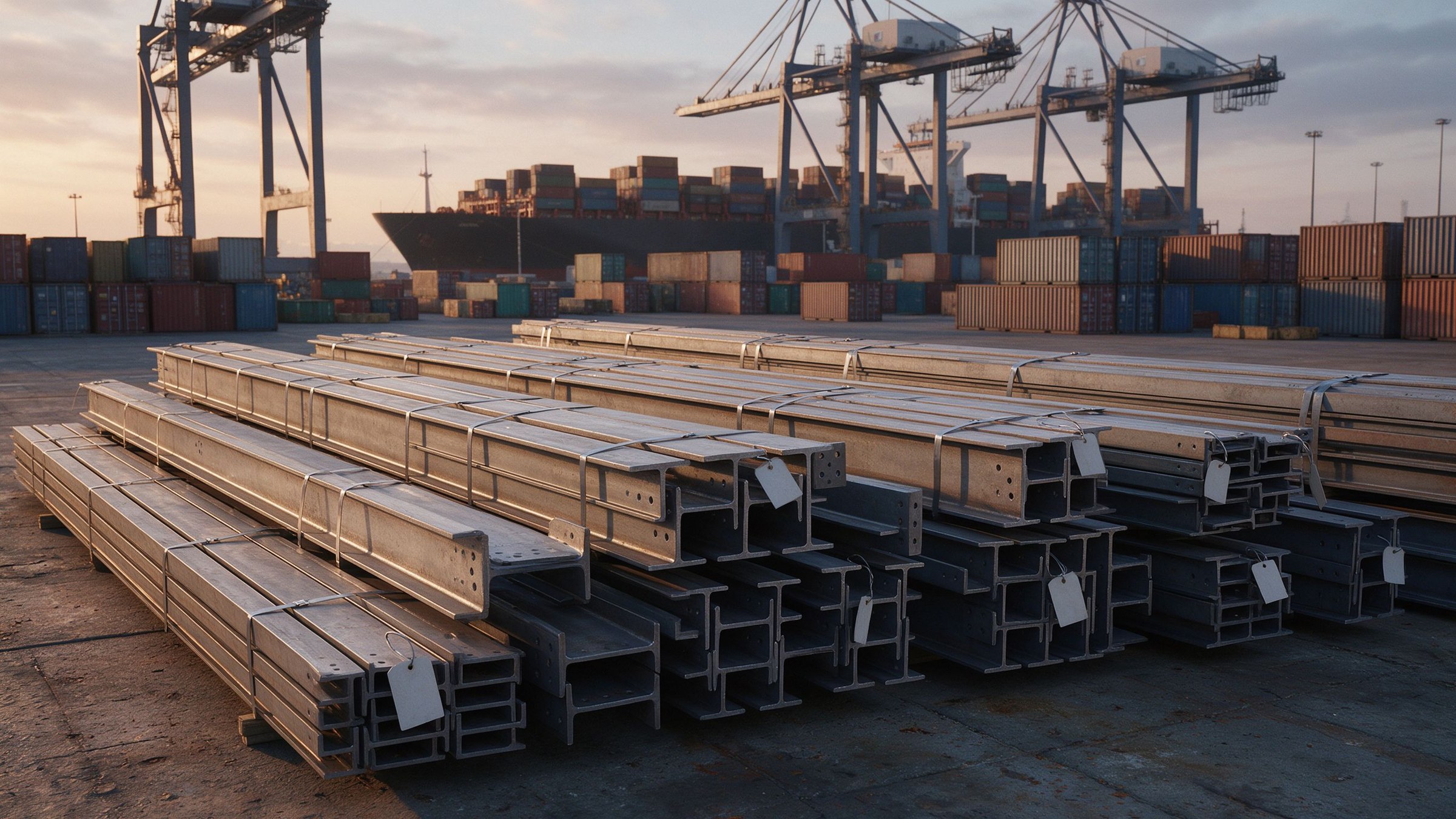
Most exported steel building packages are declared under HS heading 7308, structures and parts of structures. Heading 9406 covers complete prefabricated buildings, and 7216 covers plain angles, shapes and sections before they are prepared for use in a structure. The heading depends on what is actually in the container and how the goods are described, and the binding decision belongs to the destination customs authority. The code drives duty, origin treatment and trade measures, so it should be settled before the commercial invoice is issued, not after the container arrives.
This guide is about classification logic, not a tariff quote. Rates change, and they depend on the importing country, the origin and any trade measures in force. What does not change is the way a steel building package is analysed.
Part 1: The headings that matter for a steel building
Four headings come up repeatedly when a steel building crosses a border. They are not interchangeable, and mixing them up is one of the more expensive paperwork errors in this trade.
| HS heading | What it covers | Typical content | Where it usually goes wrong |
|---|---|---|---|
| 7308 | Structures and parts of structures, of iron or steel; the heading itself excludes prefabricated buildings of 9406 | Columns, beams, purlins, bracing, roof and wall framing, cleats, base plates, prepared members | Declaring a whole kit here when it is actually a complete prefabricated building, or the reverse |
| 9406 | Prefabricated buildings | A complete building unit, often shipped with its wall and roof panels and fit-out | Using it for loose members that are only parts of a structure |
| 7216 | Angles, shapes and sections of iron or non-alloy steel | Mill-length profiles, not yet cut, drilled, welded or otherwise prepared for a specific structure | Declaring a fabricated building kit under a raw-material heading |
| 7318 | Screws, bolts, nuts, coach screws, washers and similar articles | Connection bolts, anchor bolts, nuts, washers, sometimes packed separately | Forgetting that separately packed fasteners may be classified apart from the steel |
The distinction that decides most cases is in the words “prepared for use in structures”. A universal beam straight from the mill is a section. The same beam, cut to length, drilled, welded with cleats and marked for a specific grid position, is a part of a structure.
Part 2: Why most steel building packages land in 7308
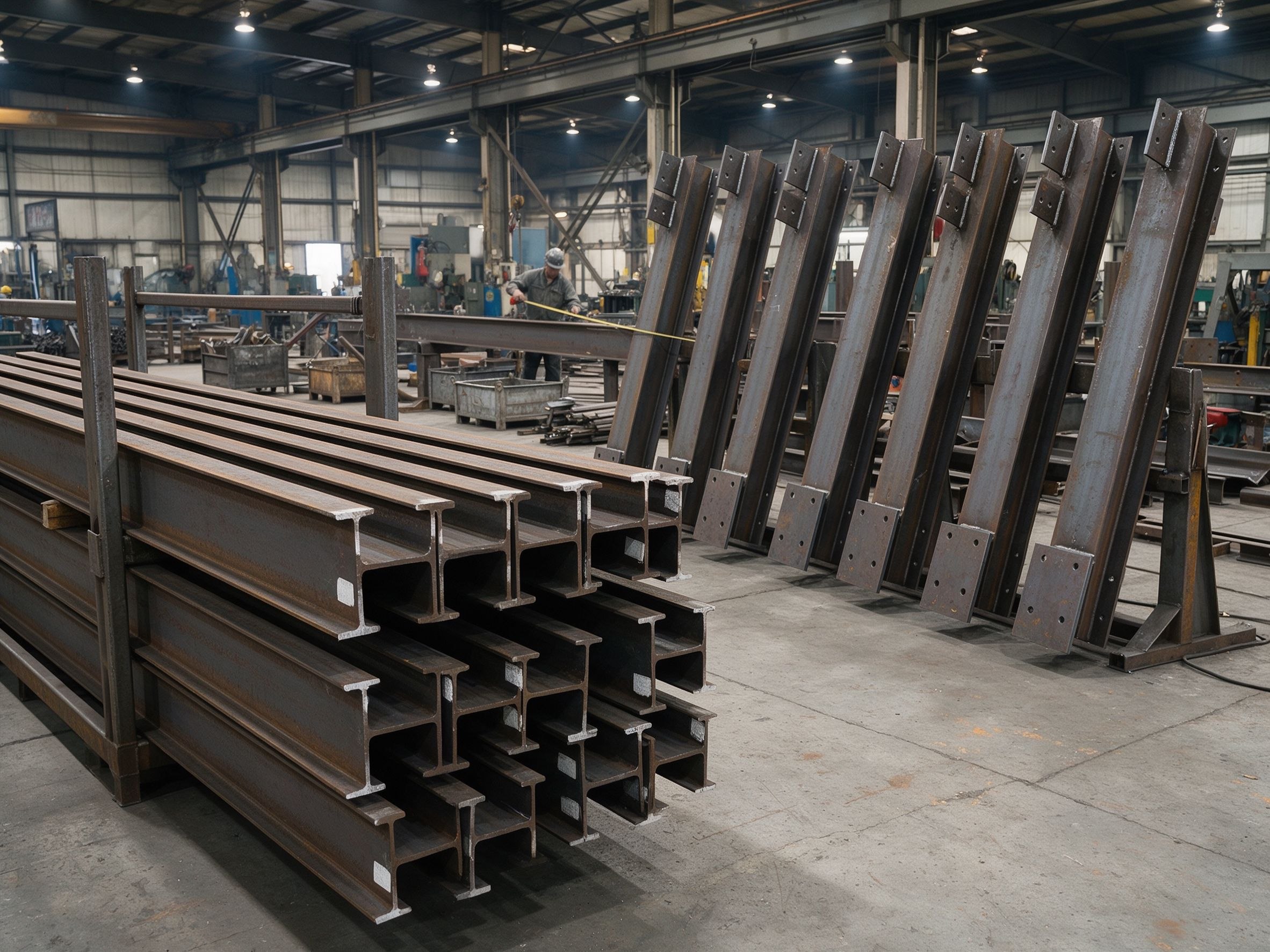
A steel building shipped as a kit is, in customs terms, a set of members that have been prepared for a particular structure. Each column has a base plate and anchor bolt holes; each beam has end plates, stiffeners and bolt holes; purlins are cut to bay lengths; bracing is fitted with gussets. None of that is a mill-length profile any more.
That is why 7308 is the normal home for the fabricated steel package: the heading explicitly covers structures and parts of structures, and it explicitly covers plates, rods, angles, shapes, sections and tubes “prepared for use in structures”.
Two practical consequences follow.
First, the invoice description has to match that reality. “Steel structure” alone is thin. A description that names the building, lists the member families and states that the members are fabricated and marked for erection gives the broker something to work with.
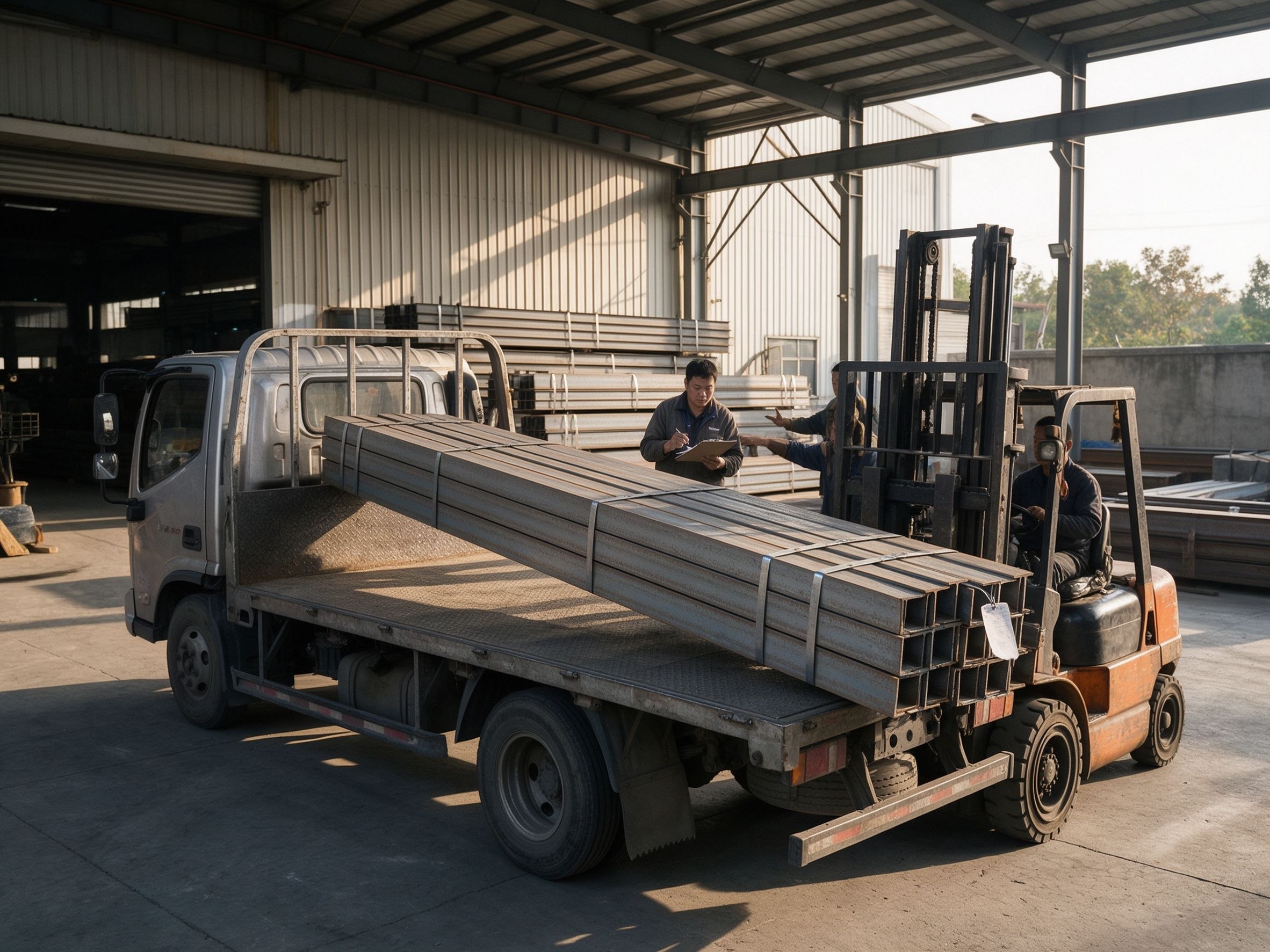
Second, the packing list has to be consistent. If the invoice says “fabricated steel structure, 42 packages” and the packing list shows 42 bundles of cut and drilled members with marks, the story holds. If the packing list shows “steel profiles” while the invoice says “structure”, the entry stops and someone starts asking questions at the worst possible moment.
Part 3: When 9406 is the right heading
Heading 9406 exists because a prefabricated building is more than a pile of members. When a supplier ships a complete building unit — structure plus wall and roof panels, doors, windows and the parts that make it a building rather than a component set — the classification argument moves toward 9406.
Customs authorities do not treat this as a naming preference. They look at the goods: a complete building presented as a building, or a set of structural members for a building completed on site? Both answers exist in real trade, and both are defensible when the goods and documents say so.
What decides it in practice:
- Completeness. A building that arrives with its envelope, openings and accessories reads differently from a frame-only package.
- Presentation. How the goods are described, packed and marketed matters. A “prefabricated building” invoice attached to 300 loose members invites a query.
- The destination’s own practice. Some administrations have published guidance or rulings on steel building kits. That guidance, not a supplier’s preference, decides the entry.
Because the two headings can carry different duty treatment in some markets, this is not an academic question. It is worth settling in writing before production starts.
Part 4: Why 7216 is not a building heading
7216 is a materials heading. It covers angles, shapes and sections of iron or non-alloy steel as they come from the rolling mill, before anyone has turned them into a specific structural part.
A fabricator buys under 7216 and ships under 7308. That is the normal commercial pattern: the mill sells sections, the fabricator sells prepared parts. When an exporter declares a drilled, welded, marked building kit under 7216, the declaration describes the input rather than the output.
The tell is in the documents. If the commercial invoice describes “H-beams, 6 m, Q235B” and the packing list shows cut lengths with bolt holes and match marks, the goods no longer match the declared heading. A broker who notices will ask for a correction; an authority that notices later can reclassify, and reclassification usually comes with a revised duty assessment and delay.
There is one honest exception. Where a shipment genuinely consists of mill-length sections with no fabrication — for example, profiles bought as a material allowance and finished locally — 7216 can be correct. The test is the condition of the goods, not the name of the project.
Part 5: The classification decision table
Use this table to test a shipment before the invoice is written. Each row describes what is physically in the container.
| What is in the container | Likely heading | Why | What to confirm |
|---|---|---|---|
| Cut, drilled, welded and marked members for one structure | 7308 | Parts of structures, prepared for use | That the invoice and packing list describe fabricated members, not profiles |
| Complete building unit with envelope panels, openings and accessories | 9406 | Prefabricated building | Local practice on kits and whether the envelope is in the same shipment |
| Mill-length sections with no fabrication | 7216 | Angles, shapes and sections | That nothing in the package has been prepared for a structure |
| Members plus separately packed bolts, nuts and washers | 7308 plus 7318 | Fasteners are classified as articles in their own right | Whether fasteners travel in the same package or as a separate line |
| Accessories such as roof sheets, gutters, flashings | Often with the building heading; sometimes separately | The covering material and presentation decide | The destination’s treatment of mixed consignments |
| Spare members and replacement parts | Usually the heading of the parts | They are parts of a structure | That the description says “spare parts for” the structure |
This table does not replace a broker’s view; it removes the most common errors before they reach the broker.

Part 6: The description has to tell one story
Classification is not only a code on a form. It is a story that the invoice, the packing list, the marks on the bundles and the certificate of origin all have to tell in the same way.
| Document | What it should say | What breaks the story |
|---|---|---|
| Commercial invoice | Product description that matches the heading: fabricated steel structure, member families, building type | “Steel” or “steel materials” with no indication of fabrication |
| Packing list | Package count, marks, weights, and that members are cut and prepared | Line items described as mill profiles |
| Bundle marks | The assembly marks that tie each member to a drawing position | Marks that do not appear anywhere in the documents |
| Certificate of origin | Origin criteria consistent with the goods actually produced | Origin claimed for goods whose production the documents cannot support |
| Mill test certificates | Steel grade and heat numbers for the material used | Certificates for a grade that does not appear on the invoice |
The marks matter more than they look: when bundle marks match the packing list and the drawing schedule, the shipment is easy to inspect and easy to defend.
Part 7: What the code changes commercially
The heading is not a formality. It sits upstream of three things a buyer cares about.
Duty. The importing country’s tariff schedule sets the rate for each national tariff line. The six-digit HS heading is only the first step; most declarations need eight or ten digits, and the national line can split a heading into several rates. We do not quote rates here because they change and because they interact with origin and trade measures.
Preferential origin. Where the destination has a trade agreement with China, an origin document can support a preferential claim. The agreement’s product-specific rules decide whether a fabricated steel structure qualifies; a supplier cannot assume it does. Eligibility is a question for the exporter and the importer together, and the certificate has to match the goods.
Trade measures. Some markets apply anti-dumping, countervailing or safeguard measures to certain steel products. Whether a building package falls inside a measure depends on the measure’s product scope and on the declared classification, not on what the product is called in the brochure. This is a reason to fix the classification early, and a reason to keep the production description honest.
Part 8: Six misclassification patterns
These are the patterns that cause the most rework in steel building imports. None of them is exotic.
| Pattern | What happens | How to avoid it |
|---|---|---|
| Declaring a fabricated kit under a profiles heading | Reclassification, revised duty, storage and demurrage while the entry is corrected | Describe the goods as prepared members and keep the packing list consistent |
| Using 9406 for a frame-only package | Query on completeness, possible reclassification | Reserve 9406 for genuinely complete building units |
| Forgetting separately packed fasteners | Undeclared lines, amended entry | List fasteners as their own line with their own heading |
| Invoice and packing list disagree on description | Entry held, documents returned for correction | One description, written once, used everywhere |
| Origin certificate that cannot support the claimed criteria | Preferential claim refused, duty reassessed | Check the agreement’s product-specific rule before issuing |
| Copying a competitor’s code from an old shipment | A code that fits their goods, not yours | Test the goods against the heading text, not against a precedent |
The sixth one deserves emphasis. A code is not wrong because someone else uses a different one, and it is not right because a similar shipment used it last year. It is right when the goods match the heading.
Part 9: Responsibility boundary in an export project
Classification sits on the border between supplier and importer, and the split should be explicit in the contract.
| Stage | ZhongSai input | Importer / local party input |
|---|---|---|
| Product description and specifications | Engineering coordination and detailing, member schedule, fabrication description | Confirming the description matches the purchase order |
| Export documents | Commercial invoice, packing list, mill test certificates, origin documents as agreed | Checking that documents match the destination’s requirements |
| Classification and entry | Providing accurate product facts on request | Filing the entry, obtaining rulings, engaging the broker |
| Duty, taxes and trade measures | Providing origin and production information | Paying duty and taxes, confirming applicable measures |
| Clearance delay | Supplying corrected documents promptly | Managing the broker, the port and the authority |
The rule is simple: the supplier describes the goods, the importer classifies and clears them. When a supplier quietly picks a code to make a quotation look lower, the importer inherits the risk at the port.
Part 10: Checklist before the invoice is issued
- The goods have been tested against the heading text, not against a previous shipment.
- The invoice description names the building type and states that members are fabricated and prepared.
- The packing list uses the same description and shows package count, marks and weights.
- Separately packed bolts, nuts and washers are listed as their own line.
- Mill test certificates match the steel grades actually used.
- The certificate of origin has been checked against the applicable origin rule, if a preferential claim is intended.
- The destination’s tariff line has been confirmed at eight or ten digits with the broker.
- Any applicable trade measure has been checked against the declared classification.
- The export invoice, packing list and marks use one consistent set of assembly marks.
- The importer has confirmed, in writing, which heading will be used for the entry.
Part 11: FAQ
Question: Is HS 7308 correct for a steel building? For a fabricated kit of columns, beams, purlins, bracing and prepared parts, 7308 is the usual heading, because the goods are structures and parts of structures prepared for use. A complete prefabricated building may fall under 9406 instead.
Question: Can a supplier choose 9406 to reduce duty? No. The heading follows the goods and the destination’s rules, not a preference. Choosing a heading to change the duty outcome is a declaration error, and the importer carries the consequence.
Question: Do bolts and anchor bolts go under the same code as the structure? Often not. Fasteners are articles in their own right and are commonly classified under 7318, particularly when packed separately. They should appear as their own line rather than being absorbed into the steel tonnage.
Question: What if the shipment contains both members and roof panels? Mixed consignments are classified according to the components and the presentation, and practice varies by destination. The description should list the components honestly and let the broker apply the local rule.
Question: Does the HS code decide whether an FTA rate applies? Not by itself. A trade agreement’s product-specific origin rule decides eligibility, and the origin document has to support it. The heading is one input, not the answer.
Question: Who is responsible if customs reclassifies the goods? The importer of record is responsible for the entry. The supplier’s job is to provide accurate product facts and documents. This is why the description should be agreed before production, not after arrival.
Question: Can the classification be changed after the container ships? A declaration can be amended, but the cost lands on someone: storage, demurrage, amended duty, and sometimes a longer inspection. Fixing the description before loading costs less than fixing the entry after discharge.
Starting a steel building project?
If you are preparing an import and want the product description, packing list and marking to line up before the invoice is issued, send the drawings and the destination. We can confirm what the package contains, how the members are fabricated and marked, and which documents travel with the steel. Classification and entry stay with your broker and your local authority.
Send project drawings — or read how the export documents are assembled, what the mill test certificates cover, and how the packing list and container plan tie the marks to the load. For the commercial side, see what importing steel from China actually costs.