Does a Steel Building Count as IBS? The IBS Score, Explained for Buyers
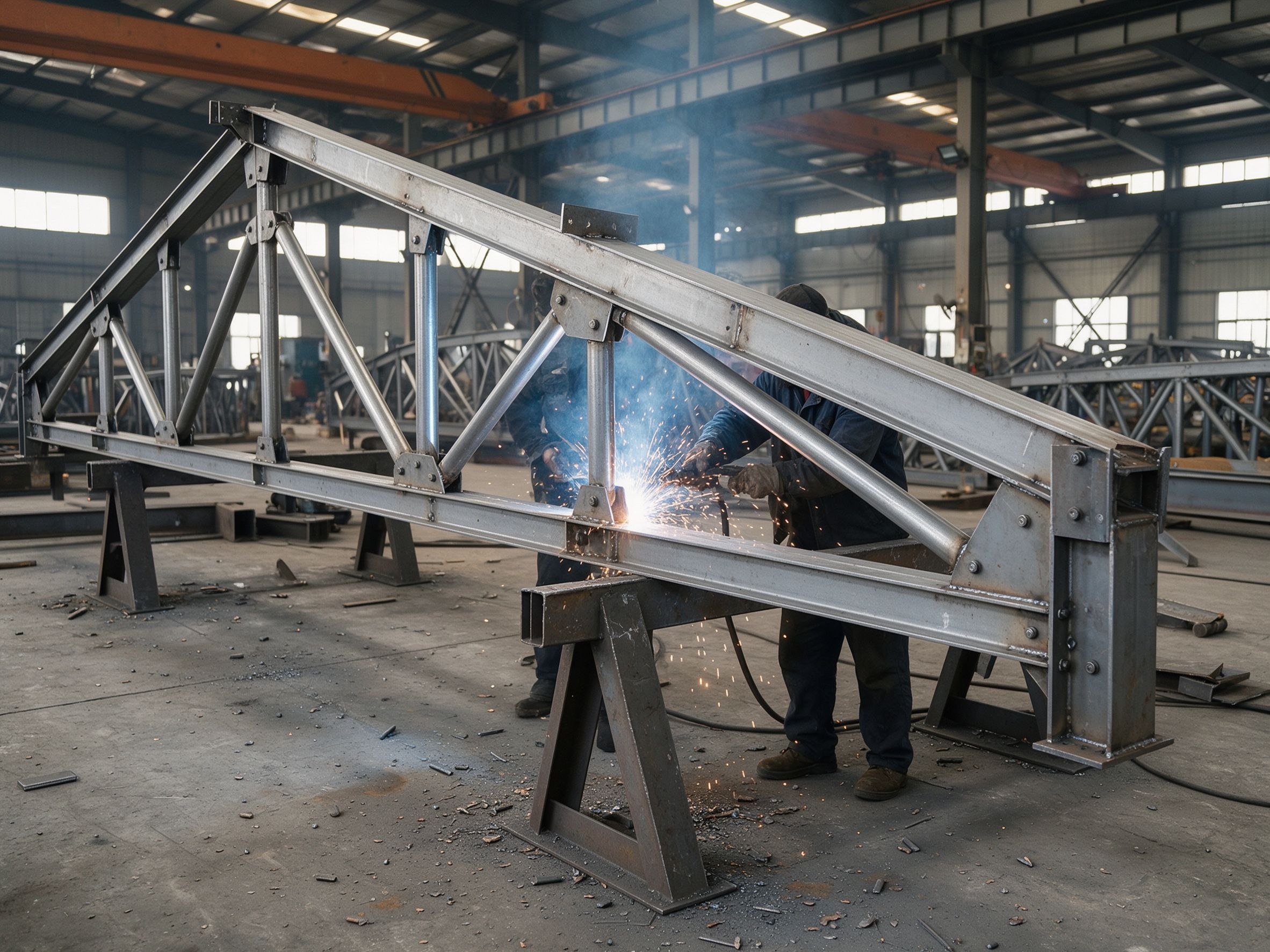
A portal-frame steel building is built from prefabricated members, so it usually contributes to a project's IBS score — but the score itself is a project calculation, not a product certificate. Buyers who confuse the two end up asking suppliers for a document no fabricator can issue.
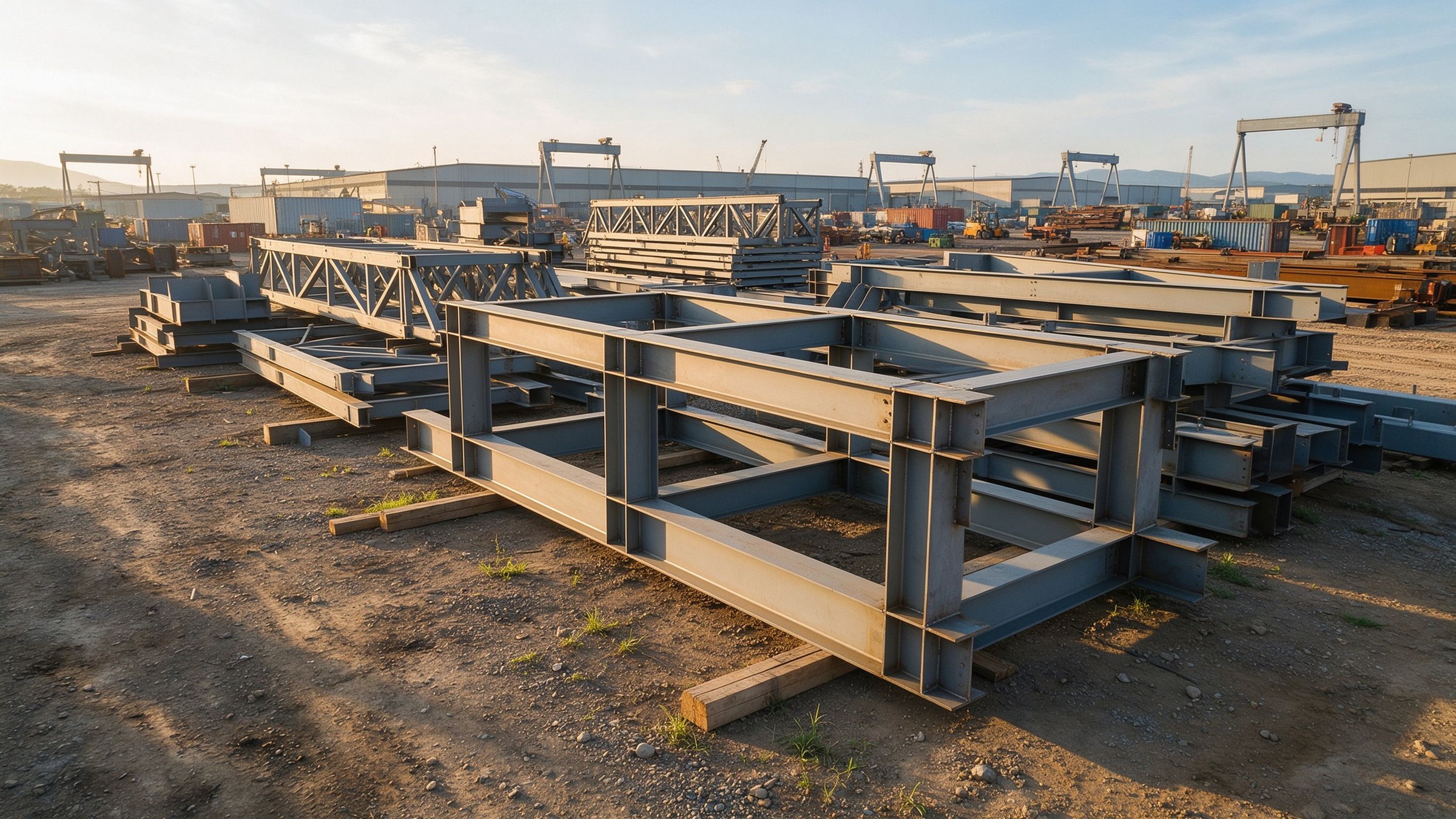
A steel building is assembled from members cut, welded and coated in a factory, transported, and erected with relatively little site labour — which is the working definition of an Industrialised Building System (IBS). Steel framing is one of the systems CIDB recognises. But the IBS score is a calculation performed on a whole project by its designer, against the IBS Content Scoring System; it is not a certificate a steel supplier issues. A buyer who needs “the IBS score” from a fabricator is asking for the wrong document, and usually discovers it after the submission deadline.
Malaysia’s IBS framework has four separate instruments that all carry the word IBS. Understanding which one a project actually needs is the difference between a two-week document exchange and a stalled approval.
Part 1: What IBS means in Malaysian construction
CIDB defines IBS as a construction system in which components are produced under controlled conditions — in a factory, or on site — then transported and installed with minimal use of workers on site. Three things follow from that definition:
- The unit of IBS is the component, not the whole building.
- Production must be controlled — factory conditions, documented procedures, repeatable output.
- Site work is assembly, not fabrication.
Malaysia recognises six system families: precast concrete, metal framing (steel), formwork, timber framing, blockwork, and an “other” category for labour-saving components. A steel portal-frame warehouse sits in the metal framing family. So does a light-gauge steel roof truss, a steel floor deck, and a modular steel partition.
That breadth is why “is my building IBS?” is the wrong question. The right question is which parts of the building are IBS components, and whether the project’s scoring submission documents them properly.
Part 2: The score belongs to the project, not the product
The IBS Content Scoring System is a manual used to calculate how much of a building is delivered through IBS methods. The calculation looks at the building element by element — structural elements, architectural elements, and the mechanical, electrical and plumbing components — and assigns content points according to how each element is built.
| Question | Short answer |
|---|---|
| Who calculates the score? | The project’s designer, typically the architect working with the engineer and quantity surveyor |
| What is scored? | A specific building design, element by element |
| Can a supplier calculate it? | No — a supplier only knows the steel scope, not the walls, floors, MEP and finishes |
| Is the score a certificate? | No. It is a submission outcome tied to that design |
| Does the score change if the design changes? | Yes — substitution of a cladding type or a floor system changes the result |
This is the single most common misunderstanding in enquiries from Malaysian buyers. A fabricator can tell you which of your elements are prefabricated, and can supply the drawings and test evidence behind them. It cannot issue a project score, because it does not hold the rest of the design.
Part 3: Where a steel building earns points — and where it does not
For a portal-frame industrial building, the scoreable content is concentrated in a few elements.
| Building element | Typical steel solution | IBS content | What the buyer must confirm |
|---|---|---|---|
| Primary frame | Hot-rolled sections, bolted or welded | High — factory-fabricated members | Member schedule and connection details in the submission drawings |
| Roof structure | Steel trusses or purlins | High | Whether trusses are factory-assembled or site-assembled |
| Roof covering | Metal cladding on purlins | Depends on the system and how it is classified | Cladding system description, not just a colour |
| Wall system | Sandwich panel, single skin, or blockwork infill | Varies widely — blockwork infill pulls the wall element back to conventional | Wall build-up section for each wall type |
| Floor (multi-storey) | Steel deck with concrete topping | Depends on how the deck is classified in the submission | Deck profile and topping specification |
| Partitions | Drywall or modular panel | High if prefabricated | Panel system and junction details |
| Stairs | Prefabricated steel flight | High | Shop drawing of the flight and landings |
Two lessons sit in that table. First, a steel frame alone does not carry a project to a high score; the walls, floors and partitions matter just as much. Second, the same building can score differently depending on how the submission describes it — which is a design-documentation issue, not a fabrication issue.
Part 4: Four instruments that all say “IBS”
This is where most procurement confusion starts.
| Instrument | Who holds it | What it actually proves | What it does not do |
|---|---|---|---|
| IMPACT certification (IBS Manufacturer & Product Assessment & Certification) | The manufacturer, per system family | The manufacturer and its product passed assessment against the Construction Industry Standard (CIS:24) process — verification, validation, testing, certification | Does not score your project |
| IBS Status registration (Manufacturer, or Distributor/Supplier/Agent) | The company, in one of six specialisation groups | The company is listed in CIDB’s certified IBS manufacturer list for that group | Does not certify a specific project’s design |
| Project IBS score | The project’s designer | How much of this building is delivered through IBS methods | Does not certify any supplier |
| Installer / contractor competency (e.g. B02 Steel Framework System training, installer certification for light-gauge steel roof trusses) | Individuals and contractors | The people installing the components have completed the relevant CIDB training and assessment | Does not replace product certification or the project score |
If a tender document asks for “IBS certification”, ask which row of that table is meant. The answer changes who has to produce the document: the fabricator, the local contractor, or the architect.
Part 5: What a steel supplier can hand over
A fabricator’s contribution to an IBS submission is evidence, not a score. For a steel scope, the usable package looks like this:
- System description — what the building is: portal frame, truss, modular, with spans and bay spacing as designed.
- Element breakdown — which elements are factory-fabricated and which are site-formed.
- Component list — members, trusses, deck profiles, panel types, with dimensions and weights.
- Connection details — base plates, column splices, beam-to-column connections, bracing.
- Test and inspection records — material certificates, weld inspection, coating checks, and any product test reports referenced by the specification.
- Erection drawings and marking plan — how the components are identified on site, which is also what an installer assessment looks for.
What it cannot hand over: the score, the submission form, or a statement that the building “achieves” a particular figure. Those belong to the designer and, ultimately, to the authority reviewing the submission.
Part 6: Where an imported steel building fits
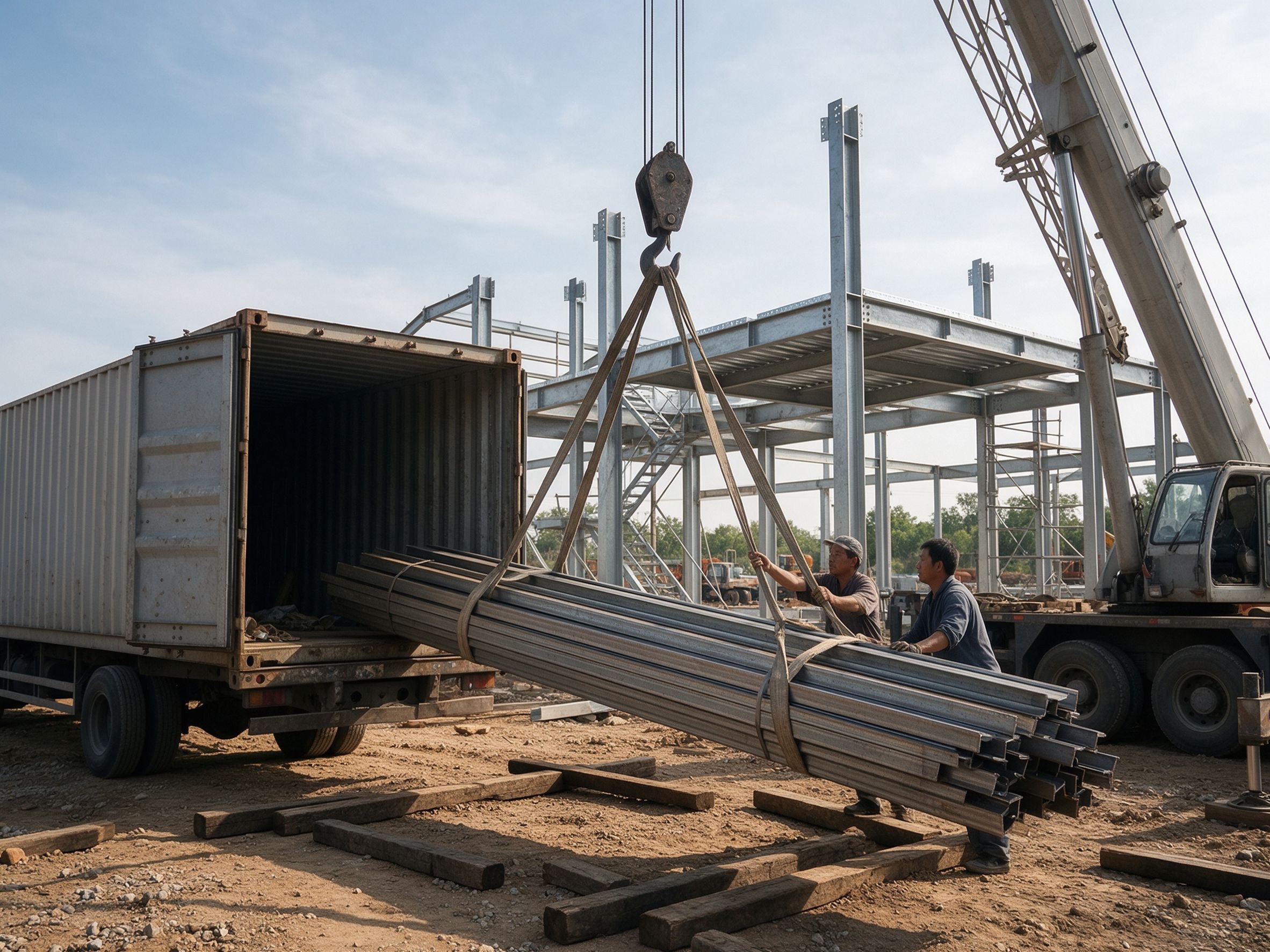
Importing the frame does not remove it from the IBS framework. The components are still factory-produced — the question is whether the documentation supports the claim.
| Concern | How it is normally handled |
|---|---|
| Components produced outside Malaysia | The prefabrication claim rests on the fabrication records; keep drawings, material certificates and inspection reports traceable to the shipped members |
| Product assessment | IMPACT assessment applies to the manufacturer and product; check whether the specific manufacturer appears on the relevant system list rather than assuming a category exists |
| Installation | Local erection is still local; installer competency and contractor registration sit with the Malaysian side |
| Project score | Calculated locally from the design, using the drawings the supplier provides |
For an imported building, the practical risk is documentation drift: the design submitted for scoring describes a wall build-up or floor system that the shipped package does not match. That mismatch surfaces at inspection, not at order.
Part 7: Responsibility line
| Task | Export supplier | Malaysian side |
|---|---|---|
| Design coordination and detailing | Yes — member design per the specified code, shop drawings | Confirms design basis and approves drawings |
| Fabrication and quality control | Yes | May witness or audit |
| Component list for IBS submission | Yes — element breakdown, dimensions, weights | Incorporates into the project submission |
| IBS score calculation and submission | No | Architect / designer, with engineer and QS |
| Contractor registration and permits | No | Registered contractor and local authority |
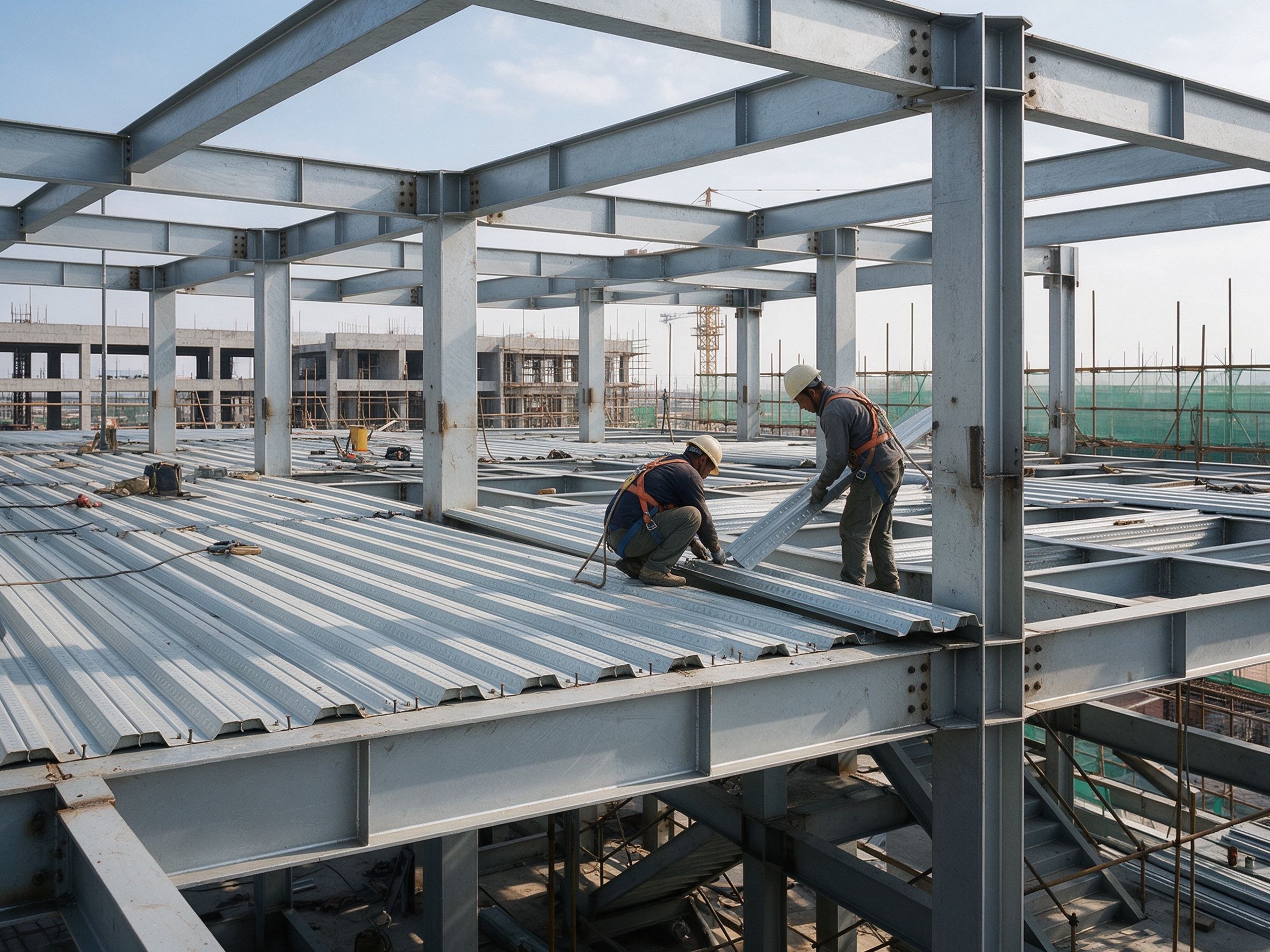
| Installation and installer competency | Technical guidance only | Local labour, supervised erection, trained installers where required |
| Authority submissions | Provides supporting documents on request | Submitting party |
The line is clean: the supplier proves the components; the project proves the score.
Part 8: Checklist before you issue the IBS question to a supplier
- Confirmed which IBS instrument the tender or authority actually requires.
- Confirmed the system family the building falls into (metal framing, and which sub-type).
- Element-by-element list of what will be prefabricated, agreed with the designer.
- Wall, floor and partition build-ups fixed before the score is calculated — not after.
- Asked the supplier for a component list with dimensions and weights.
- Asked for material certificates and inspection records traceable to shipped members.
- Asked whether the manufacturer appears on the relevant certified IBS manufacturer list.
- Confirmed who holds contractor registration for erection.
- Confirmed installer competency requirements for the specific components.
- Confirmed that the drawings submitted for scoring match the fabrication drawings.
Part 9: Common mistakes
| Mistake | Why it happens | Cost |
|---|---|---|
| Asking the fabricator for “the IBS score” | The term is used loosely in tenders | Weeks lost while the wrong party is chased |
| Treating IMPACT certification as a project score | Both are described as IBS certification | Submission rejected or returned for rework |
| Scoring the frame but not the walls | Steel scope is the only scope the supplier controls | Score falls short of the target |
| Changing cladding after scoring | Value engineering late in the process | Score has to be recalculated |
| Assuming import disqualifies prefabrication | Components are judged on production method, not origin | Unnecessary redesign |
| No installer records | Installation is treated as unskilled labour | Non-compliance at handover |
Part 10: FAQ
Question: Is a steel building automatically an IBS building? Answer: No. Steel framing is one recognised IBS system, and factory-fabricated members usually qualify as IBS components, but the project’s classification depends on how each element is built and documented. A steel frame with blockwork infill walls scores very differently from the same frame with prefabricated panels.
Question: Is the IBS score the same as IBS certification? Answer: No. Certification (IMPACT) assesses a manufacturer and its product against CIS:24. The score is a project-level calculation of how much of a specific building is delivered through IBS methods. One is held by a company; the other belongs to a design.
Question: Can a Chinese steel supplier provide the IBS score? Answer: No. The score requires the whole design — walls, floors, partitions, MEP — and is calculated by the project’s designer. A supplier can provide the element breakdown, component list, drawings and test records the calculation relies on.
Question: Does importing the frame affect the IBS score? Answer: The framework judges components by production method, not by country of origin. What affects the outcome is whether the imported package matches the design that was scored, and whether its records are traceable.
Question: What IBS score does a project need? Answer: The required figure depends on the project type and the policy in force at submission, and it is set by the authority or the client’s brief. Confirm the applicable threshold with the project’s architect or quantity surveyor rather than assuming a number.
Question: Does a higher IBS score reduce cost? Answer: Not automatically. Prefabrication shifts work from site to factory and can shorten site duration, but the net effect depends on transport, craneage, connection design and local labour rates. The score measures method, not price.
Question: What is IMPACT? Answer: The IBS Manufacturer & Product Assessment & Certification process, run against the Construction Industry Standard CIS:24, covering verification, validation, testing and certification. Certified manufacturers are listed by system family, including metal framing.
Part 11: Send the design, not the label
If a Malaysian project requires an IBS submission, send the drawings and the element list with the enquiry. We will return the component breakdown, connection details, material and inspection records, and the fabrication drawings that the score calculation needs — and we will say plainly which parts of the submission sit with the local designer, contractor and authority.
Send Project Requirements — Related reading: CIDB COA for imported steel structures covers the import approval that sits beside the IBS submission; how a steel building is fabricated explains what “factory-produced” means in practice; export documents lists the records that travel with the components.