CIDB COA for Imported Steel Structures: What to Prepare Before Shipment
A fabricated steel building entering Malaysia is a controlled construction product. The importer needs either a Product Certification or a Full Type Test Report in place before the container ships, then applies for a Certificate of Approval through CIDB's e-Permit system. Documents that arrive late cannot be fixed at the port.
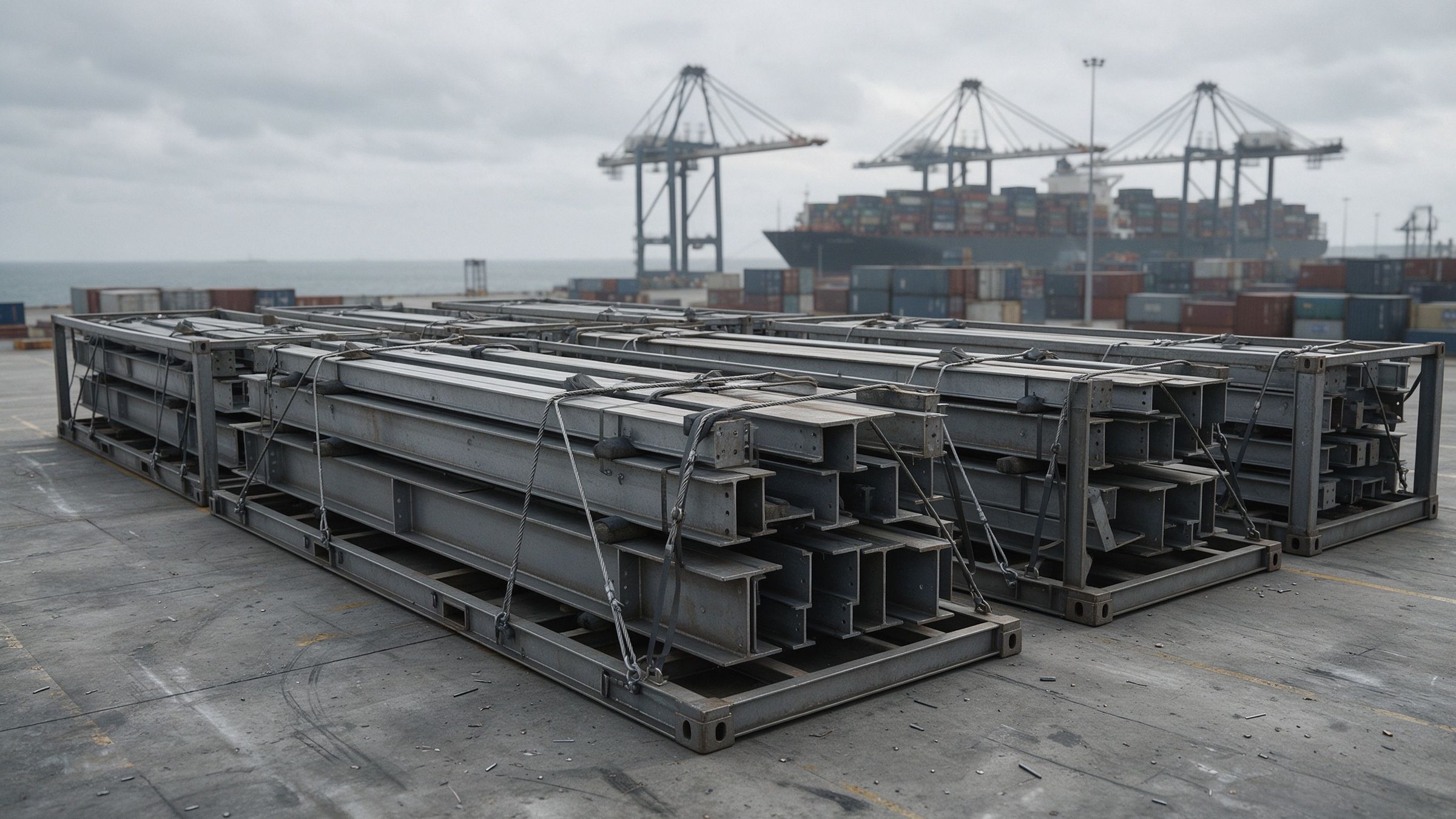
A fabricated steel building shipped to Malaysia is treated as a controlled construction product, not as generic cargo. Under the Fourth Schedule of CIDB Act 520 and the Customs (Prohibition on Import) Order, iron and steel products — including fabricated structures for buildings under HS 7308.90.99 — need a Certificate of Approval (COA) issued by CIDB before they can enter the country. The importer must hold either a Product Certification (PC) or a Full Type Test Report (FTTR) before the goods are shipped, apply for the COA through CIDB’s e-Permit system, and have the consignment verified at the point of entry. If the underlying certificate is missing when the container arrives, the COA application cannot be processed.
That is the whole rule in one paragraph. The difficulty is sequencing: the documents that make the COA possible are produced weeks earlier, by parties in two countries, and none of them can be recreated at the port.
This guide is written for Malaysian importers and for exporters shipping steel structures into Malaysia. It summarises the published CIDB procedure and does not replace it — the current procedure, product list and fees must be confirmed with CIDB before each shipment.
Part 1: What the rule actually covers
| Question | Answer as published by CIDB |
|---|---|
| Which law? | CIDB Act 520 (Amendment 2011), section 33C–33E, plus the Customs (Prohibition on Import) Order |
| Which products? | Construction products and materials listed in the Fourth Schedule |
| Which steel items? | Iron and steel headings, including plates, sections, bars, tubes, and structures and parts of structures |
| Is a fabricated building covered? | Yes — “fabricated structure for building” is listed under HS 7308.90.99, assessed against MS EN 10025-2 for raw materials |
| Who applies? | The importer (consignee) in Malaysia, through CIDB’s e-Permit system |
| What happens without it? | Dealing with uncertified Fourth Schedule materials is an offence; penalties are set out in the Act |
Two consequences follow. First, the product scope is defined by tariff heading and standard, not by what the supplier calls the goods. A portal frame dispatched as “steel components” is still a fabricated structure for building if that is how it is declared and used. Second, the obligation sits with the importer, not with the overseas fabricator — which is why the document flow has to be agreed contractually, before production.
Part 2: Two routes — PC or FTTR
CIDB publishes two routes to a COA. They differ in duration, cost structure and who carries the testing burden.
| Product Certification (PC) | Full Type Test Report (FTTR) | |
|---|---|---|
| Useful for | Repeated shipments of the same product family | One-off or occasional consignments |
| Who issues | A certification body accredited to ISO/IEC 17065, approved by CIDB (local or foreign) | A third-party inspection body accredited to ISO/IEC 17020, plus a laboratory accredited to ISO/IEC 17025 |
| Where testing happens | Factory verification and market sampling under the CB’s system | Sampling and full type test overseas, before shipment |
| CIDB role | Approves the CB, may audit the factory, issues Letter of Standard Compliance or PPS | Approves the inspection body and laboratory, receives the sampling report, then issues PPSi |
| Then | COA per consignment | COA per consignment |
| Main risk | Certificate scope does not match the actual product or grade shipped | Sampling and testing done too late, or against the wrong standard |
For a buyer ordering a single building, FTTR is usually the practical route. For a supplier shipping the same product family repeatedly to Malaysia, PC is the lower-cost route over time — but only if the certificate scope genuinely covers the members, grades and coatings being shipped.
A detail that catches people: iron and steel consignments below 250 mt may, under MITI’s published flexibility, be tested after arrival. That is a narrow exception, not a planning assumption. It does not remove the need to confirm the route with CIDB in advance.
Part 3: What “before shipment” means
The published rule is tied to the bill of lading date: from 30 April 2014, a product that arrives without a PC or FTTR will not have its COA application processed. In practice this creates a hard calendar:
- Confirm HS classification and the applicable standard with the importer and their customs broker.
- Agree which route applies — PC or FTTR — and who appoints the certification or inspection body.
- Complete sampling and testing, or confirm the PC scope, before production is packed for shipment.
- Issue the mill certificates and test reports with the consignment.
- Ship. The documents travel with the goods, not after them.
- The importer applies for the COA in e-Permit and the consignment is verified at the point of entry.
Step 3 is where projects fail. If sampling is scheduled after the containers are booked, the shipment either waits — demurrage and storage start — or sails without the certificate and cannot be cleared.
Part 4: Mill certificates are part of the product, not paperwork
Iron and steel consignments must be accompanied by mill certificates, and CIDB specifies how they are accepted:
| Form | What is required |
|---|---|
| Original mill certificate | Factories holding a PC must submit the mill certificate format to CIDB for confirmation, once per PC |
| Copy of mill certificate | Must be confirmed by a third-party inspection body accredited to ISO/IEC 17020, or a certification body accredited to ISO/IEC 17065 |
| Copy, alternative | A self-declaration letter signed by the chief executive, managing director, director or equivalent |
| Copy, project route | For oil and gas projects, confirmation from the client’s or end user’s QA/QC manager |
CIDB also reserves the right to order critical tests if it suspects the mill certificate results are not genuine. That matters for fabricated structures: the mill certificate proves the material, not the fabrication. The frame’s compliance rests on the steel grades being traceable to certificates that match what was actually shipped — heat numbers, grades, thicknesses and coating masses.
Part 5: Verification at the port and the three-day clock
The COA is issued per consignment, after physical verification.
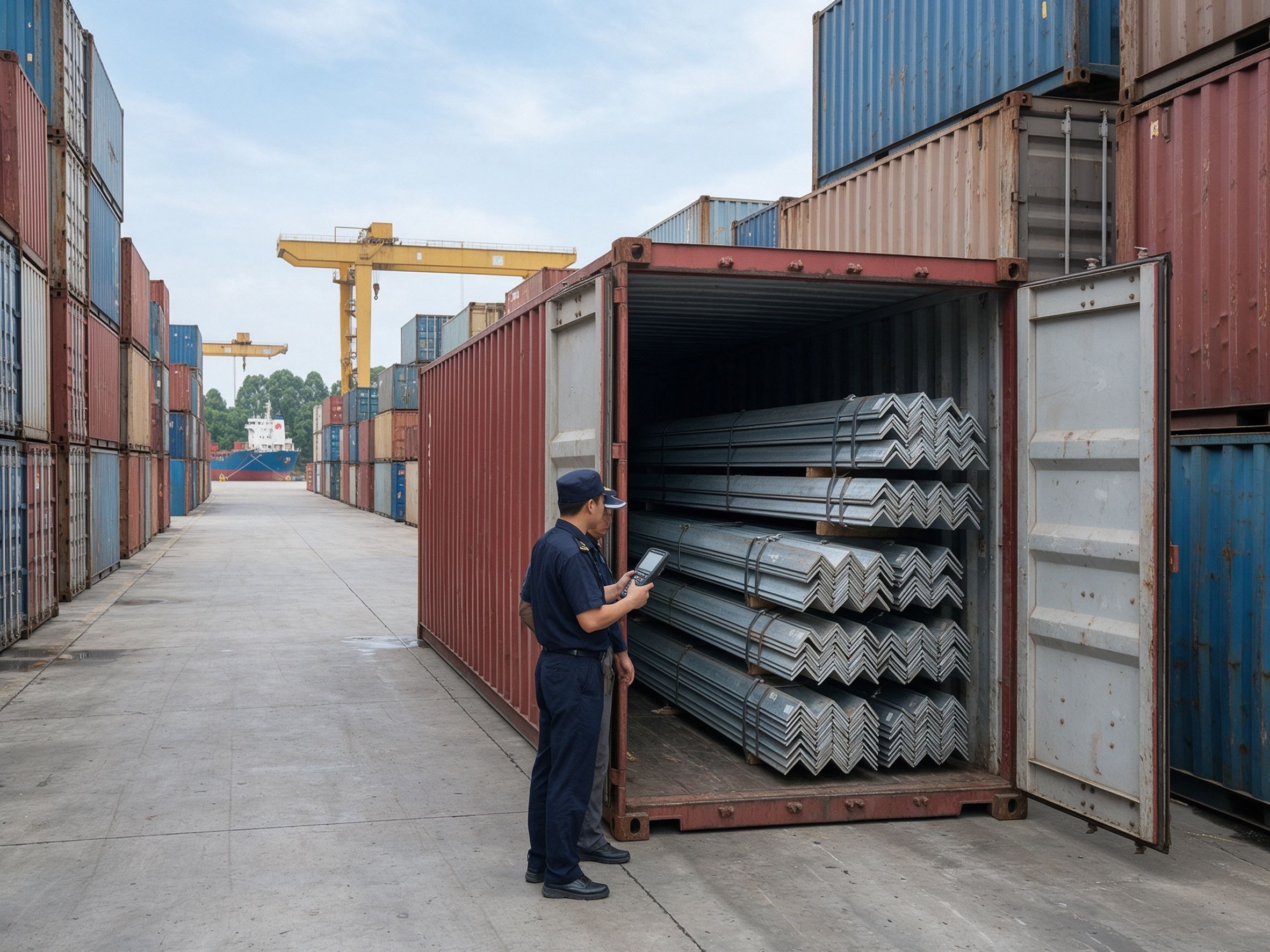
- Verification takes place at the point of entry: ports, CIQ complexes, airports and bonded warehouses.
- The importer applies online through e-Permit with the supporting documents.
- CIDB’s published service level is approval within three working days from the date of verification, with the COA printed online by the applicant.
Three working days is the CIDB processing window, not the total clearance time. Customs clearance, haulage, port storage and any inspection delays sit outside it. Projects that plan the vessel arrival against the COA date rather than against the verification date usually end up paying storage.
Part 6: Four things with similar names — and different jobs
| Instrument | Who it applies to | What it does | What it does not do |
|---|---|---|---|
| COA (Certificate of Approval) | Importers of listed construction products | Allows a specific consignment to be imported and cleared | Does not certify the building design or its erection |
| PPS / PPSi (Standard Compliance Certificate) | Local products / imported products | Confirms the product meets the Malaysian Standard | Does not replace a project’s structural approval |
| IBS certification | Manufacturers and products of industrialised building systems | Assesses and registers IBS manufacturers and products | Does not by itself satisfy the COA requirement for a consignment |
| Contractor registration | Construction contractors working in Malaysia | Registers the contractor and sets the grade of work it may undertake | Does not certify any product |
Buyers frequently ask for “the CIDB certificate” without saying which one. On a Malaysian project you may need all four, held by four different parties. Clarifying which one is being requested — in writing, before the contract — avoids the situation where the supplier sends an IBS certificate and the customs broker is waiting for a COA.
Part 7: Where the responsibility sits
| Task | Exporter / fabricator | Malaysian importer | Local engineer / contractor |
|---|---|---|---|
| HS classification and standard mapping | Provides product data, drawings, material list | Confirms declaration with customs broker | — |
| PC or FTTR route | Supports sampling, provides test pieces and factory access | Appoints the CB or inspection body, holds the certificate | — |
| Mill certificates and test reports | Issues, with heat numbers traceable to shipped members | Submits with the COA application | — |
| COA application | — | Applies in e-Permit, pays fees, attends verification | — |
| Port verification | Answers technical queries | Attends, resolves mismatches | — |
| Structural approval, permits, erection | Technical guidance only | Appoints | Registered engineer, local authority submissions |
The line is simple: the exporter makes the product and its evidence; the importer holds the approval and clears the goods; the local engineer answers for the building.
Part 8: Common failure points
| Failure | Why it happens | Prevented by |
|---|---|---|
| COA scope does not match the shipped product | Certificate covers plates or sections, not the fabricated frame; or a different grade | Matching PC scope to the actual member list before production |
| Mill certificate does not match the heat numbers | Material substituted during fabrication without updating documents | Marking discipline and a material traceability list |
| Testing done after arrival | Sampling scheduled late, or the 250 mt exception assumed to apply | Booking sampling before packing |
| Consignment split across vessels | Documents issued per shipment but goods arrive in parts | Agreeing how partial shipments are declared |
| Certificate expires mid-project | PC validity not checked against the delivery schedule | Checking validity against the full shipment plan |
| Invoice description differs from the COA | Commercial invoice written for payment terms, not for customs | Aligning invoice, packing list and COA descriptions |
| Coating or grade outside the standard | Specified to a house standard instead of the MS referenced by CIDB | Confirming the applicable MS at enquiry stage |
None of these are customs problems in origin. They are documentation and specification problems that surface at customs.
Part 9: Checklist before the container is booked
- HS heading confirmed for the fabricated structure, not only for the raw steel.
- Applicable Malaysian Standard identified for each product family.
- Route chosen: PC (long-term) or FTTR (per consignment).
- Certification body or inspection body appointed and approved by CIDB.
- Sampling and testing completed before packing.
- Mill certificates issued, original or acceptably confirmed copy.
- Heat numbers traceable from mill certificate to marked members.
- Invoice, packing list and certificate descriptions aligned.
- COA applicant (importer) identified, with e-Permit access confirmed.
- Vessel arrival planned against verification, not against the COA date.
Part 10: What to send with the enquiry
If the destination is Malaysia, the enquiry should state it. What helps most at quotation stage:
- Project location and whether the buyer is the importer of record.
- Building type, approximate tonnage and member families.
- Steel grades and coating specification, if already fixed.
- Whether a PC already exists for the product family, and its scope.
- Whether the project is let under a contractor registration grade that restricts who can erect.
None of this changes the steel. All of it changes the document set, and therefore the schedule.
Part 11: FAQ
Question: Does a fabricated steel building need a CIDB COA to enter Malaysia? If it falls within the Fourth Schedule product list, yes. CIDB’s published iron and steel guidebook lists “fabricated structure for building” under HS 7308.90.99, assessed against MS EN 10025-2 for raw materials. The importer should confirm the classification for the actual consignment.
Question: Can the Chinese supplier apply for the COA? No. The COA is applied for by the importer in Malaysia through CIDB’s e-Permit system. The supplier’s role is to provide the PC or FTTR evidence, mill certificates and technical data that the application depends on.
Question: PC or FTTR — which is faster? FTTR is normally faster to arrange for a single project because it is consignment-based; PC is a longer set-up but lower cost per shipment over a series. The right choice depends on how many shipments are planned and whether a valid PC already covers the product.
Question: Is a mill certificate enough? No. It proves the steel material, not the fabricated product. The consignment still needs the PC or FTTR route and a COA; the mill certificate is a required supporting document.
Question: How long does the COA take? CIDB publishes three working days from verification at the point of entry. Time before verification — testing, document review, vessel arrival — is additional.
Question: What if the container arrives without the certificate? Under the published rule, the COA application will not be processed, and the importer bears the consequences. This is why sampling and certification have to be scheduled before shipment, not after.
Question: Does IBS certification replace the COA? No. IBS certification assesses and registers industrialised building system manufacturers and products; the COA is a consignment-level import approval. They are separate instruments and may both be relevant.
Shipping to Malaysia
If your project is in Malaysia, say so at enquiry stage and send the member list, steel grades and coating specification with the drawings. We will prepare the fabrication documentation, mill certificates and test evidence that the importer’s application depends on, and state clearly which steps belong to the importer, the customs broker and the local engineer.
Send project drawings — related reading: the export document set that travels with a steel shipment, how mill test certificates are read, and how HS classification is decided for steel structures.