Who Can Erect Your Steel Building in Malaysia? Registration Is Not Certification
A supplier's product certificate and a contractor's CIDB registration are two different documents with two different holders. Buyers who treat them as interchangeable discover the gap when the site is already mobilised.
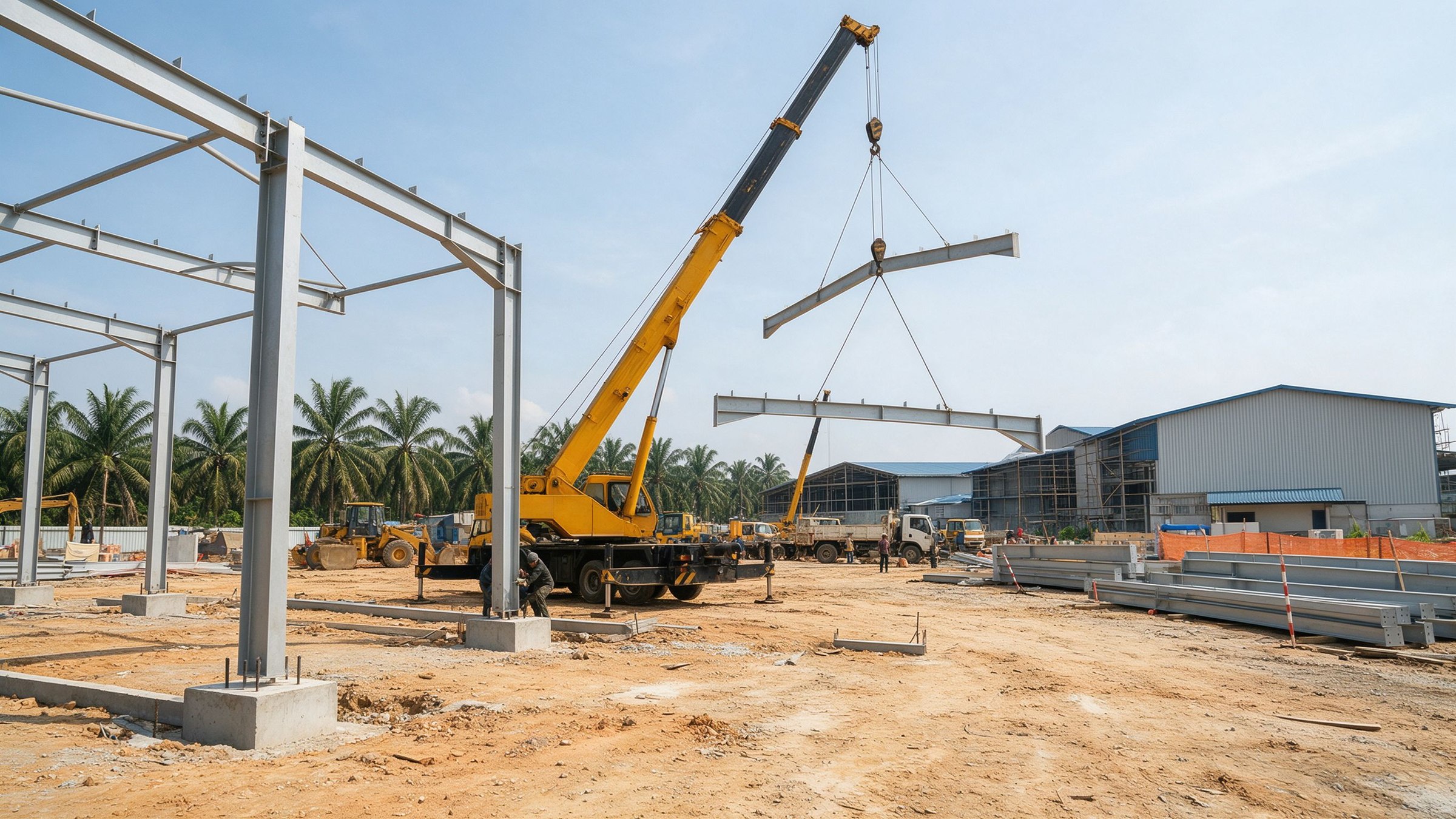
Anyone who carries out construction work in Malaysia must be registered with CIDB under Section 25 of Act 520 (Amendment 2011), unless exempted under Section 40(1). Registration is held by the contractor doing the work, in a specific category and up to a specific project value. It says nothing about whether the steel in your building complies with Malaysian standards — that is a separate check, held by the product and its manufacturer. A foreign fabricator cannot lend its certificate to the erecting contractor, and a contractor’s registration does not validate imported steel.
For an imported steel building, three checks therefore run in parallel: who may erect it, what the components must comply with, and which approvals the project needs. Buyers who collapse them into one “CIDB certificate” usually find the gap after the crane is on site.
Part 1: Three checks that are often mistaken for one
| Check | Held by | What it establishes | What it cannot do |
|---|---|---|---|
| Contractor registration | The company that will build | The holder may carry out construction work in a stated category, up to the value ceiling of its grade | Does not certify steel, cladding or connections |
| Product compliance and certification | Manufacturer and product | Components meet MS or another standard approved in Malaysia, where certification is required | Does not give anyone the right to erect |
| Project approvals | Project owner and its registered professionals | The design and the works are approved by the relevant authority | Does not verify either of the above |
A tender document that asks for “CIDB certification” without specifying which of the three usually means the first one — but the party expected to produce it is often wrong.
Part 2: What contractor registration actually authorises
Registration is not a general licence to build anything anywhere. Its limits are explicit in the registration conditions:
- A contractor cannot undertake work that exceeds the value of construction work allowed under its registration grade.
- A contractor cannot carry out work outside its registered category.
- The certificate is not transferable.
- A contractor may not tender or carry out work after the certificate expires until it is renewed.
- The registration number must be displayed on a signboard at each construction site.
Two practical consequences follow. First, a contractor qualified for small works is not qualified for your project simply because it has done steel buildings before. Second, a group that holds one registered entity cannot assign the contract to a sister company without registration.
Part 3: Local and foreign contractors are registered differently
| Local contractor (PPK) | Foreign contractor | |
|---|---|---|
| Scope | Categories and grades, renewable | Only the specific project named in the certificate |
| Validity | Until expiry, subject to renewal | Until the project completion date on the certificate |
| Tendering | May tender within its category and grade | May not use the certificate to tender for other work |
| Extension | Renewal process | Must apply before the end of the period, with supporting documents |
| Site signboard | Registration number required | Registration number required |
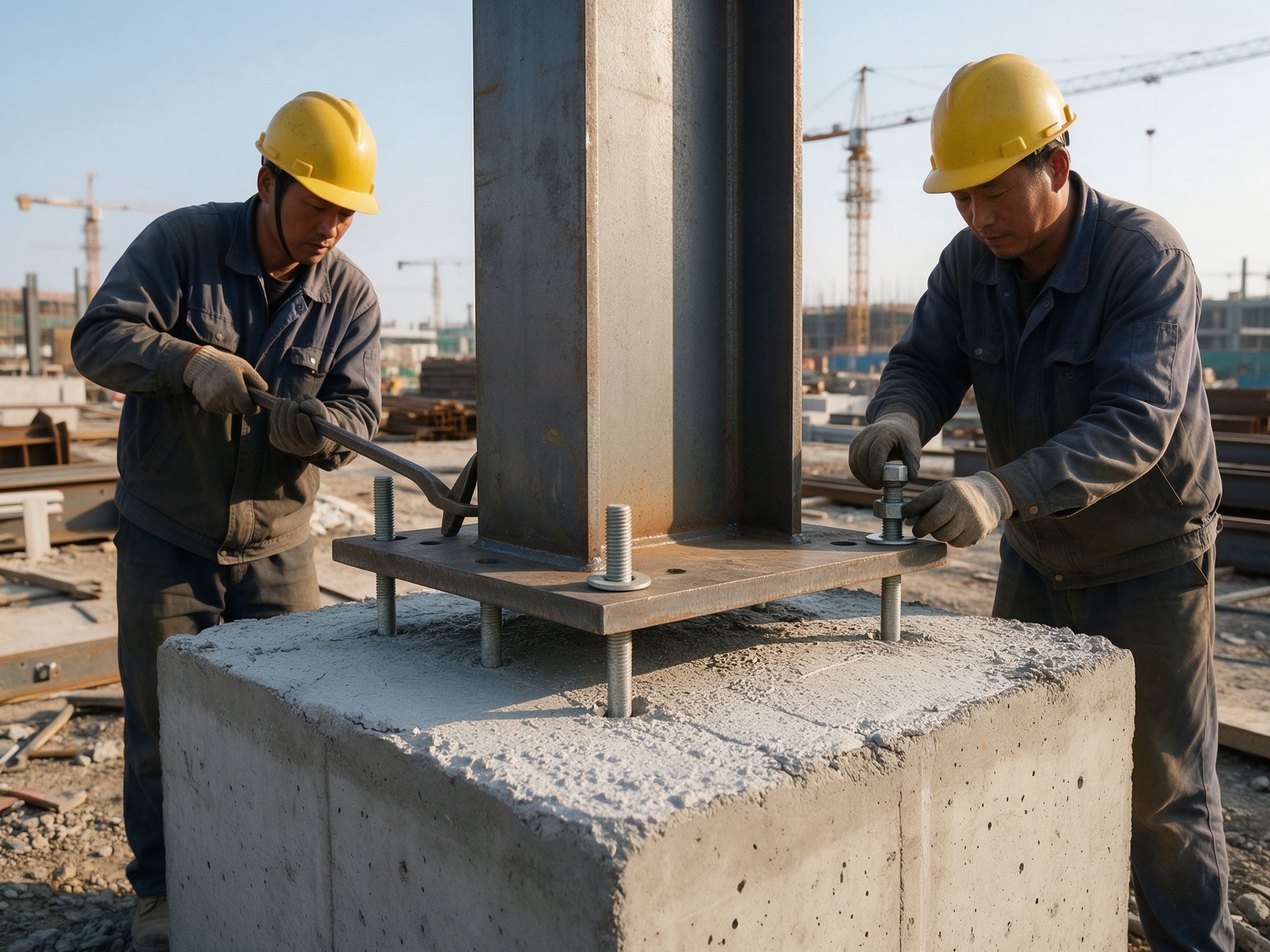
For an imported building, this matters when the overseas supplier wants to send its own erection team. That team cannot work under the supplier’s home-country credentials; the Malaysian side needs a registered contractor, and where a foreign contractor is registered for a specific project, its certificate is tied to that project only.
Part 4: The obligations that fall on the registered contractor
Registration comes with duties that a buyer can hold the contractor to:
- Notify CIDB of the awarded project within 14 days of award.
- Appoint skilled construction workers and site supervisors accredited and certified by the Board.
- Ensure every worker on site holds a valid Construction Personnel Card.
- Ensure products and materials used are based on MS or another standard approved in Malaysia, and certified by the Board where certification applies.
- Display the registration certificate at the place of business and the registration number at the site.
- Comply with the conditions attached to the grade and category.
The fourth item is where imported steel is actually tested. The contractor is responsible for using compliant, certified products — which means the buyer’s specification and the supplier’s documentation have to line up before the first bolt is torqued.
Part 5: Where the steel supplier sits
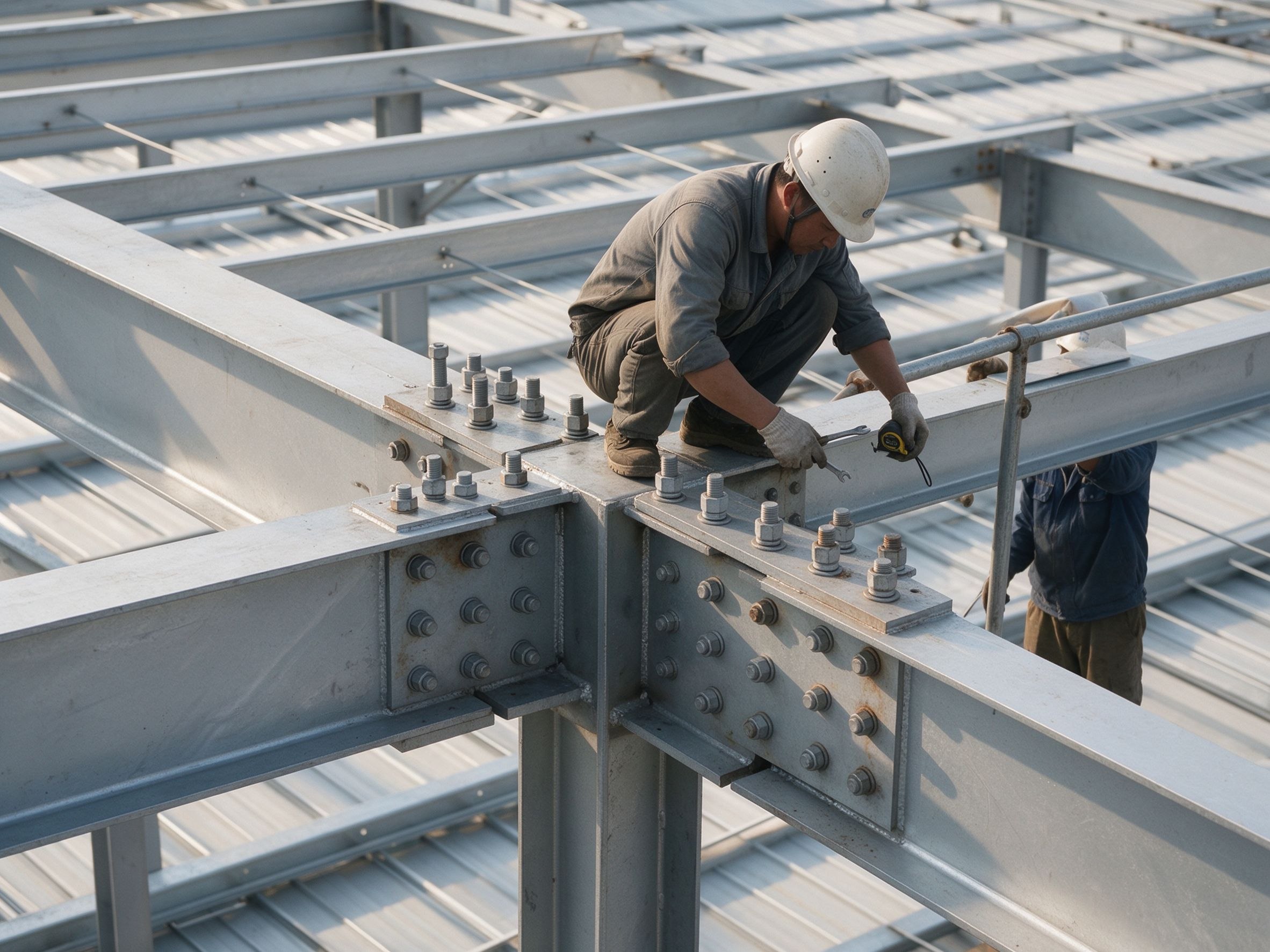
A fabricator’s role in this framework is to supply evidence, not registration.
| Supplier provides | Supplier does not provide |
|---|---|
| Mill certificates and traceability to shipped members | Contractor registration |
| Weld and coating inspection records | The right to erect on site |
| Product test reports referenced by the specification | Project approvals |
| Erection drawings, marking plan, connection details | Personnel cards or installer accreditation |
| Installation technical guidance | Local skilled labour |
If a tender expects the steel supplier to “hold CIDB contractor registration”, the requirement is aimed at the wrong party. The correct response is to name the registered contractor who will erect, and to attach the supplier’s documentation package alongside.
Part 6: What to verify before awarding the erection contract
- The contractor’s certificate is current, not expired or suspended.
- The registered category covers steel structure erection, not only general building works.
- The registered grade value ceiling is above the contract sum.
- The certificate belongs to the entity that will sign the contract and invoice.
- For a foreign contractor, the certificate names this project specifically.
- The contractor confirms it will notify CIDB within 14 days of award.
- Site supervisors and skilled workers named in the method statement hold current accreditation.
- The contractor accepts responsibility for Construction Personnel Cards for all site workers.
- The contractor confirms how it will verify that imported components meet the specified standard.
- The documentation package from the supplier reaches the contractor before mobilisation, not after.
Part 7: Documents to request from each party
| Document | From | Why it is needed |
|---|---|---|
| Contractor registration certificate (with grade and category) | Erecting contractor | Confirms authority to build and value ceiling |
| Company registration matching the contracting entity | Erecting contractor | Prevents contracting an unregistered sister company |
| Supervisor and skilled worker accreditation records | Erecting contractor | Required by the registration conditions |
| Method statement and erection sequence | Erecting contractor | Shows how components will be handled and temporarily braced |
| Material certificates and test reports | Steel supplier | Supports the contractor’s product compliance duty |
| Marking plan and erection drawings | Steel supplier | Ties each shipped member to the design |
| Installation guidance and connection details | Steel supplier | Reduces site rework and disputes |
Part 8: Common mistakes
| Mistake | What it looks like on site | Consequence |
|---|---|---|
| Treating product certification as erection authority | Supplier’s certificate filed as “CIDB approval” | Work starts without a properly registered contractor |
| Awarding above the contractor’s grade | Contract sum exceeds the registered ceiling | Registration condition breached |
| Using a sister company to sign | Certificate held by a different entity | Contract and registration do not match |
| Foreign crew working under home credentials | No Malaysian registration for the project | Site stopped, mobilisation cost lost |
| No personnel cards | Workers without valid cards on site | Compliance failure at inspection |
| Imported steel with no traceability | Certificates not matching shipped members | Product compliance cannot be demonstrated |
Part 9: Responsibility boundary for an imported project
| Task | Export supplier | Malaysian side |
|---|---|---|
| Engineering coordination and detailing | Yes | Confirms design basis and approves |
| Fabrication, quality control, marking, packing, container loading | Yes | May witness or audit |
| Export coordination and shipping documents | Yes | Handles clearance and inland transport |
| Contractor registration and site establishment | No | Registered contractor |
| Skilled labour, erection, temporary bracing | Technical guidance only | Registered contractor and its accredited personnel |
| Product compliance evidence | Material and test records | Contractor confirms compliance with the specified standard |
| Project approvals and authority submissions | Supporting documents on request | Owner and its registered professionals |
Part 10: FAQ
Question: Does a steel supplier need CIDB contractor registration to sell into Malaysia? Answer: No. Registration is required of the party carrying out construction work in Malaysia. The supplier’s obligation is to provide components and documentation that meet the specified standard. The erecting contractor holds the registration.
Question: Can I use my supplier’s certificate to satisfy the contractor requirement? Answer: No. Certificates are not transferable and are tied to the registered entity, its category and its grade. A supplier’s product certificate and a contractor’s registration are different instruments.
Question: What happens if the contract value exceeds the contractor’s grade? Answer: The contractor cannot undertake work above the value allowed under its registration grade, so the registration condition would be breached. Split the scope, or engage a contractor whose grade covers the contract sum.
Question: Can a foreign contractor erect my building in Malaysia? Answer: Only under a foreign contractor registration tied to that specific project. The certificate does not allow tendering or carrying out other work, and any extension has to be applied for before the stated period ends.
Question: Who is responsible for checking that imported steel meets Malaysian standards? Answer: The registered contractor must ensure products and materials are based on MS or another approved standard, certified where required. In practice the supplier’s mill certificates, test reports and inspection records are the evidence the contractor relies on.
Question: Does the contractor have to report the project to CIDB? Answer: Yes. Information about the awarded construction work must be submitted within 14 days after the award, as a condition of registration.
Question: Is a contractor’s registration the same as the project’s IBS score? Answer: No. Registration authorises the company to build; the IBS score measures how much of the design is delivered through prefabricated methods. Both can apply to the same project without overlapping.
Part 11: Check the holder, not the letterhead
Before awarding erection, ask for the certificate, read the category and the grade, and match the entity name to the company that will sign. Then send the supplier’s documentation package to that contractor, so the product-compliance duty can be discharged with real records rather than a promise.
Send Project Requirements — Related reading: CIDB COA for imported steel structures covers the import approval route; the IBS score explains the project-side calculation; the installation guide sets out the erection sequence the contractor’s method statement should follow.