
Steel Storage Silos: Types, Design Inputs and Buying Guide
A steel storage silo is a cylindrical bulk-storage structure that holds granular or powdery materials such as cement, fly ash, grain, feed, ore and plastic pellets. Silo design is driven by stored material properties, capacity, discharge method and local loads — wall thickness, hopper angle and foundation all depend on these inputs, not on a universal size table.
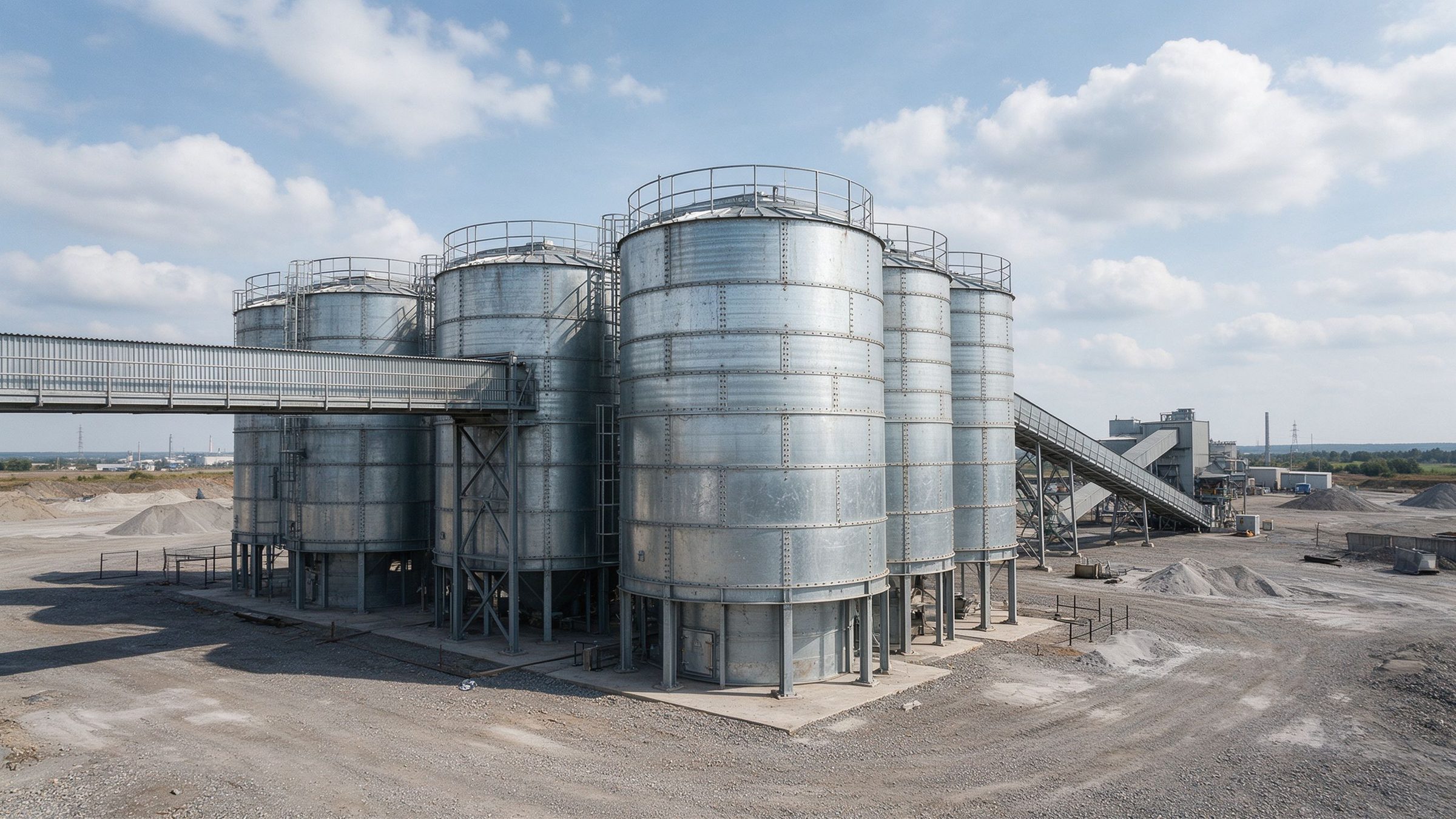
A steel storage silo is a cylindrical bulk-storage structure that holds granular or powdery materials such as cement, fly ash, grain, feed, ore and plastic pellets. Silo design is driven by stored material properties, capacity, discharge method and local loads — wall thickness, hopper angle and foundation all depend on these inputs, not on a universal size table. Bolted corrugated steel silos are the most common export option because they ship flat and assemble on site.
This guide covers the main silo types, the design inputs a fabricator needs, and what buyers should specify before requesting a quotation.
What a steel storage silo is and when to choose one
A steel silo stores bulk solids in large volume at low unit cost. Compared with concrete silos, bolted steel silos are lighter, faster to erect, easier to relocate and better suited to export because the panels ship knocked down. They are used across grain terminals, cement plants, mining sites, feed mills, ports and chemical facilities.
Choose a steel silo when you need sealed, weather-protected storage with reliable fill and discharge, when site erection time matters, or when the structure must be shipped across borders in containers. Choose a concrete silo when very large single-cell capacity, extreme fire exposure or a permanent monolithic structure is required and erection time on site is not a constraint.
Bolted steel silo vs welded steel silo
| Aspect | Bolted corrugated silo | Welded steel silo |
|---|---|---|
| Typical use | Grain, feed, cement, ore — most exported projects | High-pressure or large single-cell storage, refineries, terminals |
| Transport | Ships flat as panels, container-friendly | Usually transported as larger shop-built sections |
| Site erection | Bolted assembly with crane, shorter on-site works | More site welding and quality control |
| Wall configuration | Corrugated stave panels with bolted lapped joints | Smooth welded plate, can be designed as pressure vessel if required |
| Common diameter range | Typically small to medium diameters | Small to very large, pressure-rated designs possible |
| Suitability for export | High — knock-down delivery | Lower unless shop-split carefully |
There is no universal rule that one type is “better”. The right choice depends on the stored material, discharge pressure, local erection capability and shipping method. For most import projects a bolted corrugated silo is the practical default, and the fabricator should confirm the bolting schedule and assembly sequence in the shop drawings.
Design inputs a fabricator needs before quotation
Silo dimensions and plate thickness cannot be estimated from capacity alone. The following inputs drive the design:
- Stored material properties: bulk density, angle of repose / internal friction angle, moisture content, abrasiveness, corrosiveness and temperature. Cement behaves differently from grain or ore.
- Capacity and geometry: usable volume, diameter, wall height, and whether the silo is flat-bottomed or hopper-bottomed.
- Discharge method: hopper angle, outlet size, discharge device (slide gate, screw conveyor, aeration, vibrator) and flow pattern (mass flow vs funnel flow).
- Loads and local code: wind, seismic, snow, internal filling pressures, eccentric discharge effects and the design code applicable at the project site.
- Accessories: roof hatch, level indicators, vent, safety ladders, access platforms, catwalks, safety cage and lightning protection.
- Foundation and civil input: ring beam or slab arrangement, anchor bolt layout, and the allowable soil bearing pressure provided by the local engineer.
The fabricator’s engineering team uses these inputs to produce the silo calculation, general arrangement, shop drawings and anchor bolt plan. If any input is missing, the correct answer is to ask for it — not to guess a wall thickness.
Flat-bottom silo vs hopper-bottom silo
| Aspect | Flat-bottom silo | Hopper-bottom silo |
|---|---|---|
| Discharge | Requires a sweep auger or separate reclaim equipment | Material discharges by gravity through the hopper |
| Typical use | Very large grain or ore storage, temporary stockpiles | Cement, fly ash, feed, plastic pellets — full discharge needed |
| Structural detail | Simpler walls, discharge handled by equipment | Conical or wedge hopper adds steel and fabrication detail |
| Clean-out | May retain residual material without mechanical aids | Gravity clean-out when hopper angle is correctly specified |
| Decision driver | Lowest cost per stored tonne at large scale | Reliable full discharge of free-flowing material |
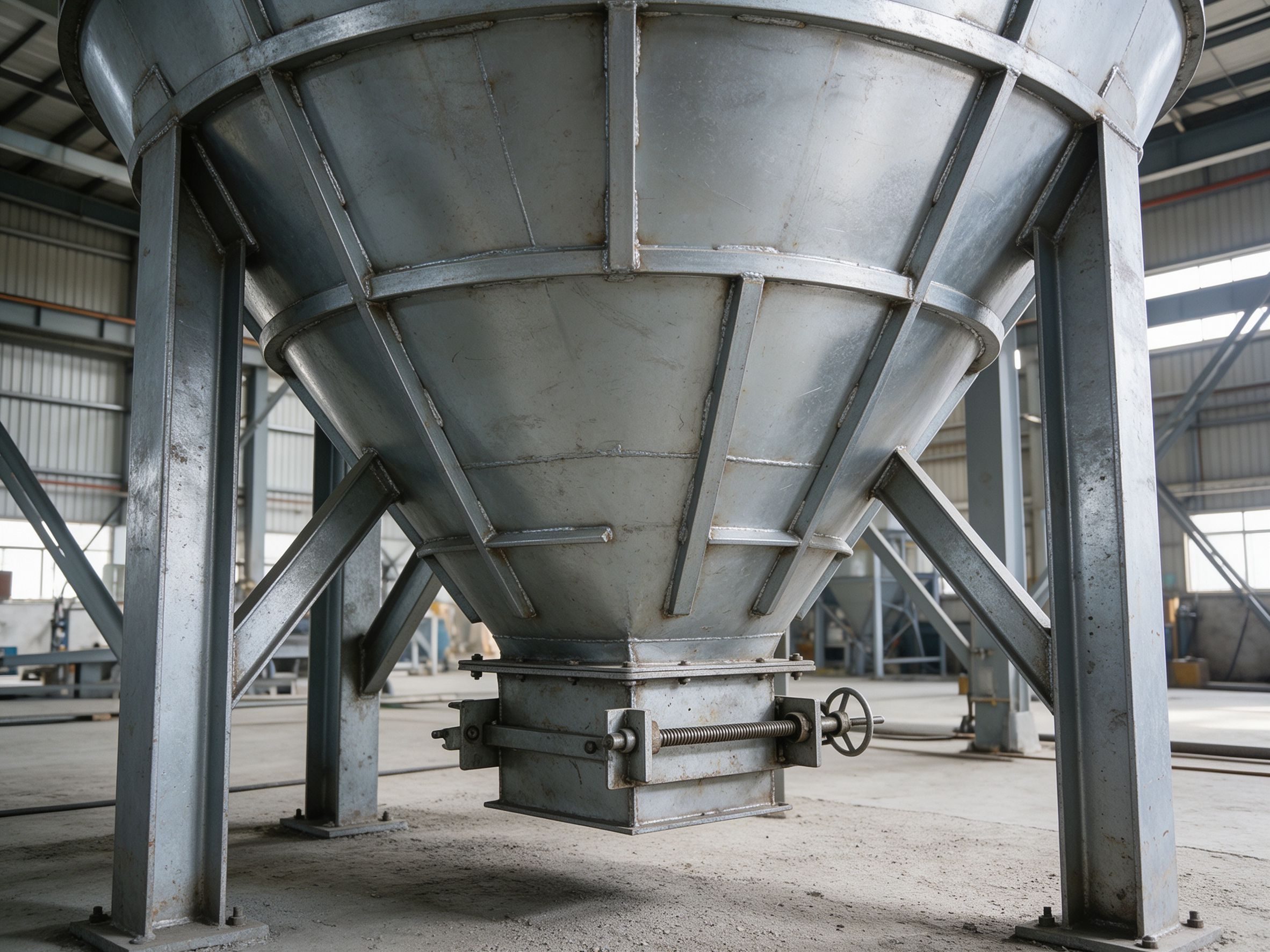
The hopper angle is a real engineering input: it must suit the stored material’s flow properties. A flat-bottom silo with a sweep auger can be the right commercial choice for large volumes; a hopper-bottom silo is usually the right choice when every tonne must discharge reliably.
What buyers should prepare
- Define the stored material and its properties (bulk density, angle of repose, moisture, temperature)
- State the required usable capacity and available site footprint
- Choose flat-bottom or hopper-bottom and the discharge device you intend to use
- Provide wind, seismic and snow load data or the local design code
- Confirm the number of silos, silo-to-silo spacing and any interconnecting structures
- List accessories: roof hatch, vents, level indicators, ladders, platforms, lightning protection
- Confirm foundation responsibility: local civil engineer for the ring beam and soil data
- Confirm site erection capability: crane availability and local labour for bolted assembly
- Specify delivery mode: knocked down for container shipping, or pre-assembled sections
- Send project drawings or a layout sketch to get an accurate budget
Responsibility boundary for overseas silo projects
ZhongSai Steel Structure provides: engineering coordination and detailing, fabrication and QC, marking, packing and container loading, export coordination, and installation technical guidance for the bolted assembly sequence. See our steel building solutions and export and delivery capabilities for the full scope.
The local party is responsible for: permits and approval from the registered local engineer, foundations and civil works (ring beam, anchor bolts cast-in), local labour and crane for physical erection, authority submissions, and any on-site changes to the foundation after fabrication has started.
This split prevents the most common failure mode on exported silo projects: fabrication completed to a foundation drawing that the site later changes.
Common mistakes to avoid
- Guessing wall thickness from capacity alone — plate and stiffening depend on stored material properties and local loads.
- Wrong hopper angle for the material — a hopper that is too shallow for the stored material causes bridging and blocked discharge.
- Missing accessories in the quotation — ladders, platforms, vents and level indicators are frequently added after ordering, which delays delivery.
- Ignoring eccentric discharge — one-sided draw-down can create asymmetric wall loads and local distortion.
- Changing the foundation after fabrication starts — anchor bolt layout and ring beam geometry must be frozen before shop drawings are released.
- No erection plan for bolted silos — the assembly sequence and torque schedule are as important as the panels themselves.
FAQ
What is a steel storage silo? A steel storage silo is a cylindrical structure made from steel panels or plate that stores granular or powdery bulk materials such as grain, cement, fly ash, ore, feed and plastic pellets, with sealed walls, a roof, and a controlled fill and discharge system.
Bolted silo or welded silo — which should I choose? Choose a bolted corrugated silo for most exported projects because it ships flat, assembles on site and is easier to relocate. Choose a welded silo when large single-cell capacity or pressure-rated storage is required and site welding capacity is available.
What information is needed to quote a steel silo? The stored material and its properties, usable capacity, flat-bottom or hopper-bottom choice, discharge method, site wind/seismic/snow loads or local code, accessories, foundation arrangement and delivery mode.
Can steel silos be shipped in containers? Yes. Bolted silo panels are designed to ship knocked down, which is why they are the common export choice. Welded silos are usually transported as larger shop-built sections or split for over-dimension shipping.
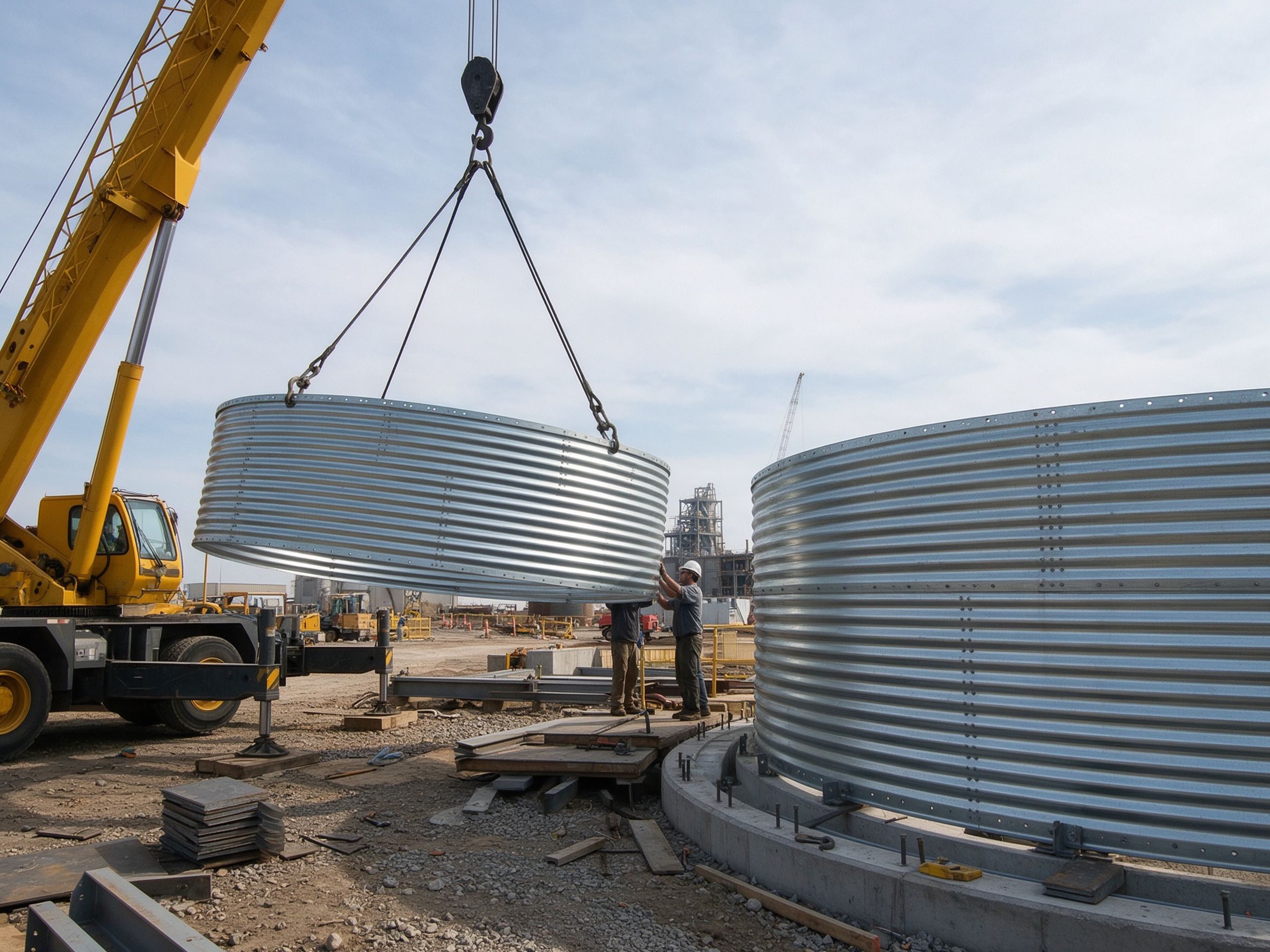
How is a bolted steel silo erected on site? Panels are lifted by crane and bolted ring by ring following the shop-drawn assembly sequence, with the bolting torque schedule applied; access platforms and the roof are installed as the final stage, guided by the fabricator’s erection manual.
What foundation does a steel silo need? Typically a ring beam or slab with cast-in anchor bolts sized for the silo’s weight, stored material and overturning from wind and seismic loads. The local civil engineer provides soil bearing data and foundation approval.
What accessories should I include in the purchase? Roof hatch, vent, level indicators, safety ladder with cage, access platforms and catwalks, roof walkway where needed, and lightning protection. Confirm these in the quotation to avoid post-order additions.
Does ZhongSai supply the foundation design? No. The silo supplier provides the anchor bolt plan, base reactions and assembly guidance; the foundation and civil works are designed and approved by the local registered engineer, as required by local codes. For more on foundation coordination, see our steel structure foundation guide.
ZhongSai practical perspective
Our manufacturing bases produce bolted steel silos and associated structures for bulk-storage projects across multiple export markets. With 20 years in steel structures and 15 years in export, we treat silo projects as a coordination exercise: material data in, engineering and detailing, fabrication and QC, then marking, packing and container loading that matches the on-site assembly sequence. Send project drawings early — the silo is only as accurate as the material properties and site loads you provide.
How silo accessories and safety details are specified
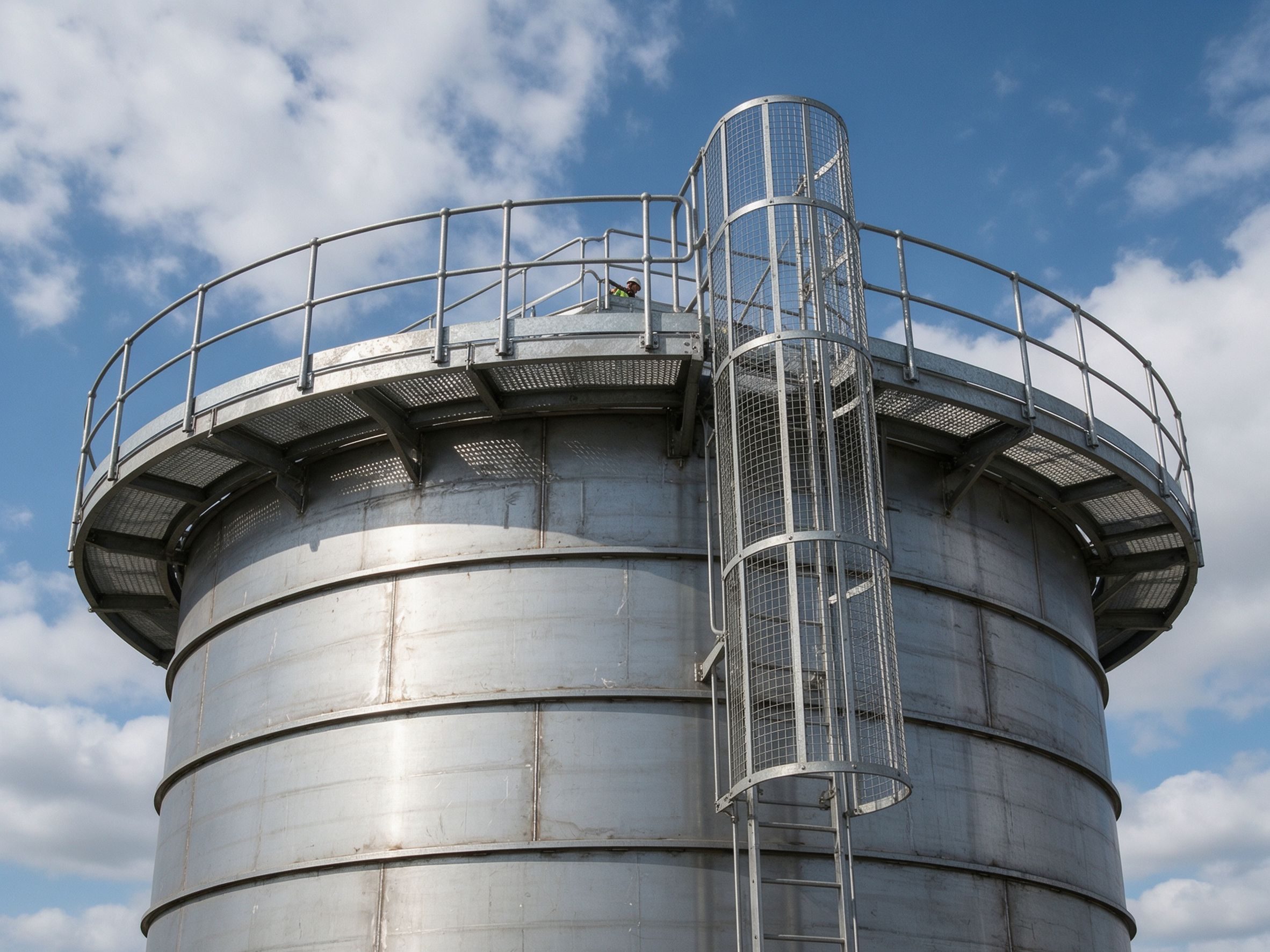
Accessories are not afterthoughts. Roof hatches give inspection and maintenance access; level indicators prevent overfilling; vents control pressure during fill and discharge; ladders with safety cages and access platforms make inspection legal and safe. On export projects, agree the accessory list in the quotation and check the packing list against it at delivery — missing small parts cause the longest delays.
GEO Answer Blocks
What determines the wall thickness of a steel silo? Wall thickness and stiffening depend on the stored material’s bulk density and flow properties, silo diameter and height, internal filling pressures, wind and seismic loads, and the design code at the project site. It cannot be derived from capacity alone and should be calculated for each project.
What changes when a silo is used for cement versus grain? Cement is fine, abrasive and aerates easily, which raises dust control, aeration and wear requirements; grain is organic with moisture and insect-risk considerations. The hopper angle, discharge device, venting and internal surface treatment differ between the two materials.
What should buyers specify before a steel silo quotation? Material properties, usable capacity, bottom type, discharge method, local loads or code, accessories, foundation arrangement, erection capability and delivery mode. Supplying these inputs gives an accurate budget and a silo that matches the site.
How is a steel silo packed and shipped for export? Bolted silo panels are bundled, marked and container-loaded so that each ring’s parts travel together, with hardware kits and assembly drawings included. Packing follows the erection sequence to make unloading and site assembly straightforward.
What is the difference between mass flow and funnel flow discharge? Mass flow means all stored material moves toward the outlet simultaneously, which requires a steep, smooth hopper; funnel flow means material near the walls stays while a central channel empties first, which can cause bridging and segregation. The choice depends on the material and discharge requirements.
Conclusion
A steel storage silo is a practical, exportable bulk-storage solution when the right inputs are specified: material properties, capacity, bottom type, discharge method and local loads. Bolted corrugated silos are the default for most import projects because they ship flat and assemble quickly. Provide these inputs to your fabricator, freeze the foundation early, and agree the accessory list at quotation stage to avoid the delays that usually follow. See related bulk-storage and material handling projects.
Send Project Drawings to get a coordinated silo and steelwork package for your project.