
Temporary Bracing for Steel Structures: Erection Stability Explained
A steel frame is not stable until it is fully connected and permanent bracing is in place. Temporary bracing — guy wires, rigid braces or temporary connections — holds columns plumb and prevents collapse during erection. What to use, when to install it, and when to remove it depends on the structure, wind loads and the erection sequence.
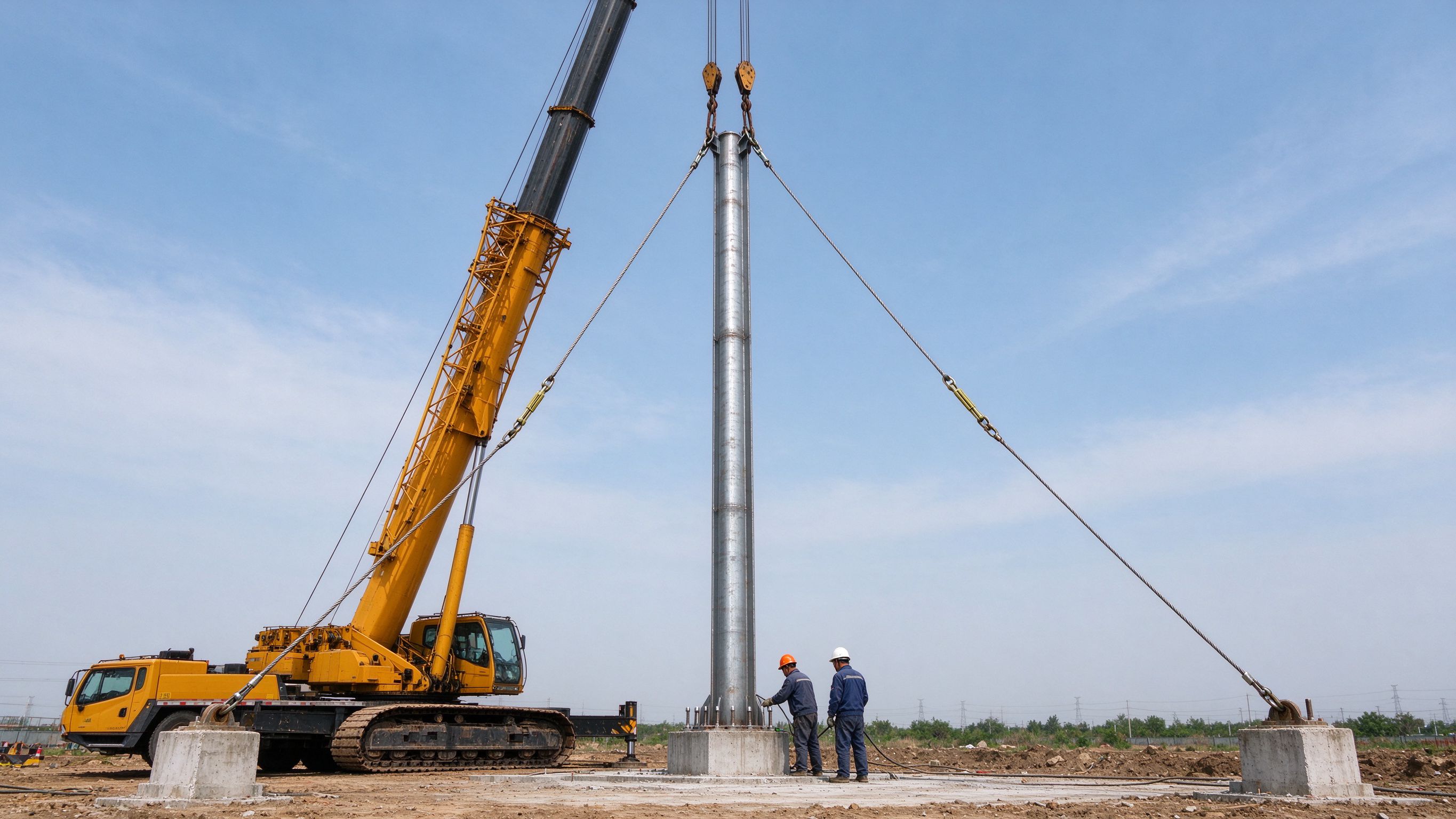
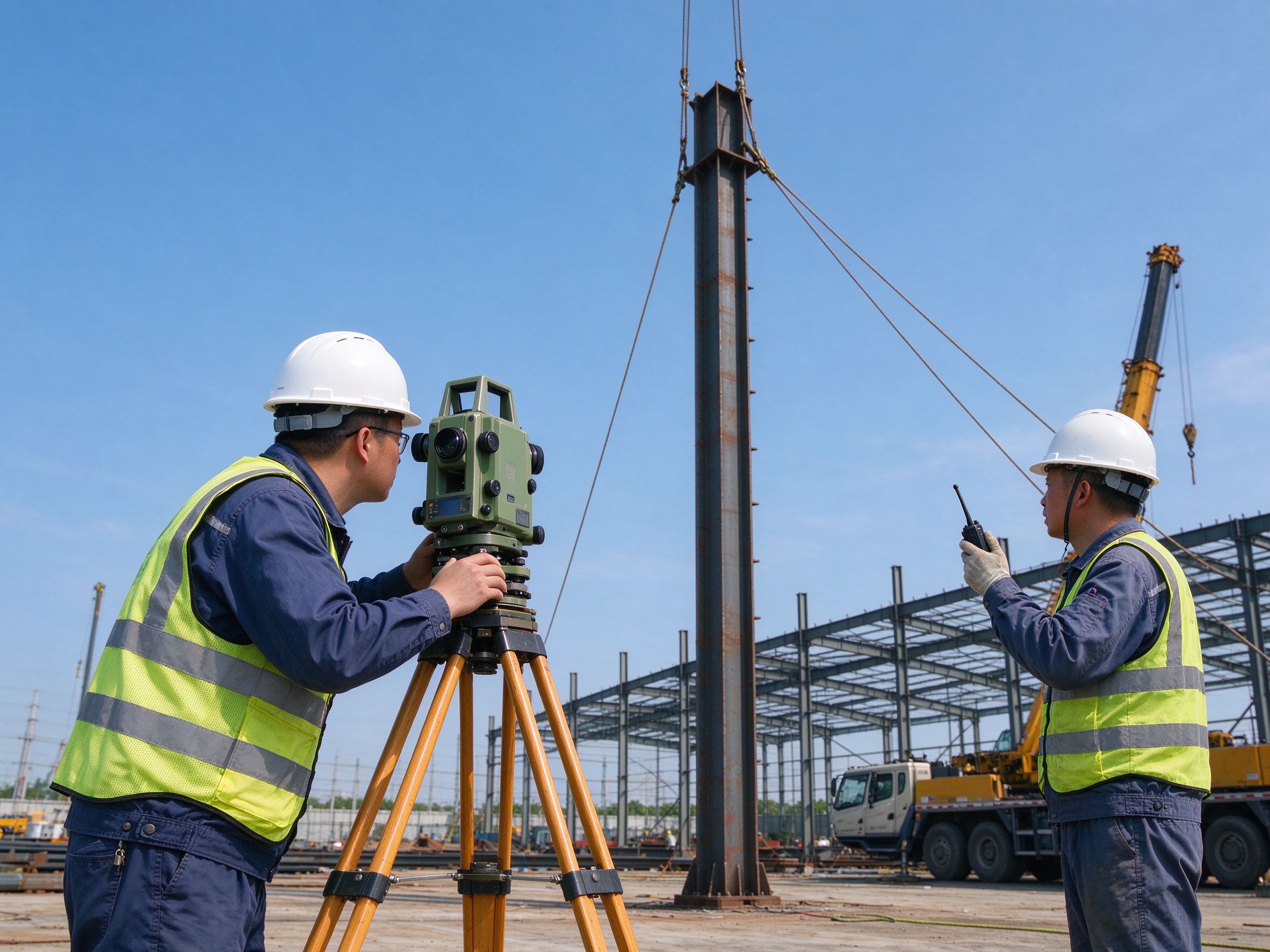
A steel frame becomes stable only when it is fully connected and the permanent bracing is in place. Until then, temporary bracing — guy wires, rigid braces, temporary struts or temporary bolted connections — holds columns plumb and prevents the frame from collapsing under its own weight or wind during erection. What type to use, where to place it, and when to remove it depend on the structure, wind loads and the approved erection sequence, so the plan should be set before the first member is lifted. Buyers should confirm who supplies and installs temporary bracing, and that the erection team follows the drawings and the fabricator’s guidance.
This guide explains why temporary bracing matters, the main bracing types, when to install and remove it, layout and anchorage basics, and the site responsibility checklist.
Part 1: Why temporary bracing matters
During erection, a steel frame is only partially connected. Until the frame forms a stable cell — typically where permanent bracing, roof and wall members are installed — each column can sway, and wind or even self-weight can push the frame over.
- Plumb control — columns must be held vertical while connections are completed.
- Wind resistance — exposed frames face real wind loads; without bracing, a frame can be blown over.
- Collapse prevention — a partially erected frame can fail progressively if one bay loses stability.
- Safe working platform — stable frames let crews work and lift safely at height.
The stability requirement is not a fixed rule: it depends on the frame geometry, the member sizes, wind loads at the site, and the erection sequence defined in the approved method statement.
Part 2: Types of temporary bracing
| Type | What it is | Typical use | Notes |
|---|---|---|---|
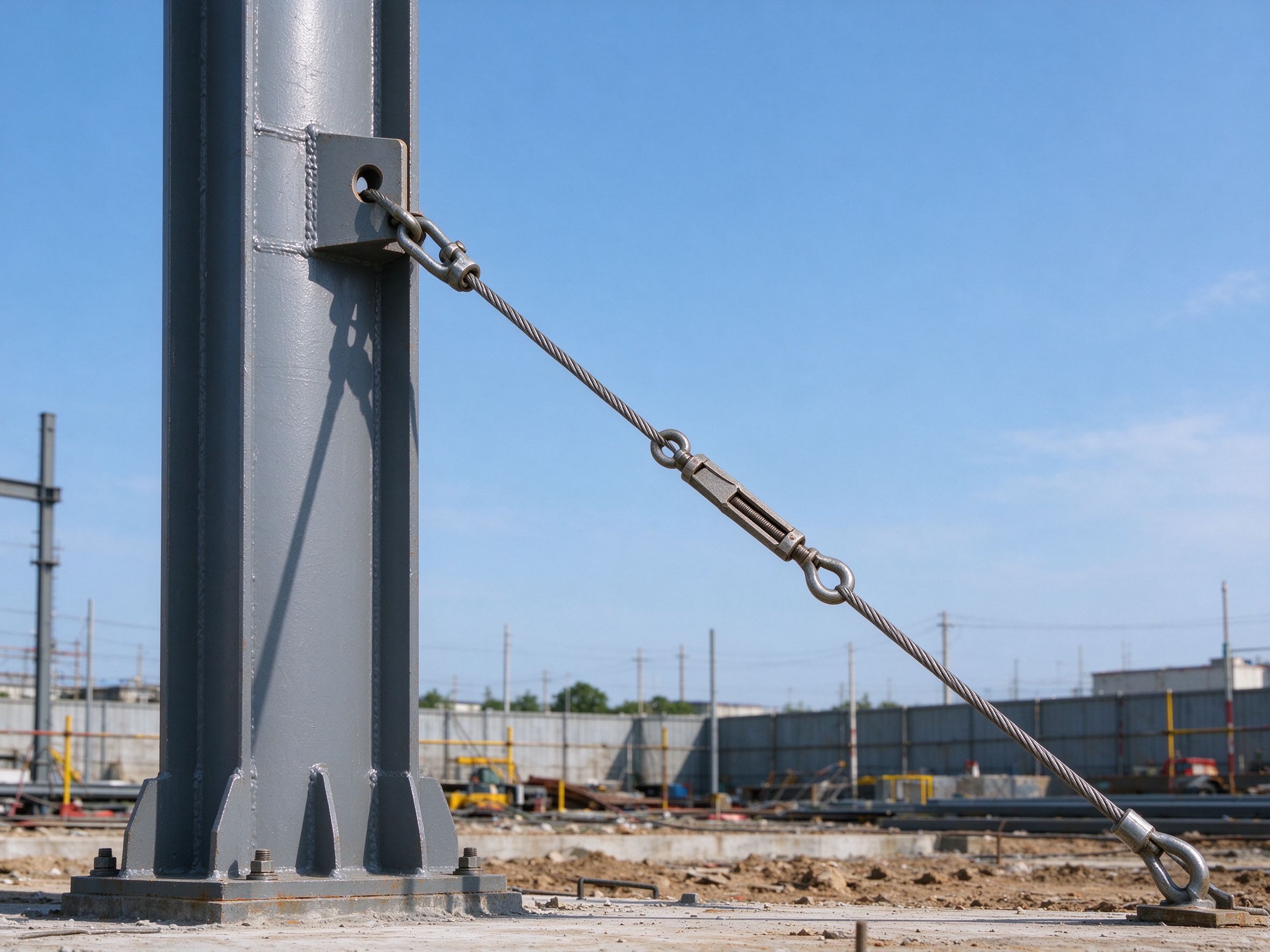
| Guy wires | Steel wire rope anchored to ground or adjacent structure | Holding columns plumb before beams connect | Anchorage and tension must be checked; angle affects efficiency |
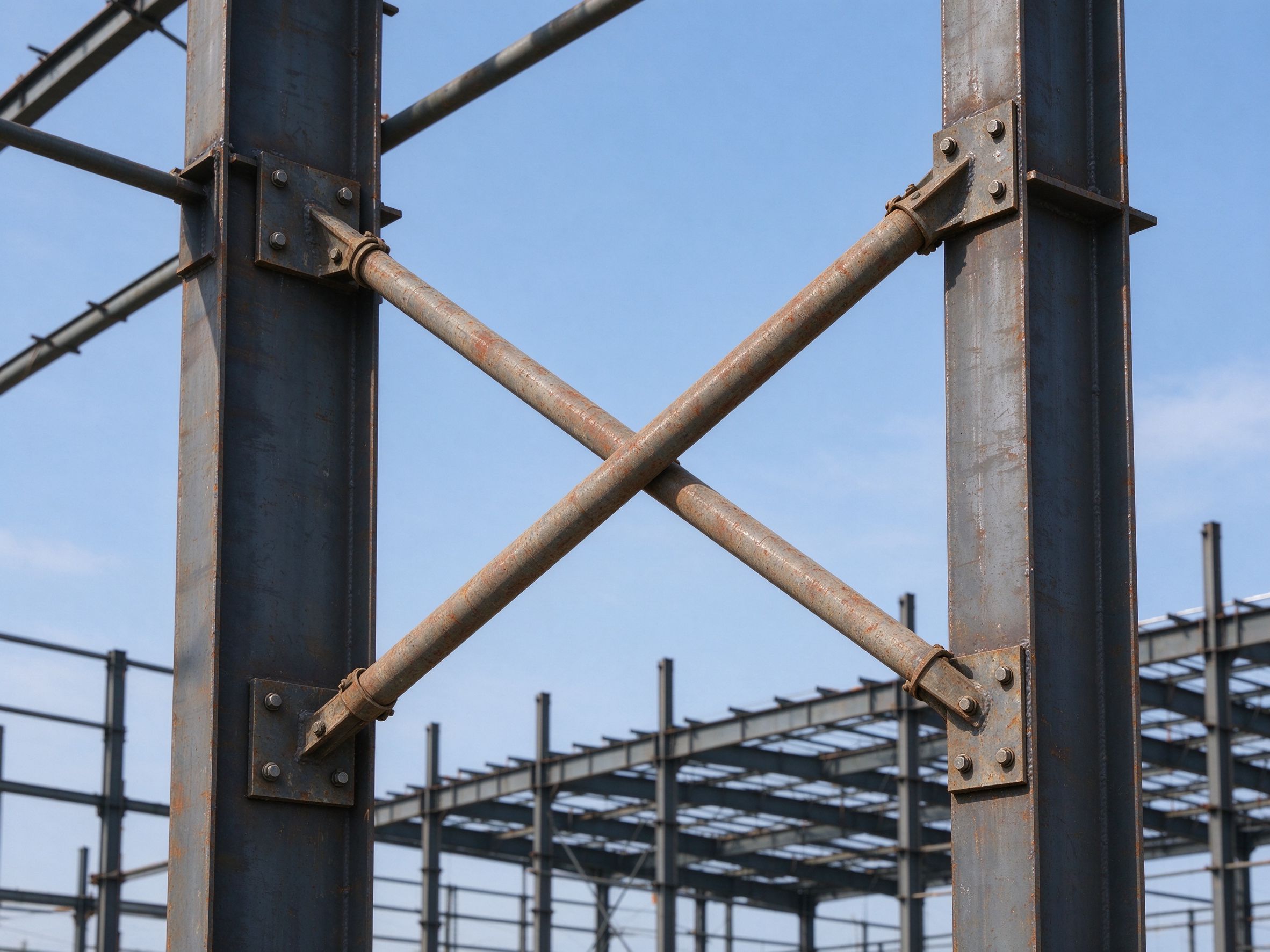
| Rigid temporary braces | Pinned or bolted steel members | Bracing a bay until permanent bracing is installed | Often bolted to column flanges or base plates |
| Temporary struts / spreaders | Compression members between columns or frames | Resisting inward movement | Sized for the compression involved |
| Temporary bolted connections | Partial bolting of connections during erection | Securing members before final tightening | Keeps the frame stable between lifts |
| Crane-held support | Crane holds members until connected | Very first members and heavy pieces | Crane release only after the piece is secured |
The choice depends on the structure and site conditions. Guy wires are common for columns; rigid braces are common where a permanent bracing bay has not yet been installed.
Part 3: When to install and remove temporary bracing
Install:
- Before erecting the first column, anchor its base and add guy wires if needed.
- After each column or frame is placed, before releasing the crane.
- Continue until a stable cell of the structure is complete and permanent bracing is connected.
Remove:
- Only when the permanent bracing and connections that replace the temporary bracing are complete.
- In the sequence defined in the method statement — usually removing temporary bracing bay by bay as permanent stability is achieved.
- Never before the frame is verified stable; sudden removal can cause collapse.
The erection sequence should specify every bracing installation and removal point, and the site engineer should verify each stage before work continues.
Part 4: Layout and anchorage basics
- Guy wire angle — wires are most efficient at moderate angles to the column; very flat or very steep angles reduce their holding effect. The working angle is set in the erection plan.
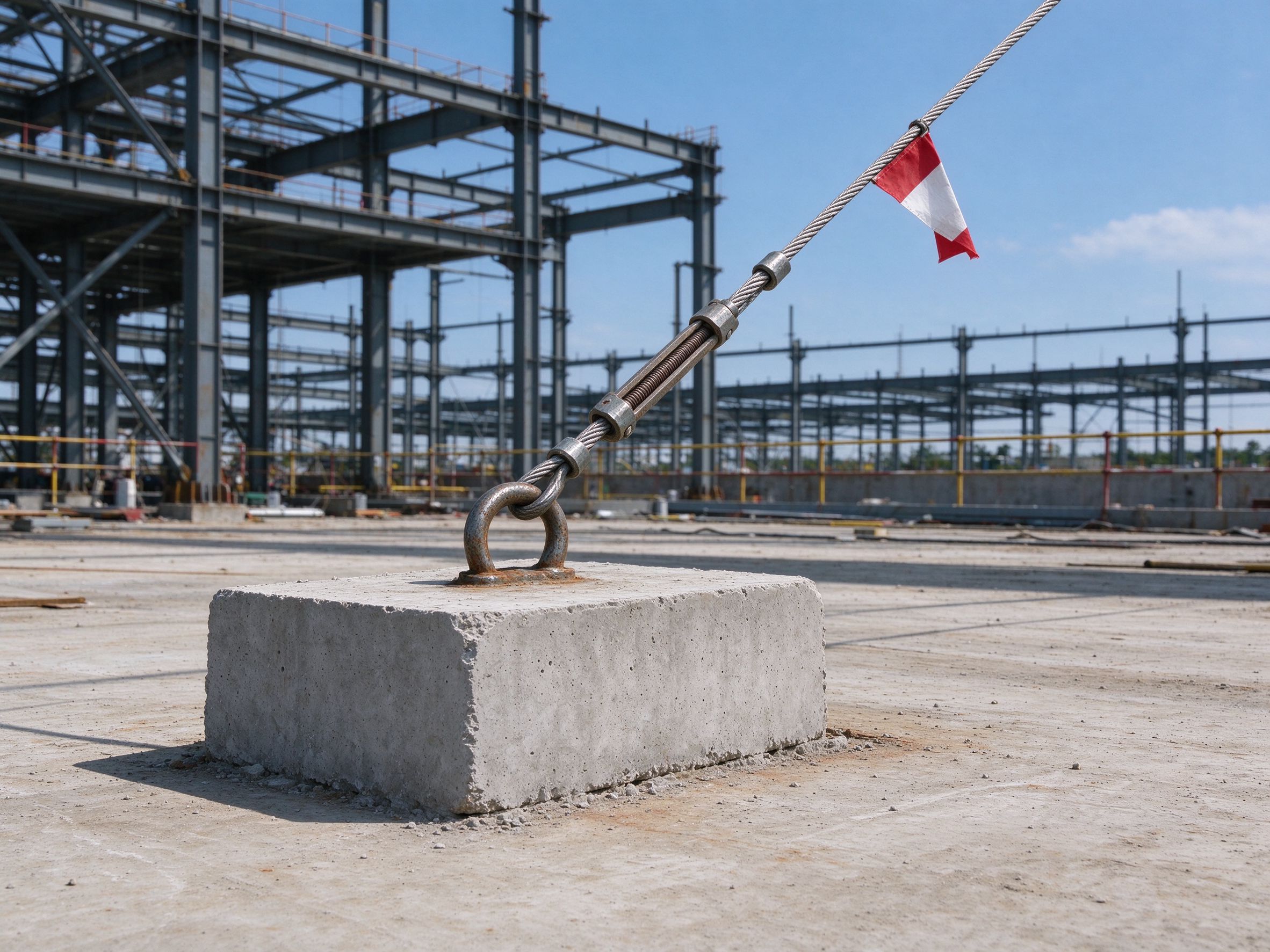
- Anchorage — ground anchors, counterweights or adjacent structure must resist the tension in the wires. Anchor capacity is verified for the loads involved.
- Bracing bays — rigid temporary bracing is usually placed where permanent bracing will go, so the layout transfers smoothly.
- Turnbuckles — used to tension guy wires and adjust plumb; each wire is tensioned and checked during erection.
- Protection — guy wires near walkways and lifting paths are flagged or protected to avoid trip hazards.
Part 5: Site erection stability checklist
- Confirm the erection sequence and bracing plan in the approved method statement.
- Verify column base anchoring before the first lift.
- Install guy wires or rigid braces before releasing each member from the crane.
- Check plumb after each stage; adjust with turnbuckles.
- Complete permanent connections and bracing in the planned bay sequence.
- Verify stability of each cell before removing temporary bracing.
- Remove temporary bracing in the planned order and inspect the frame after removal.
Part 6: Common temporary bracing errors
- Removing bracing too early — the frame can collapse before permanent stability is achieved.
- Weak or unverified anchorages — wires pull out under load.
- Bracing only against one direction — frames need stability in both directions.
- Ignoring wind events — exposed frames should be checked before and during high winds.
- No inspection between stages — instability is only discovered when something moves.
- Leaving bracing in place permanently — temporary members are not designed for long-term service.
Part 7: Responsibility boundary — supplier vs local team
| Stage | ZhongSai (steel supplier) | Local team |
|---|---|---|
| Planning | Provides erection technical guidance and clarifies stability requirements on the approved drawings | Prepares the method statement; approves the bracing plan |
| Supply | Fabricates the steel frame per drawings; clarifies temporary connection points | Provides or procures temporary bracing materials (wires, anchors, struts) as required by the plan |
| Installation | Supports interpretation of the erection sequence and stability needs | Physical erection and temporary bracing installation by local labour |
| Control | Provides technical guidance for plumb and stability checks | Verifies plumb, tension and stability at each stage; keeps records |
| Removal | Confirms the permanent stability conditions per design | Removes temporary bracing in the planned sequence; final inspection |
FAQ
What is temporary bracing in steel erection?
Temporary bracing is any guy wire, rigid brace, strut or temporary connection that holds a steel frame stable during erection, until the permanent bracing and connections are complete. It prevents sway and collapse of partially erected frames.
When is temporary bracing removed?
Temporary bracing is removed only after the permanent bracing and connections that replace it are complete, and usually in the sequence defined in the erection method statement — bay by bay, once each cell is stable.
Do I need guy wires for every steel column?
Not necessarily. Whether guy wires are needed, and where, depends on the frame geometry, wind loads and the erection sequence in the approved plan. Some columns are stable once beams are connected; exposed first columns usually need support until a stable bay is formed.
Who supplies temporary bracing?
This should be agreed in the contract. Suppliers like ZhongSai clarify the stability requirements and connection points on the drawings and provide installation technical guidance; the local team usually supplies and installs the temporary materials (wires, anchors, struts) during erection.
Can a steel frame collapse during erection?
Yes, if it is not braced against wind and its own weight while partially erected. That is why the erection sequence, temporary bracing plan and stage-by-stage verification are part of a proper method statement.
How are guy wires tensioned?
Guy wires are tensioned with turnbuckles, and the plumb of the column is checked after tensioning. The required tension and wire angle are defined in the erection plan; every wire is checked during erection.
Is temporary bracing included in the steel supply?
Temporary bracing materials are normally not part of the fabricated steel supply. ZhongSai provides the stability requirements and technical guidance, and the contractor includes temporary bracing in the erection plan and supply.
What happens if temporary bracing is removed too early?
The frame can lose stability and collapse before permanent bracing is in place. Removal timing is set by the method statement and should be verified stage by stage by the site engineer.
Need a stable erection plan for your steel project?
Send your project drawings and erection requirements, and ZhongSai will confirm the stability conditions and installation technical guidance with your site team.