
NDT Testing for Steel Structures: UT, MT and Weld Inspection
Non-destructive testing (NDT) checks welds and steel members for internal or surface flaws without damaging them. The common methods are visual testing (VT), ultrasonic testing (UT) and magnetic particle testing (MT); radiography (RT) is used where the specification requires it. The methods and acceptance criteria follow the project specification and the buyer's requirements. ZhongSai's QC performs the agreed NDT and issues reports and certificates with the steel.
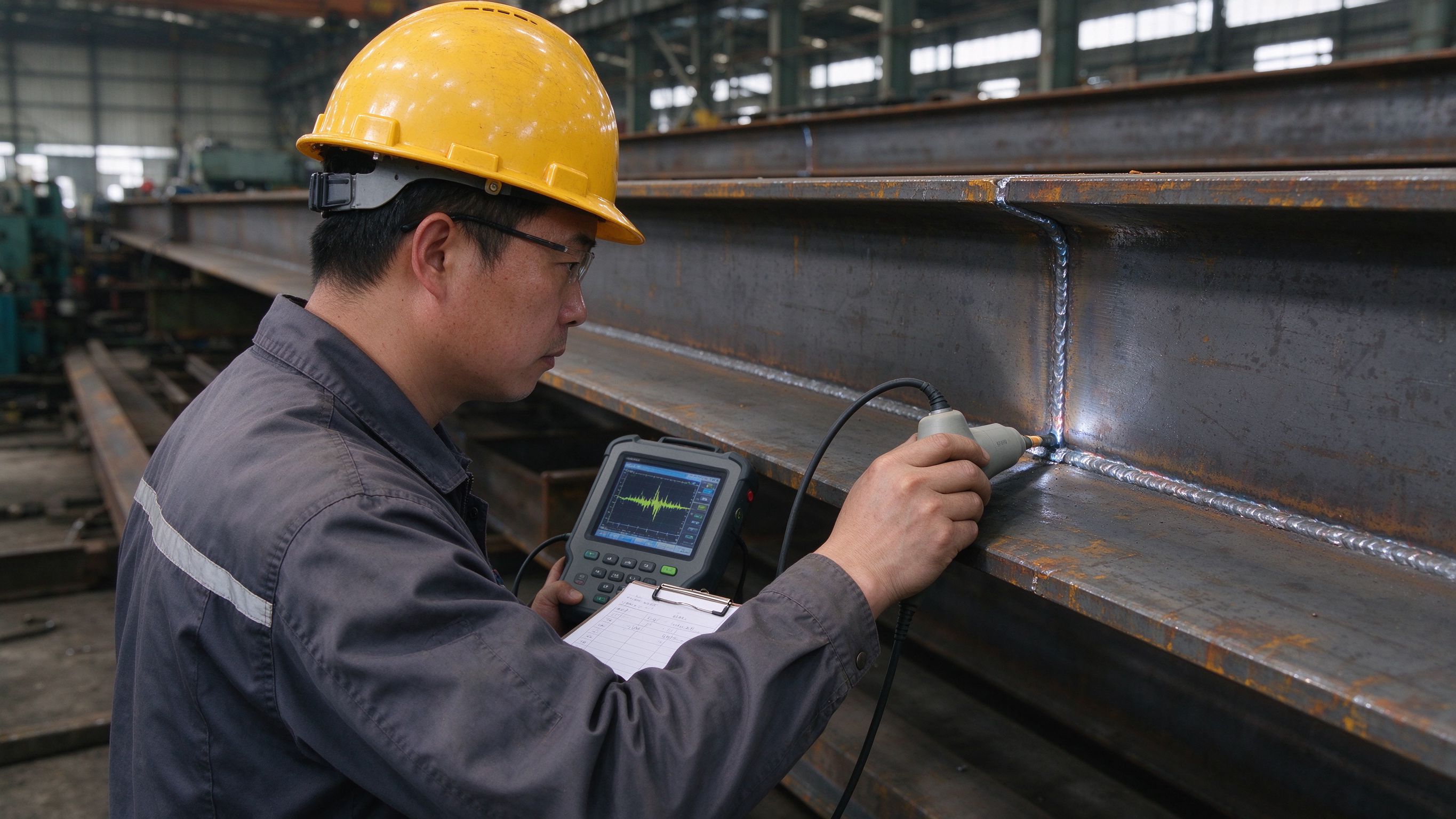
Non-destructive testing (NDT) checks welds and steel members for internal or surface flaws without damaging them. The common methods are visual testing (VT), ultrasonic testing (UT) and magnetic particle testing (MT); radiography (RT) is used where the specification requires it. The methods and acceptance criteria follow the project specification and the buyer’s requirements. ZhongSai’s QC performs the agreed NDT and issues reports and certificates with the steel.
This guide explains the methods, when testing happens, and how buyers can specify and check it.
Part 1: Why NDT matters for steel structures
Welds carry structural loads, so hidden flaws matter:
- Safety — internal weld flaws can grow under load and cause failure.
- Quality control — NDT catches flaws before the steel leaves the workshop.
- Buyer confidence — NDT reports are part of the quality evidence with the steel.
- Acceptance — the project specification defines which methods and criteria apply.
NDT is agreed at order time, not discovered at delivery.
Part 2: Testing methods compared
| Method | What it finds | When it is used |
|---|---|---|
| Visual testing (VT) | Surface flaws, profile, weld size | Every weld, at final inspection |
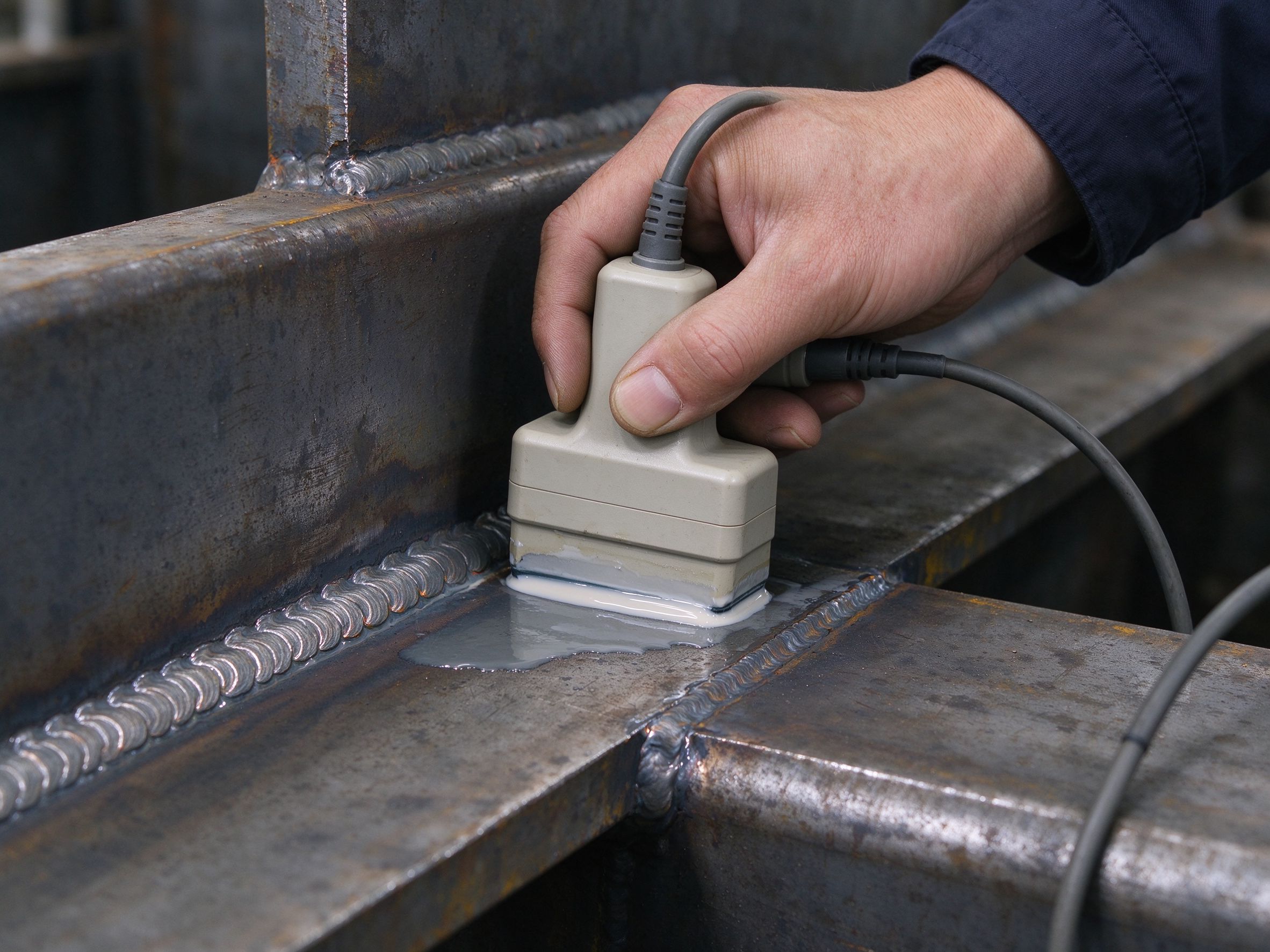
| Ultrasonic testing (UT) | Internal flaws in the weld volume | Full or partial penetration welds, per spec |
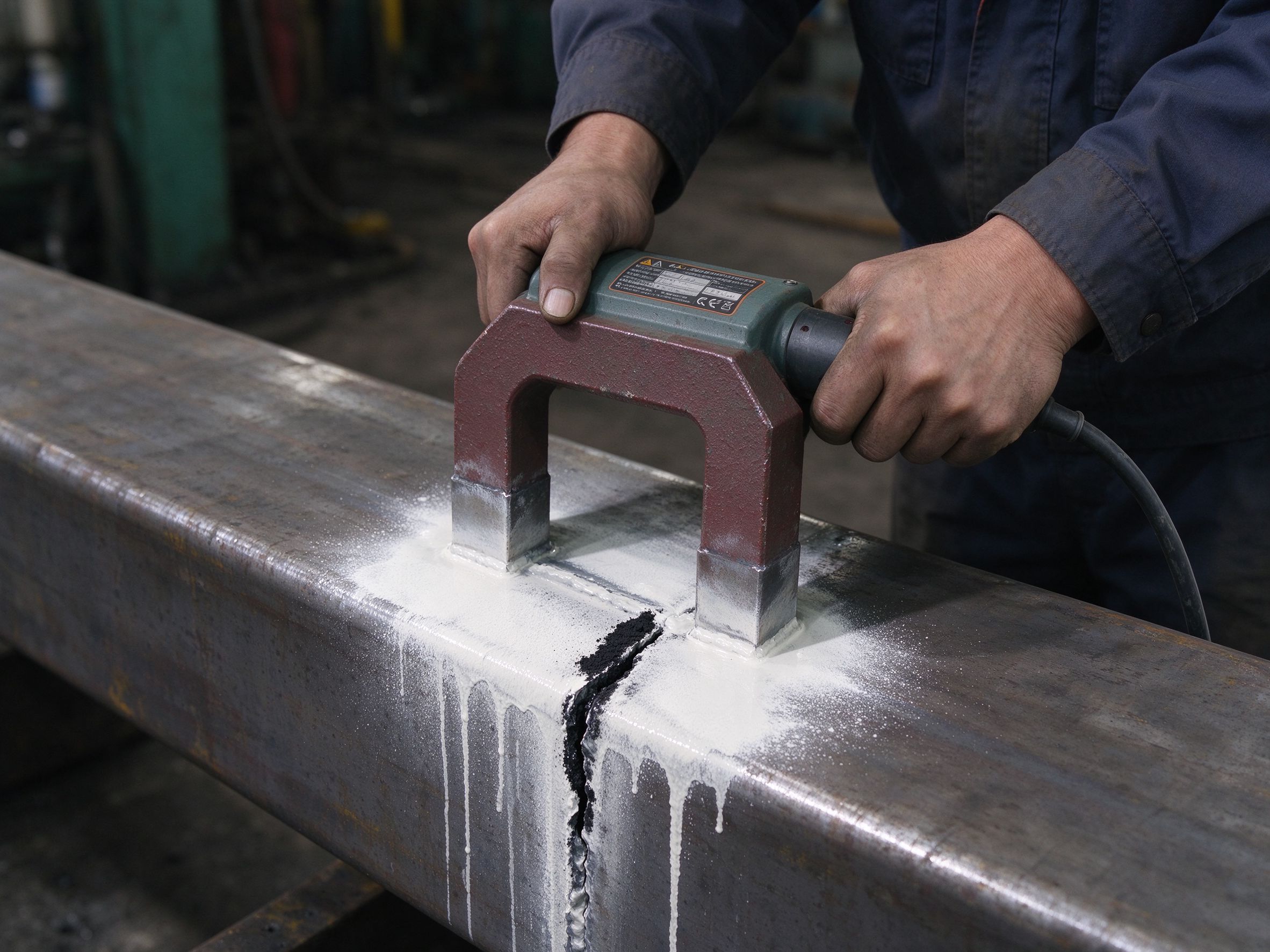
| Magnetic particle (MT) | Surface and near-surface cracks | Ferromagnetic steel, per spec |
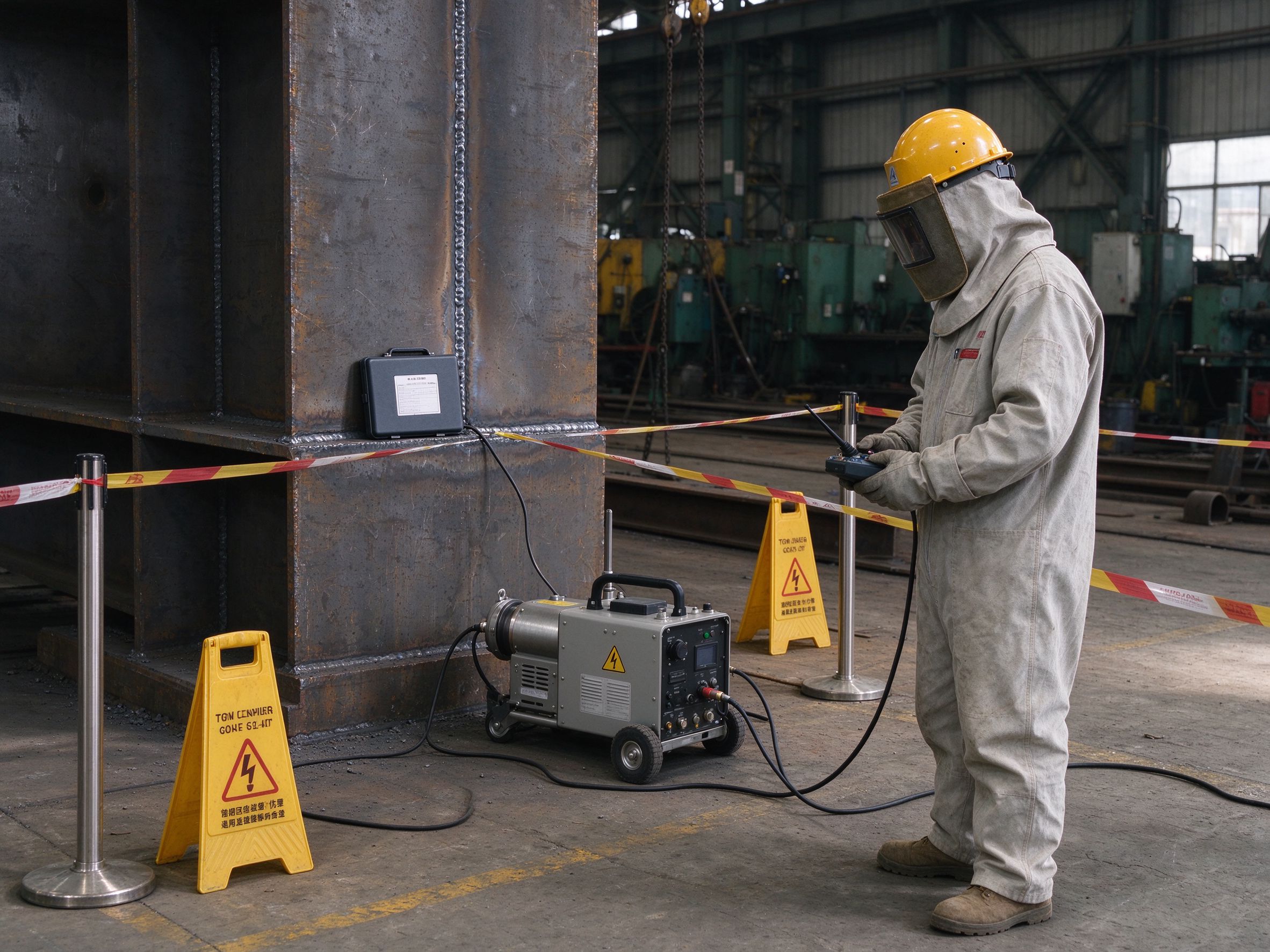
| Radiographic testing (RT) | Internal flaws, recorded on film or digital | Where the specification requires it |
| Liquid penetrant (PT) | Surface cracks | Where MT is not suitable |
The combination depends on the weld class, the specification and the buyer’s requirements.
Part 3: When NDT happens
- During fabrication — critical welds are tested before coating.
- Final inspection — VT on all welds, plus the agreed UT/MT sampling.
- Pre-shipment — the buyer or their inspector can witness agreed NDT before loading.
- On site — the local team checks visible welds and reports issues.
The timing and sampling follow the project specification and the inspection plan.
Part 4: How buyers specify and check NDT
- Define the NDT requirement in the specification: methods, coverage and acceptance criteria.
- Agree the standards — for example ISO 5817 weld quality levels and ISO 17640 UT.
- Confirm the inspection plan: which welds, what percentage, when.
- Ask for reports and certificates with the shipment documents.
- Optionally appoint a third-party inspector or witness the NDT.
- On site, visually check welds and report any anomaly promptly.
Part 5: Responsibility boundary — supplier vs local team
| Stage | ZhongSai (steel supplier) | Local team |
|---|---|---|
| QC | Performs the agreed NDT and issues reports and certificates | Reviews reports with the registered engineer |
| Spec | Confirms the specification and inspection plan at order time | States the required standards and coverage in the order |
| Witness | Allows the buyer’s inspector to witness agreed NDT | Arranges third-party inspection if required |
| Delivery | Ships reports and certificates with the steel | Checks documents on receipt |
| On site | — | Visually checks welds and reports issues with photos |
FAQ
What is NDT in steel structures?
Non-destructive testing checks welds and members for flaws without damaging them. Common methods are visual, ultrasonic, magnetic particle and radiographic testing.
Why is ultrasonic testing used?
UT finds internal flaws in the weld volume that visual inspection cannot see. It is the common method for full or partial penetration welds.
Do all welds need UT or RT?
No. The methods and coverage follow the project specification and weld class. Many projects use visual testing on all welds plus agreed UT or MT sampling.
Who performs the NDT?
The manufacturer’s QC performs the agreed NDT in the workshop; a third-party inspector can be appointed by the buyer and can witness the testing.
What reports should I receive?
You should receive NDT reports listing the welds tested, the method, the results and the acceptance criteria, with certificates where the spec requires them.
Can I witness the NDT?
Yes. Buyers can arrange to witness agreed NDT or appoint an inspector before shipment.
What if a weld fails NDT?
Failed welds are repaired per the approved repair procedure and re-tested. The report records the repair and the re-test result.
Is NDT included in the price?
NDT is agreed at order time as part of the quality requirements and the specification. Confirm the scope and any third-party costs when ordering.
Need quality-tested steel for your project?
Send your specification and requirements, and ZhongSai will confirm the NDT scope, inspection plan and reports with your engineer.