
Steel Structure Fire Protection: Methods, Ratings & What Buyers Need to Know
A practical guide to steel structure fire protection: why bare steel loses strength in fire, the main protection methods compared, how fire ratings work, what determines the rating your building needs, and how to coordinate fire protection with fabrication and site works.
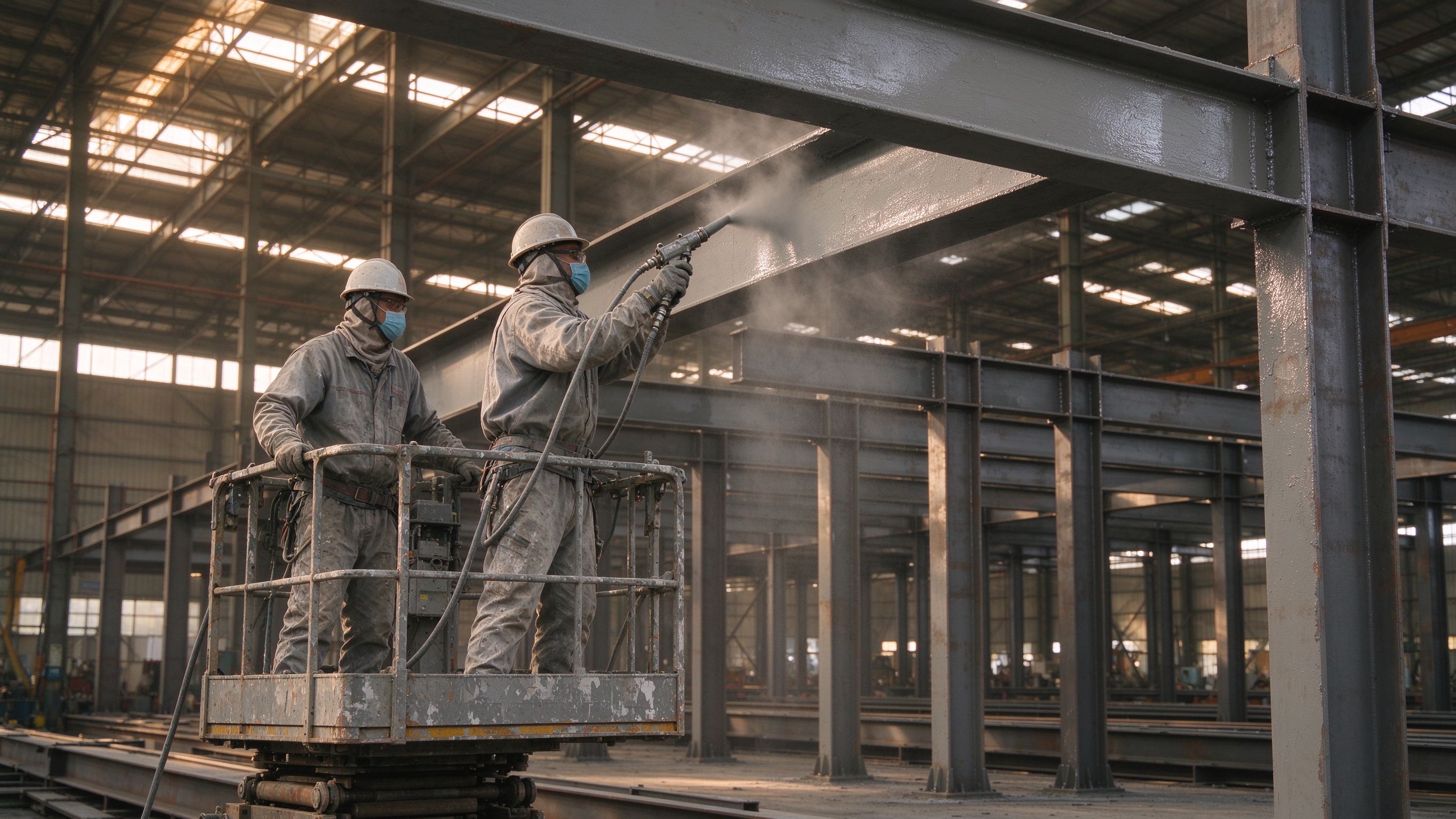
Bare structural steel loses a large part of its load capacity at temperatures reached in a typical building fire, so most local building codes require fire protection on columns, beams and trusses. The protection can be passive — intumescent coating, board, blanket or concrete encasement — or active, such as a sprinkler system. The required fire rating (commonly R30, R60, R90 or R120, i.e. minutes of standard fire resistance) depends on the building type, occupancy, height, fire compartment size, local code and insurance requirements, not on a fixed global value. Fire protection is normally specified, applied and approved by the local design and construction team, but it must be coordinated with the steel fabricator from the first design stage so coatings are compatible, thicknesses are realistic, and site touch-up is planned.
This guide explains what fire protection does, how the common methods compare, what a fire rating means, what determines the rating, and how buyers can coordinate fire protection with a steel structure supplier.
Part 1: Why bare steel needs fire protection
Steel does not burn, but it conducts heat and loses strength as its temperature rises. In a typical fully developed building fire, unprotected structural steel can reach temperatures at which its load-bearing capacity is seriously reduced — well before the fire is extinguished. The result is the same whether the steel is a portal frame, a truss, or a column-and-beam structure: local buckling or collapse of members that were perfectly adequate at normal temperature.
This is why fire protection is not optional decoration. It is a structural safety requirement in nearly every jurisdiction. Two design philosophies exist:
- Passive protection — insulating the steel so its temperature stays below a critical limit for a specified time (e.g. 60 minutes). It works without any trigger, water or power.
- Active protection — sprinklers, detection and suppression systems that fight the fire directly. Active systems can reduce the risk but do not by themselves remove the need for passive protection in most codes.
Most buildings use passive protection on the primary structure, sometimes combined with active systems. Which combination applies to your project is decided by the local building code, the authority having jurisdiction, and often the insurer.
Part 2: Fire protection methods compared
The four most common passive methods for steel structures are intumescent coating, board, blanket (mineral fibre), and concrete encasement. Each has different cost, appearance, durability and application constraints.
| Method | How it works | Suitable for | Advantages | Limitations |
|---|---|---|---|---|
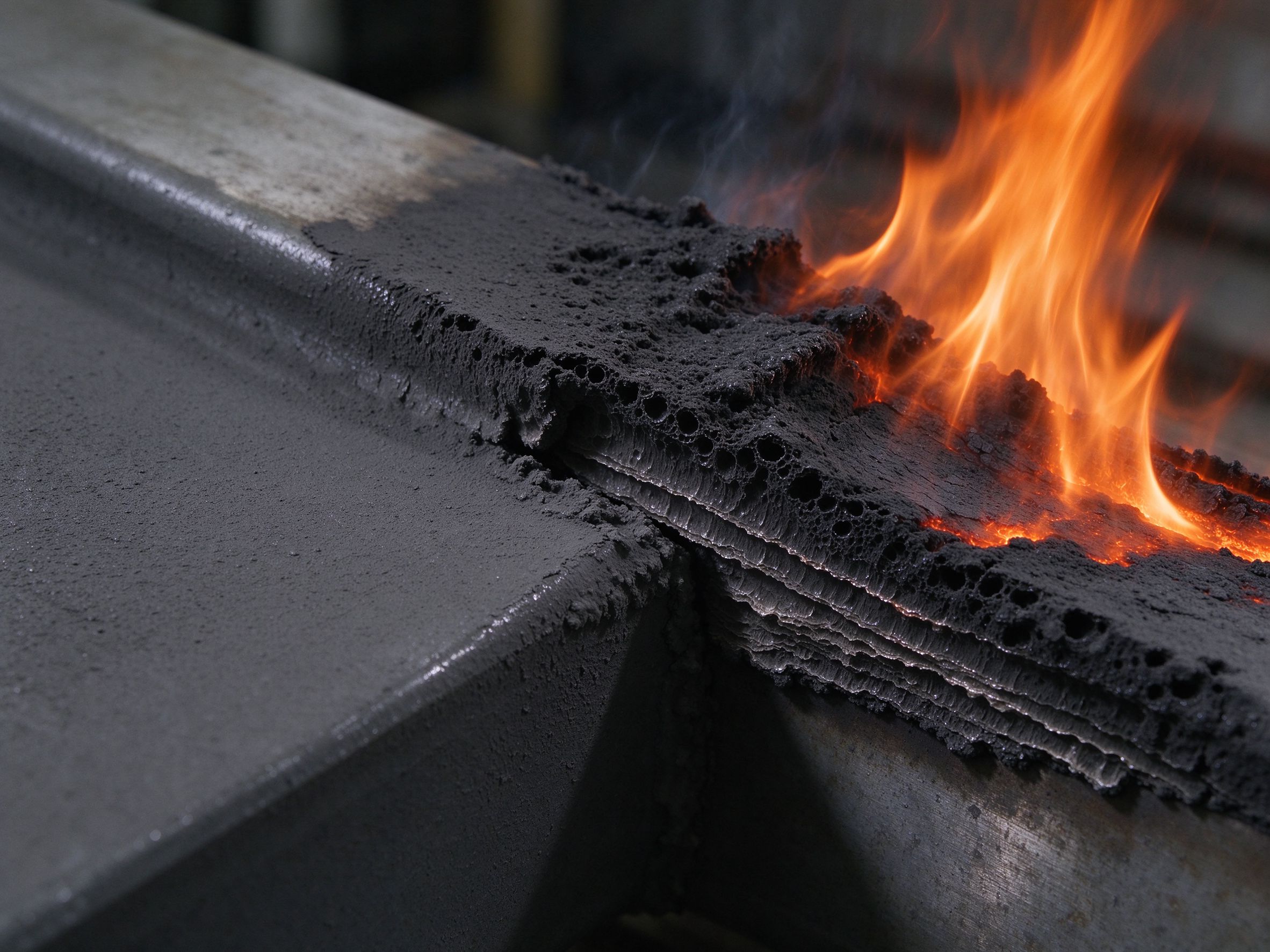
| Intumescent coating | Thin paint layer expands under heat into an insulating char | Columns, beams, visible structures | Thinnest finish, good aesthetics, applied off-site or on-site | Surface preparation critical; needs compatible primer; touch-up after erection; sensitive to humidity and impact |
| Board (e.g. gypsum / cementitious) | Rigid boards fixed around members | Columns, beams, service risers | Fast site install, no drying time, robust | Bulky, hides the steel profile, detailing around connections |
| Blanket / mineral fibre wrap | Flexible insulation wrapped or fixed over steel | Trusses, roof members, ducts | Light, easy around complex geometry | Soft finish, needs a covering in exposed areas, lower impact resistance |
| Concrete encasement | Full or partial concrete cover | Columns, heavy industrial frames | Very durable, no maintenance | Heavy, increases foundation load, slow, hides the steel |
Key takeaway: intumescent coating is the most common choice for exposed steel because it preserves the visual profile, but it is also the method most sensitive to surface preparation and coating compatibility. Board and blanket are typical for concealed or service-heavy areas.
Part 3: What a fire rating actually means
A fire rating such as R60 does not mean “the building will survive 60 minutes.” In European terminology the rating classifies the load-bearing element’s load-bearing capacity (R), integrity (E) and insulation (I) under a standard fire curve:
| Rating class | What it tests | Typical use |
|---|---|---|
| R | Load-bearing capacity (collapse resistance) | Always required for structural members |
| RE | R + integrity (no flame/gas passage) | Compartment walls and floors |
| REI | R + E + insulation (temperature stays below limit on unexposed side) | Fire-separating elements |
The test itself follows a standard fire curve in a furnace — for example ASTM E119 in North America or the EN 13501-2 classification in Europe — and the result is expressed in minutes (30, 60, 90, 120). A member achieves, say, R60 if it still carries its design load after 60 minutes in the standard test. The real-world behaviour of the building will differ from the furnace test; the rating is a comparative, code-based measure, not a guarantee of real fire duration.
Different members in the same building can have different required ratings — a ground-floor column serving several storeys may need more protection than a roof purlin, for example. The rating is determined per element by the structural engineer and the local code.
Part 4: What determines the fire rating your building needs
There is no single global answer. The required rating is set by the applicable local building code, based on project-specific factors:
- Building use and occupancy — storage, production, public assembly, or offices all carry different risk levels.
- Building height and number of storeys — taller buildings generally require higher ratings because evacuation and firefighting are harder.
- Fire compartment size and fire load — what is stored or produced (e.g. flammable materials) affects the fire severity.
- Distance to boundaries — closer buildings may require higher external-wall performance.
- Insurance requirements — insurers often set stricter protection than the minimum code.
- Local authority and registered engineer approval — the final figure is confirmed during design approval.
What this means for a buyer: ask the local architect or registered engineer for the required rating before requesting steel quotations, because the rating affects coating thickness, material cost and delivery time. The steel supplier needs to know the rating so the fabrication and surface-treatment programme can be planned realistically.
Part 5: Where fire protection is applied
Protection is applied where failure would threaten the structure:
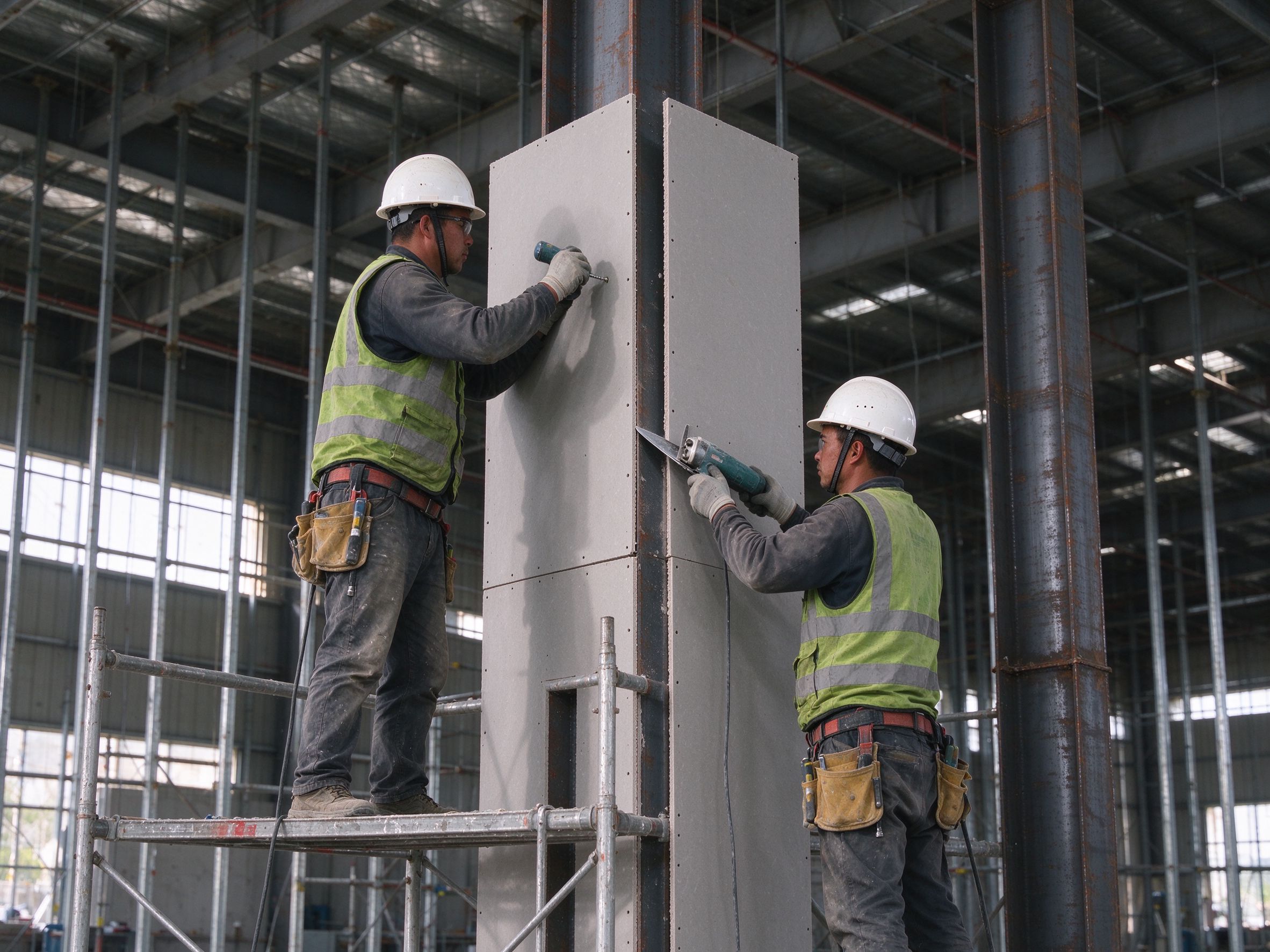
- Columns and primary beams — almost always protected in code-required buildings.
- Roof trusses and purlins — protected in many occupancies; requirements vary by code and building height.
- Composite and fire-separating elements — walls, floors and mezzanines that must maintain integrity and insulation.
- Penetrations and junctions — service openings, connections and junctions between protected members must be treated or sealed; gaps are a common source of fire-protection failure.
- External steel — external members may need protection where they are close to boundaries or support the structure.
The protection system also has to survive the building’s service life: impact damage, water, humidity and maintenance all affect coating performance, which is why manufacturers’ application and touch-up instructions matter.
Part 6: Coordinating fire protection with fabrication and coatings
Fire protection sits at the meeting point between the steel fabricator, the coating supplier and the site team. Practical coordination points:
- Tell the supplier the rating early. The required rating changes the coating specification and, therefore, the surface-preparation and painting programme.
- Check coating compatibility. Intumescent coatings are applied over a specific primer system. The steel fabricator’s standard shop primer must be compatible with the specified fire-protection system — or the surface must be prepared differently before the intumescent coat is applied.
- Decide where it is applied. Off-site application (at the fabricator or a specialist shop) is faster and more controlled; on-site application is typical where the structure is erected before the protection is specified, or for touch-up after erection and welding.
- Plan site touch-up. Welds, bolt connections and erection damage expose bare steel; a touch-up plan must be part of the contract, with compatible materials available on site.
- Protect the coating after application. Intumescent coatings are softer than normal paint; lifting, handling and erection sequences should avoid damaging finished members.
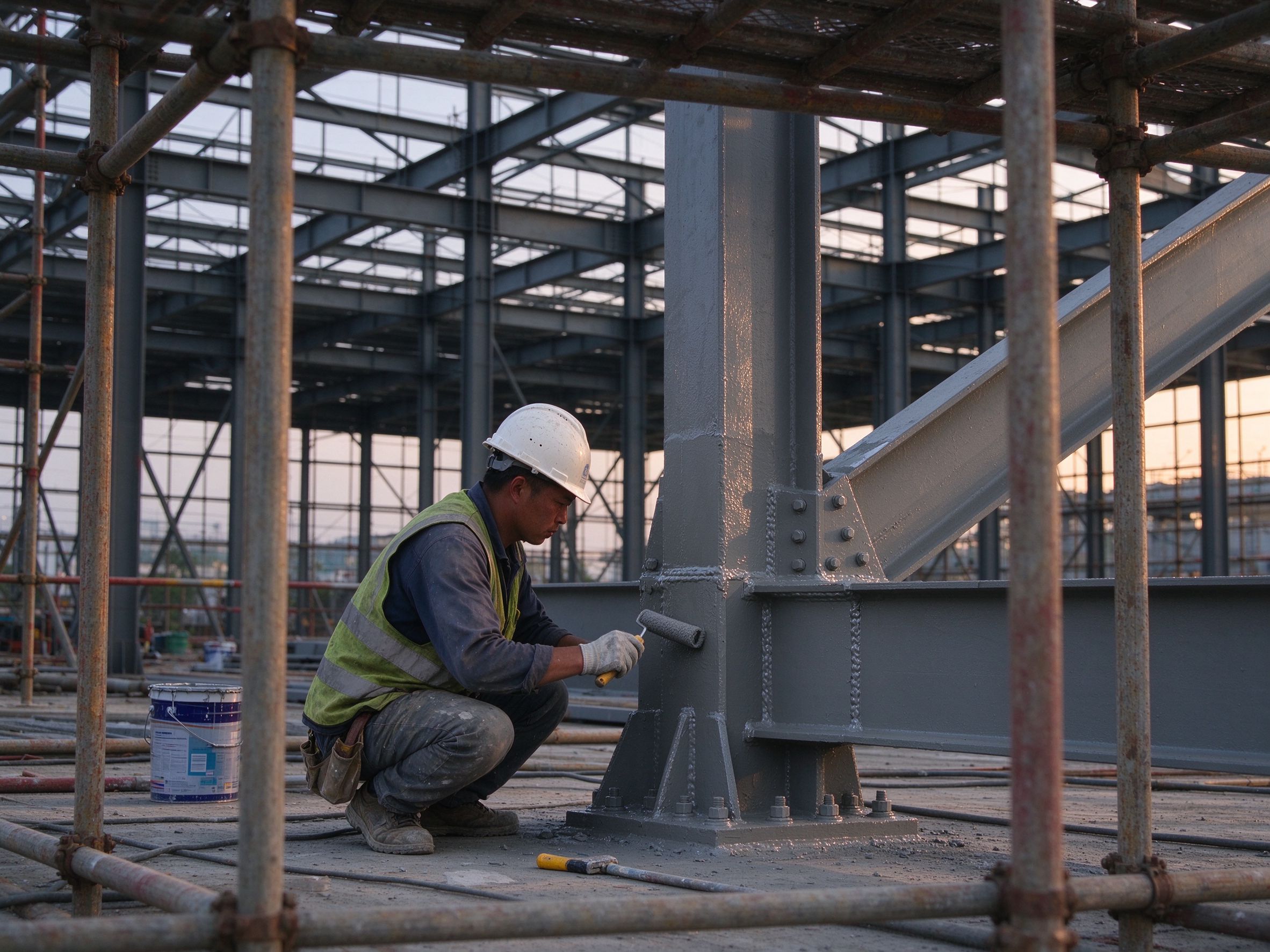
ZhongSai, as the steel supplier, coordinates the fabrication, surface treatment and painting programme and provides installation technical guidance. The fire-protection specification, its application and its approval normally sit with the local design team, a specialist applicator, and the local authority.
Part 7: Responsibility boundary — supplier vs local team
| Stage | ZhongSai (steel supplier) | Local team |
|---|---|---|
| Design and detailing | Engineering coordination; detailing and drawings that respect fire-protection requirements (connection access, member spacing) | Building permit; registered engineer approval; fire rating specification |
| Fabrication | Fabrication, surface preparation, shop primer, marking, packing, container loading | — |
| Fire protection application | If agreed: coordinate with specified coating system and off-site application; supply members ready for the protection system | Fire-protection specification and specialist application (often by a certified applicator) |
| Site works | Installation technical guidance; documentation for touch-up | Foundations and civil works; erection; fire-protection touch-up and repair; authority inspections |
| Approval | Export coordination and documentation | Authority submissions; final certification and inspections |
Unless the contract says otherwise, the steel supplier delivers members that are ready for the specified fire-protection system; the local team manages the local approval and the protection works on site.
Part 8: Checklist for buyers before ordering
- Confirm the required fire rating (e.g. R30 / R60 / R90 / R120) with the local registered engineer and the authority having jurisdiction.
- Check whether the insurer imposes a stricter requirement than the code minimum.
- Decide whether fire protection is applied off-site or on-site, and who is responsible for each stage.
- Confirm that the specified intumescent system is compatible with the fabricator’s shop primer and surface preparation.
- Ask the steel supplier to confirm the member schedule, coating thickness assumptions and how the protection affects delivery time and cost.
- Include a site touch-up allowance and compatible materials in the contract.
- Verify access for inspection and maintenance around protected members.
- Get the local fire-protection specification in writing before finalising the steel order.
FAQ
What is the difference between fire protection and corrosion protection?
Corrosion protection (paint systems, galvanising) protects steel against rust in the environment; fire protection (intumescent coating, board, blanket, concrete) protects load-bearing capacity during a fire. They are separate systems, but they interact: the fire-protection coating is usually applied over a corrosion-protection primer, and both must be compatible.
How long can a steel structure survive a fire without protection?
There is no fixed answer. Unprotected steel heats up quickly in a developing fire and can lose a significant part of its load capacity within minutes once the fire is fully developed, but the real outcome depends on the fire load, ventilation, member size and loading. That is why codes require a specified standard-fire rating rather than a rule of thumb.
Is intumescent coating the same as normal paint?
No. Intumescent coating is a much thicker, specially formulated system that expands under heat to form an insulating char. It looks like paint when cured, but it has strict application conditions: compatible primer, controlled surface preparation, correct film thickness, and limited overcoating windows.
Does ZhongSai apply fire-protection coating at its manufacturing bases?
ZhongSai’s manufacturing bases handle fabrication, surface preparation and painting as part of the steel supply. Fire-protection specification and application are usually managed by the local design team and a specialist applicator to satisfy local certification; the steel is supplied ready for the specified protection system, and touch-up is coordinated on site. Confirm the exact scope in your contract.
Who decides the fire rating for my building?
The local registered engineer and the authority having jurisdiction set the rating, based on the applicable building code, occupancy, height, fire load and insurance requirements. It is confirmed during design approval — before the steel is ordered.
Can sprinklers replace passive fire protection?
In most codes, active systems reduce risk but do not remove the requirement for passive protection on the primary structure. The applicable local code and insurer decide the combination.
How does fire protection affect cost and delivery time?
The required rating determines coating type and thickness, which affects material cost and the fabrication programme. Board or blanket adds site labour and time; concrete encasement adds foundation load and construction time. Asking the supplier for a quotation without the rating risks an estimate that cannot be built to code.
What causes fire-protection failures in practice?
The most common causes are: incompatible primer, insufficient surface preparation, under-thickness coating, damage during erection without touch-up, unsealed penetrations and junctions, and maintenance neglect. All are preventable with specification and site control.
Ready to coordinate fire protection on your steel building?
Send your project drawings and requirements, including the fire-rating requirement from your local engineer, and ZhongSai will confirm the fabrication, surface-treatment and coating programme that matches the protection system.