
Fire Protection Coating Application and Inspection for Steel Structures
The quality of fire protection coating application decides whether a steel structure's fire rating actually holds. The result depends on surface preparation, the coating type (intumescent or cementitious), application conditions and dry-film thickness verification; thickness is the core of acceptance and must follow the certified data of the chosen system for the required fire rating, member profile and section factor. ZhongSai has built steel structures for 20 years and focused on exports for 15, and can coordinate fire protection coating technical guidance for the buildings we fabricate.
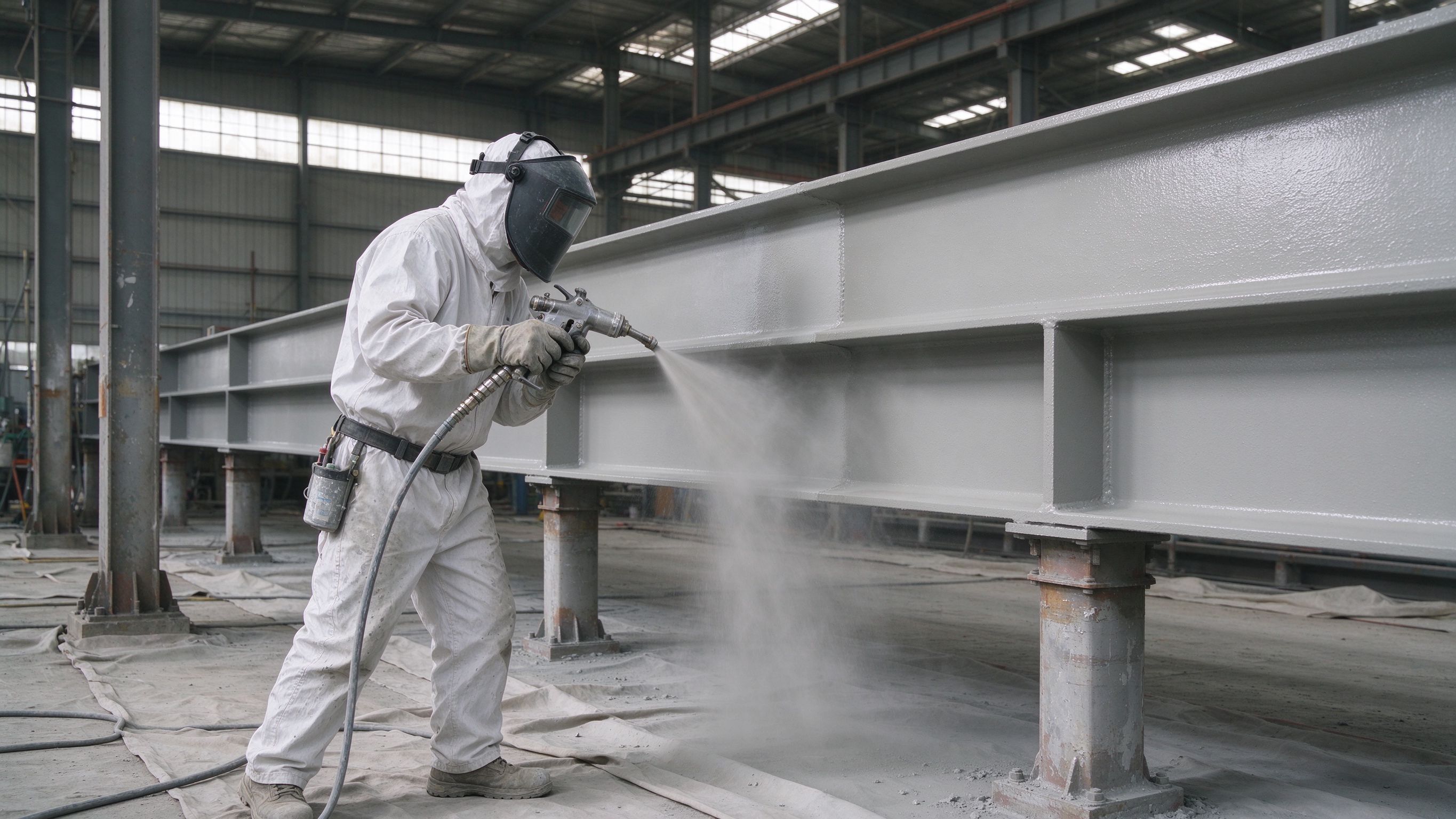
The quality of fire protection coating application decides whether a steel structure’s fire rating actually holds. The result depends on surface preparation, the coating type (intumescent or cementitious), application conditions and dry-film thickness verification; thickness is the core of acceptance and must follow the certified data of the chosen system for the required fire rating, member profile and section factor. ZhongSai has built steel structures for 20 years and focused on exports for 15, and can coordinate fire protection coating technical guidance for the buildings we fabricate.
This guide covers what buyers, site engineers and inspectors should check when fire protection coating is applied on a steel building.
Two mainstream coating types
Intumescent coatings are thin-film systems that expand under heat to form a char layer. Cementitious (cement-based) coatings are thick, fibrous or plaster-like materials applied in heavier layers. The choice depends on the fire rating, the member profile, appearance requirements, exposure conditions and cost.
| Factor | Intumescent (thin film) | Cementitious (thick film) |
|---|---|---|
| Typical thickness | A few mm up to ~several mm (per system data) | Often 10–40+ mm, depends on rating and profile |
| Appearance | Smooth, paintable finish | Rough, plaster-like finish |
| Suitable for | Indoor and some outdoor uses per system approval | Interior applications, concealed or exposed steel |
| Surface prep | Must be clean, primed with compatible primer | Similar; substrate must be sound |
| Application | Spray, sometimes brush/roller for touch-up | Spray, pump or trowel |
| Inspection | Dry-film thickness, adhesion, visual | Thickness gauges/check points, visual, density |
| Maintenance | Re-coatable, easier to touch up | Heavier damage is harder to repair invisibly |
The required thickness is not a fixed global value: it depends on the fire rating in the drawings, the local code, the member’s section factor and the coating system’s certified data.
Surface preparation and primer
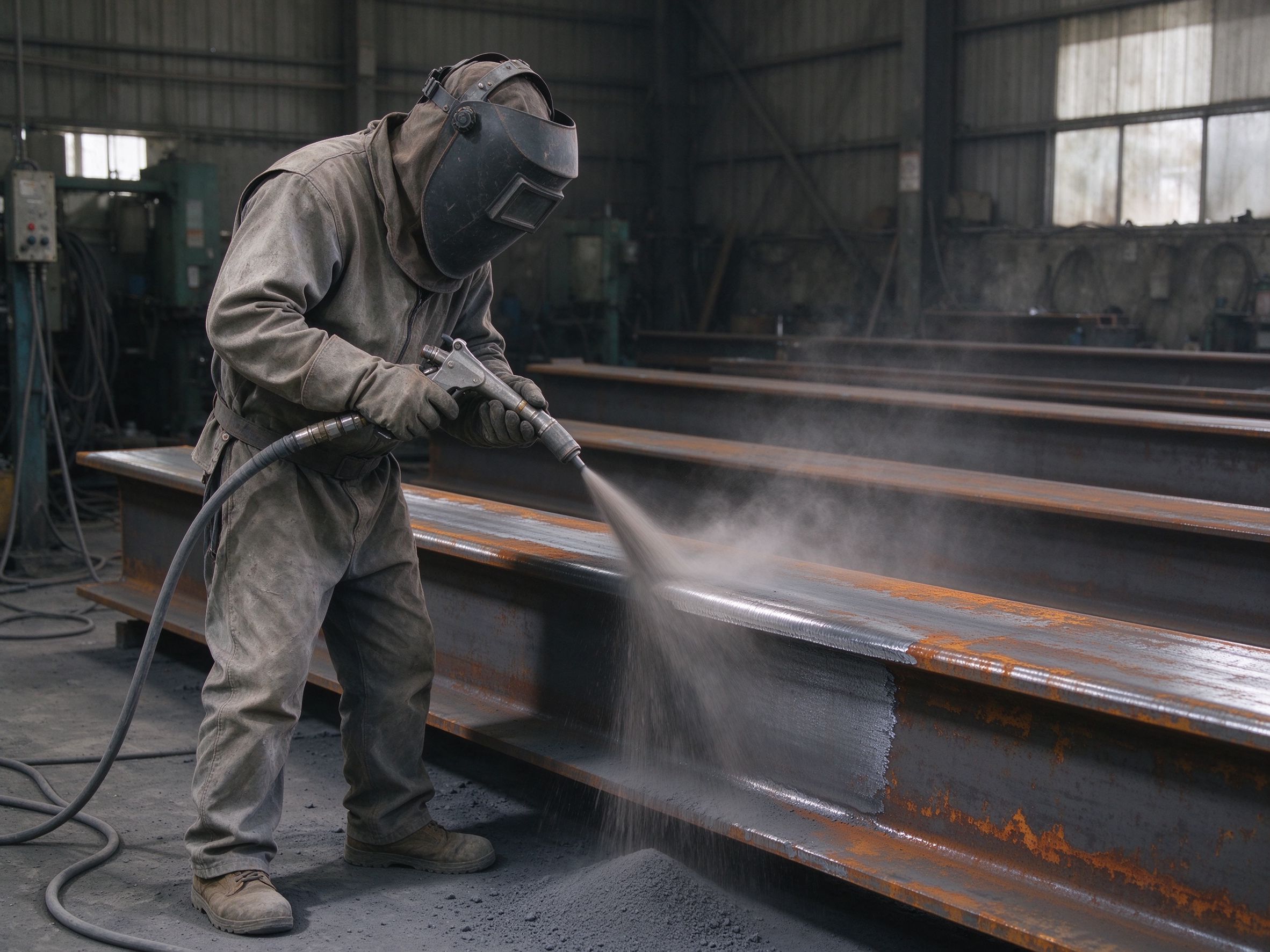
- The substrate must be free of oil, grease, rust scale, dust and loose mill scale before coating
- Abrasive blast cleaning to the degree required by the coating system (commonly Sa 2 / Sa 2½, depends on the system)
- Apply the compatible primer and shop primer; fire protection coating systems have approved primer combinations
- Incompatible primers can cause delamination or reduced adhesion — check the coating system’s approved data sheet
Application conditions
- Temperature, humidity and steel surface temperature limits follow the coating manufacturer’s data sheet
- Ventilation is required, especially indoors, for solvent-based intumescent coatings
- Coating intervals and minimum/maximum recoat times matter; over-coating before cure can trap solvents
- Edge coverage: sharp edges and welds often need extra care, and the dry-film thickness should be verified there
Thickness inspection and acceptance
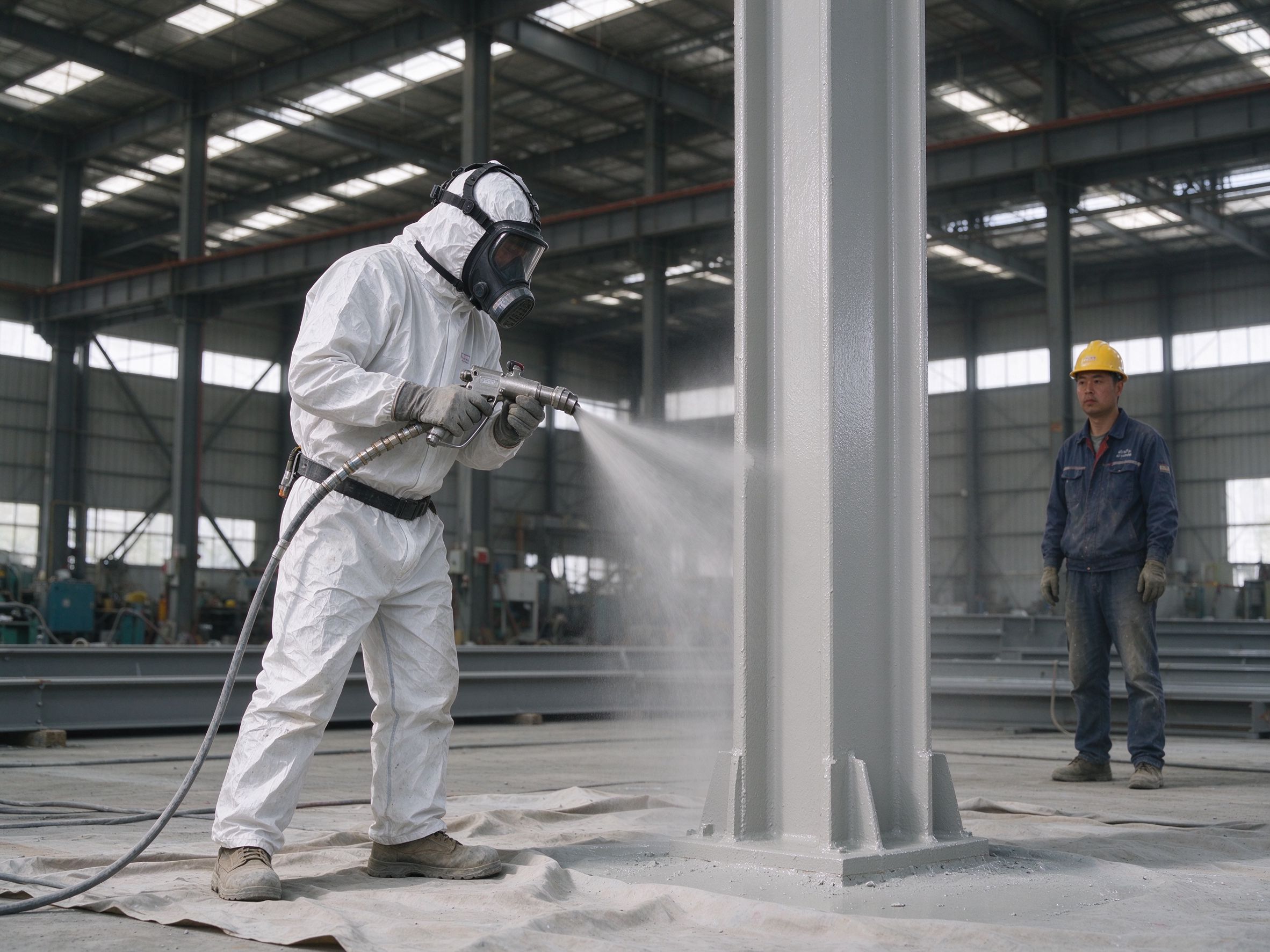
- Dry-film thickness is measured on site with a coating thickness gauge at agreed check points
- The target thickness comes from the coating system’s certified design tables for the required fire rating and the member’s section factor (Hp/A)
- Inspect edges, welds, cut-outs, bolt zones and re-coat areas separately — they are the weak points
- Acceptance is usually based on: required thickness achieved, adhesion, visual continuity and no holidays, drips or bare spots
- Keep application records and thickness reports; local fire authority submission often requires them

Responsibility boundary
| Stage | ZhongSai (supplier) | Buyer / local party |
|---|---|---|
| Coating technical coordination | Recommend system options and provide guidance per drawings | Confirm the required fire rating and local authority requirements |
| Fabrication surface prep | Shop primer and surface condition per spec | — |
| Fire protection coating application | Technical guidance for application conditions | Local applicator executes; application quality is the site’s responsibility |
| Inspection & acceptance | Support with documentation guidance | Arrange local inspection and authority submission |
| Permits / authority submissions | — | Local registered engineer and fire authority approval |
Checklist before, during and after application
- Fire rating and member section factor confirmed from drawings
- Coating system and certified data sheet selected
- Surface preparation and primer compatible with the coating system
- Weather / environmental conditions within application limits
- Thickness gauge and check points agreed before start
- Edges, welds, cut-outs and re-coat areas included in inspection
- Application and thickness records kept for authority submission
- Touch-up plan agreed for transport and erection damage
FAQ
What is the difference between intumescent and cementitious fire protection coating?
Intumescent coatings are thin-film systems that char under heat; cementitious coatings are thick plaster-like layers. Intumescent gives a smoother paintable finish; cementitious is rougher and usually heavier.
How thick should fire protection coating be on steel?
The required thickness is not a fixed global value — it depends on the fire rating, local code, the member’s section factor and the coating system’s certified data. Do not accept an arbitrary thickness without the system data sheet.
Who applies fire protection coating on site?
The local applicator executes the application; ZhongSai provides technical guidance and documentation support. Responsibility for permits and authority submissions stays with the local party.
How is fire protection coating inspected?
Dry-film thickness is measured with a coating thickness gauge at agreed check points; visual checks cover adhesion, continuity, edges, welds and re-coat areas.
Can fire protection coating be applied outdoors?
Some systems are approved for limited exterior use; most thin-film intumescent systems are designed for interior environments. Follow the coating system’s approved exposure conditions.
Does the primer affect fire protection coating?
Yes. Fire protection systems have approved primer combinations; an incompatible primer can reduce adhesion and cause the coating to fail inspection.
What documents are needed for fire authority submission?
Coating system data sheet, application records, dry-film thickness reports and, where required, the applicator’s qualifications and the registered engineer’s sign-off.
Can damaged fire protection coating be repaired?
Yes, with the same system and compatible primer; damage from transport and erection should be repaired and thickness re-verified before final acceptance.
Sending a steel structure overseas?
Share the drawings and the fire rating required; ZhongSai can confirm the fabrication, surface condition and provide fire protection coating technical guidance before quotation.