
How to Audit a Steel Structure Factory in China? Practical Checklist
Visiting or remotely auditing a Chinese steel structure factory? This practical checklist covers capacity, equipment, welding quality control, testing, packing, export experience and red flags to watch for.
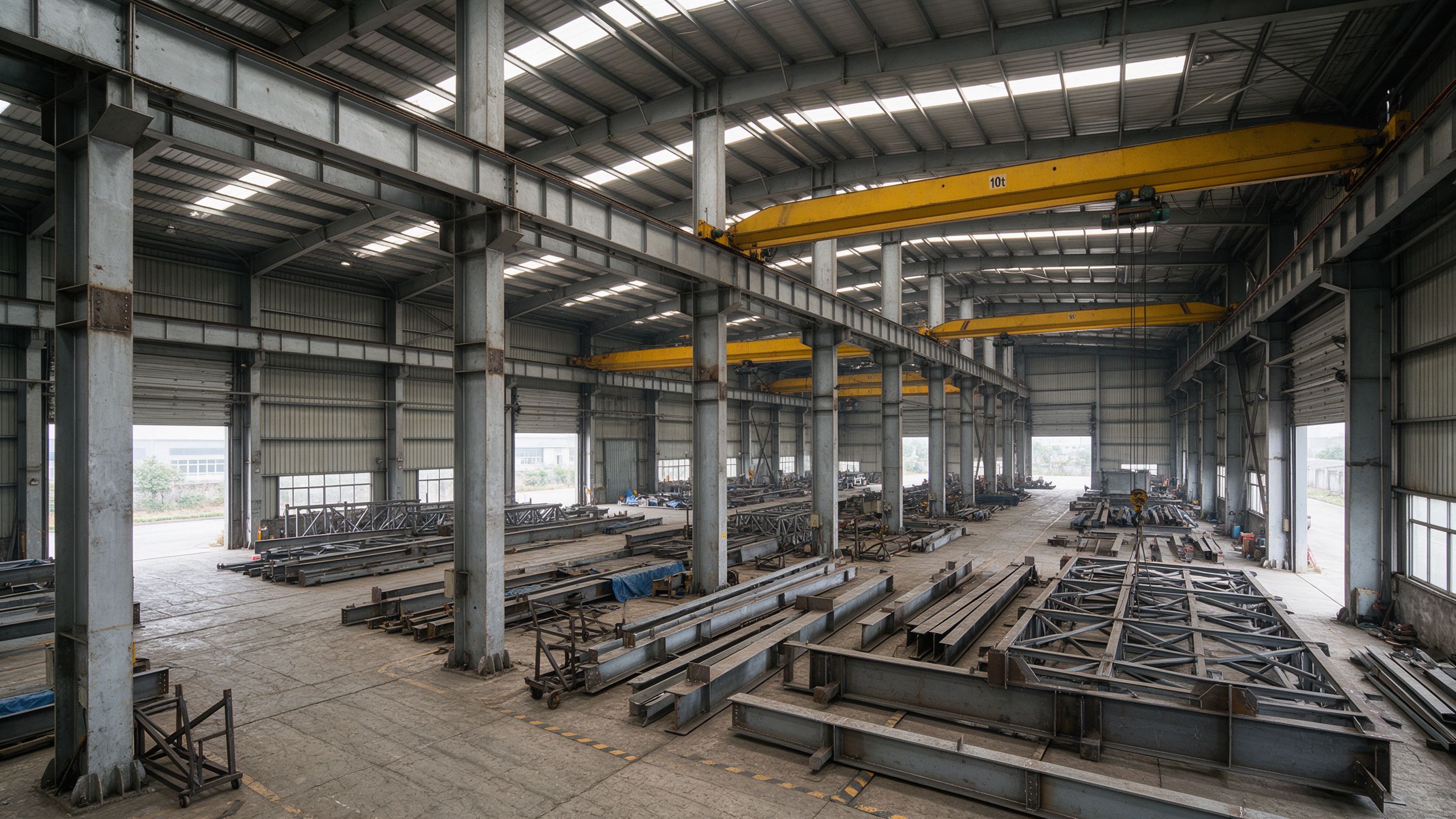
A factory audit is the most reliable way to tell a real steel structure manufacturer from a trading company or broker. You do not need to be a structural engineer to run one; you need a clear checklist covering production capacity, equipment, welding control, testing, packing, and export experience. For overseas buyers, a short on-site visit or a structured video walkthrough usually reveals the difference between a capable supplier and a middleman within half a day.
1. Confirm It Is a Factory, Not a Broker
Before the visit, ask the supplier for the registered entity name, business license, and photos of the same entity’s workshop, office and yard. On site, check:
- Workshop ownership: Do they actually own the steel fabrication lines, or do they rent capacity from another workshop?
- Signage and entity name: Does the company name on the license, invoice, email signature and signboard match?
- Scale: A genuine manufacturer usually shows marked members, welding stations and raw-material storage all in one connected yard.
Trading companies often show impressive offices but cannot take you to the shop floor where your beams are actually welded.
2. Production Capacity and Equipment
Ask for real equipment lists and, where possible, verify them visually:
- Cutting: CNC flame/plasma cutting, sawing, drilling lines
- Assembly: H-beam assembly machines, automatic welding (submerged-arc), end-milling
- Surface treatment: shot-blasting booth and painting line, or galvanizing arrangement
- Lifting capacity: bridge cranes rated capacity — this tells you the heaviest member they can handle
- Annual output range: ask for tonnage and compare with your project size; a factory vastly smaller or vastly larger than your needs can both be risky
3. Welding Quality Control
Welding is where cheap and expensive fabricators separate. Look for:
- Qualified welders: welder certificates in hand, not just promised in an email
- Welding Procedure Specifications (WPS) / procedure qualifications (WPQR): real documents, not blank templates
- Automatic submerged-arc welding for web-to-flange seams on H sections; manual welding only where it cannot be avoided
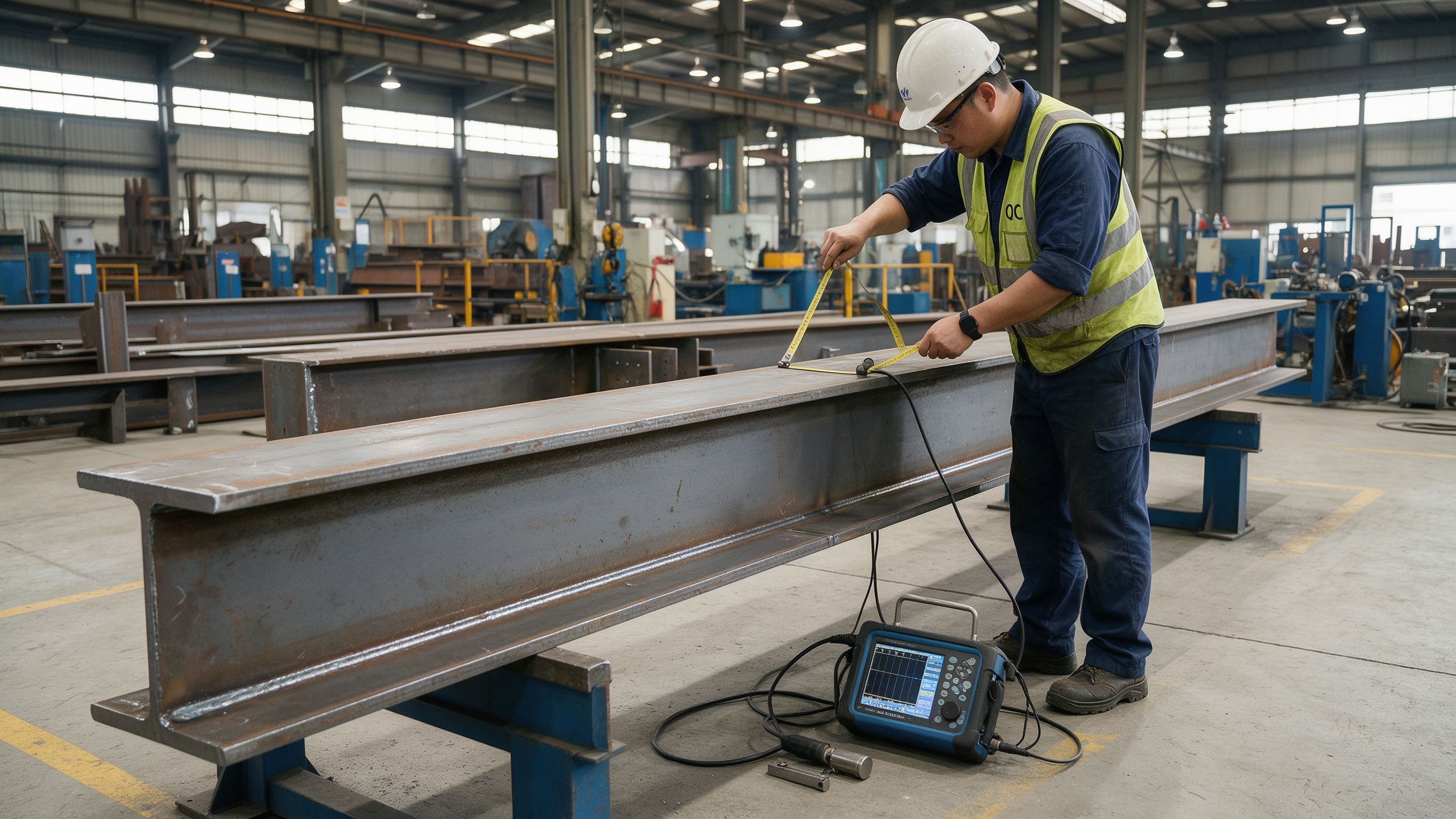
- Backing, penetration and post-weld inspection: visual inspection, and NDT (UT/MT) where specified by the design
If the shop floor has no WPS posted, no weld records and welders without current qualification cards, that is a red flag.
4. Testing and Inspection Records
Ask to see physical records, not brochures:
- Mill test certificates (MTC/EN 10203) for the actual steel grade used
- NDT reports for critical welds
- Dimensional inspection records of finished members
- Coating thickness measurement reports
A serious manufacturer keeps traceability: material plate number, member mark, welder, inspector and date can all be traced for every shipped piece.
5. Packing, Marking and Export Experience
For overseas projects this section decides whether your site erection goes smoothly:
- Member marking system: every beam and column has a unique mark matching the erection drawings
- Packing method: angle steel flats, frame bracing, bolted parts in separate boxes, anti-corrosion protection
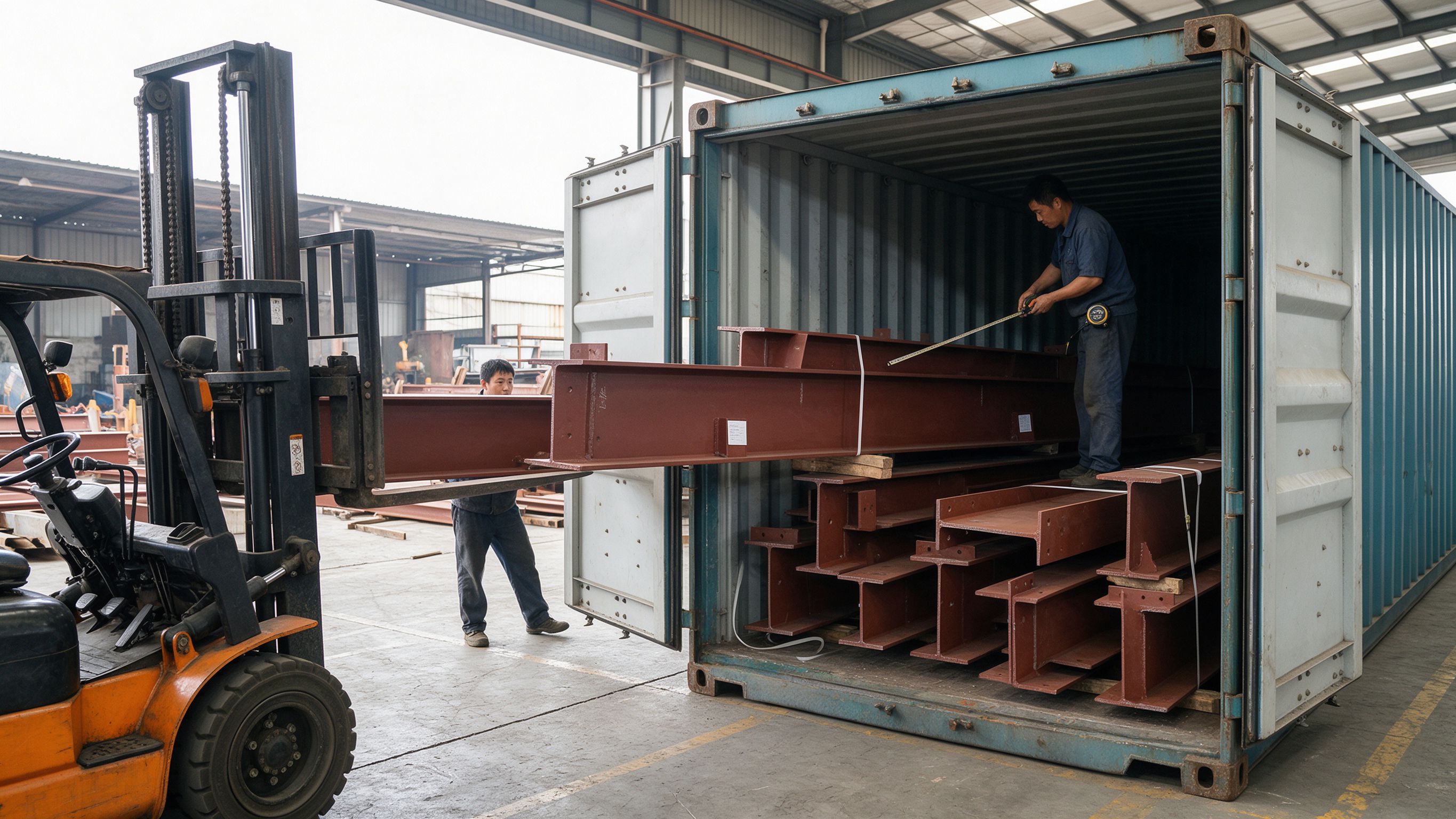
- Container loading experience: how sections are nested and loaded to avoid wasted space and in-transit damage
- Export documents: packing list, loading photos, commercial invoice, certificate of origin when needed
Inexperienced exporters often ship members that arrive with mixed marks, damaged coating and missing small parts, which delays site work for weeks.
6. Red Flags During an Audit
Walk away — or at least slow down and verify — if you see:
- No shop floor access, or constant excuses to avoid the welding area
- Promises of unrealistically low prices with no engineering detail
- No written WPS, no welder cards, no inspection records
- Cannot produce mill certificates for the steel grade they quoted
- Cannot show packing photos from previous export shipments
- Sales staff who cannot explain span, loads or connection details
7. On-Site vs Remote Audit
If you cannot travel, a live video walkthrough can substitute for much of a physical visit: ask the supplier to walk you through raw material storage, a current production beam (read its material mark), the welding bay, the blasting/painting area and the packing yard. Request time-stamped photos for each zone. It is weaker than being on site, but it still filters out most brokers.
What ZhongSai Recommends
Bring your drawing package and a list of the above items to any factory meeting. A manufacturer that answers with documents rather than promises is usually one you can build a long-term export relationship with.
Planning a steel structure project and not sure how to compare suppliers? Send your drawings or project requirements for an engineering review.