
Steel Structure Design Codes: GB vs AISC vs Eurocode
A practical comparison of GB 50017, AISC 360, and EN 1993 for overseas steel structure procurement — covering steel grade mapping, load combinations, connection design, welding standards, and what buyers should confirm before ordering.

When you order a steel structure from an overseas manufacturer, the design code is not a paperwork detail. It determines how the structure is calculated, which steel grades are specified, how connections are designed, and which welding and inspection standards apply. A building designed under GB 50017 cannot simply be relabelled as AISC or Eurocode compliant — the calculation assumptions, load combinations, and detailing requirements differ.
This guide explains the three most common steel structure design codes, where they align and where they diverge, and what buyers should confirm before placing an order.
Direct Answer
There is no universally “best” steel structure design code. GB 50017 is the Chinese standard and is the default for manufacturers in China. AISC 360 is used for projects governed by US standards or where American engineers are involved. EN 1993 (Eurocode 3) is used for European and many African, Middle Eastern, and Southeast Asian projects that reference Eurocodes. The correct code is the one specified by the project’s local building authority, the structural engineer of record, or the client’s specification. If you are sourcing from a Chinese manufacturer and the project requires AISC or Eurocode, you must confirm that the manufacturer can produce calculation reports and drawings under that code — or that a third-party engineer will review and stamp the design.
| Aspect | GB 50017 (China) | AISC 360 (USA) | EN 1993 / Eurocode 3 (Europe) |
|---|---|---|---|
| Design philosophy | Limit state design | LRFD and ASD | Limit state design |
| Common steel grades | Q235, Q355, Q390, Q420 | ASTM A36, A572 Gr.50, A992 | S235, S275, S355, S460 |
| Load combination basis | GB 50009 (Load code) | ASCE 7 / IBC | EN 1990 / EN 1991 |
| Connection design | GB 50017 Chapter 11 | AISC 360 Chapter J | EN 1993-1-8 |
| Welding standard | GB 50661 | AWS D1.1 | EN ISO 15614 / EN 1993-1-9 |
| Seismic design | GB 50011 | AISC 341 | EN 1998 |
| Typical regions | China, projects with Chinese engineers | USA, Philippines, parts of Latin America | EU, Middle East, Africa, Southeast Asia |
Code selection should be confirmed at the quotation stage, not after fabrication begins.
Why the Design Code Matters
The design code governs every structural decision in a steel building:
- Member sizing — columns, beams, and bracing are proportioned according to the code’s capacity equations and safety factors.
- Load combinations — how dead load, live load, wind, snow, seismic, and crane loads are combined differs between codes.
- Connection design — bolted and welded connections have different capacity formulas and detailing requirements.
- Steel grade selection — each code references its own set of steel standards, though equivalent grades exist.
- Welding and inspection — welding procedure specifications (WPS), welder qualifications, and NDT requirements follow different standards.
- Deflection and vibration limits — serviceability criteria vary, especially for floors with cranes or sensitive equipment.
A supplier that quotes under GB but delivers to a project requiring AISC may produce a structure that is structurally sound under one code but does not satisfy the other’s specific requirements — particularly in connection detailing and load combinations.
The Three Major Codes
GB 50017 — Standard for Design of Steel Structures (China)
GB 50017 is the national standard for steel structure design in China. It is the default code used by Chinese steel fabricators and is familiar to their engineering teams.
- Uses limit state design (ultimate limit state and serviceability limit state).
- References GB 50009 for load combinations and GB 50011 for seismic design.
- Common steel grades: Q235 (yield 235 MPa), Q355 (yield 355 MPa), and higher grades for heavy structures.
- Welding follows GB 50661.
- Connection design is covered in Chapter 11 of GB 50017.
For projects in China or projects where the client accepts Chinese standards, GB 50017 is the most straightforward and cost-effective option because the manufacturer’s engineering team works with it daily.
AISC 360 — Specification for Structural Steel Buildings (USA)
AISC 360, published by the American Institute of Steel Construction, is the governing specification for steel buildings in the United States and is referenced by the International Building Code (IBC).
- Supports both LRFD (Load and Resistance Factor Design) and ASD (Allowable Strength Design).
- References ASCE 7 for loads and AISC 341 for seismic design.
- Common steel grades: ASTM A36 (yield 250 MPa), A572 Grade 50 (yield 345 MPa), A992 for W-shapes.
- Welding follows AWS D1.1.
- Connection design is in Chapter J of AISC 360.
AISC is commonly required for projects in the US, the Philippines, Guam, and parts of Latin America that reference US building codes. When sourcing from China for an AISC project, confirm whether the manufacturer can produce AISC calculation packages or whether a US-licensed engineer will review and stamp the design.
EN 1993 — Eurocode 3: Design of Steel Structures (Europe)
EN 1993, part of the Eurocode suite, is the steel structure design standard used across the European Union and widely adopted in the Middle East, Africa, and parts of Southeast Asia.
- Uses limit state design with partial factors defined in EN 1990.
- References EN 1991 for actions and EN 1998 for seismic design.
- Common steel grades: S235, S275, S355 (yield 355 MPa), and higher grades.
- Welding follows EN ISO 15614 for WPS qualification and EN 1993-1-9 for fatigue.
- Connection design is in EN 1993-1-8.
Eurocode 3 is more modular than GB or AISC, with separate parts for general rules, fire design, fatigue, and connections. Projects in the UAE, Saudi Arabia, Nigeria, Kenya, and many other countries commonly reference Eurocodes, sometimes with national annexes that modify partial factors.
Steel Grade Equivalents
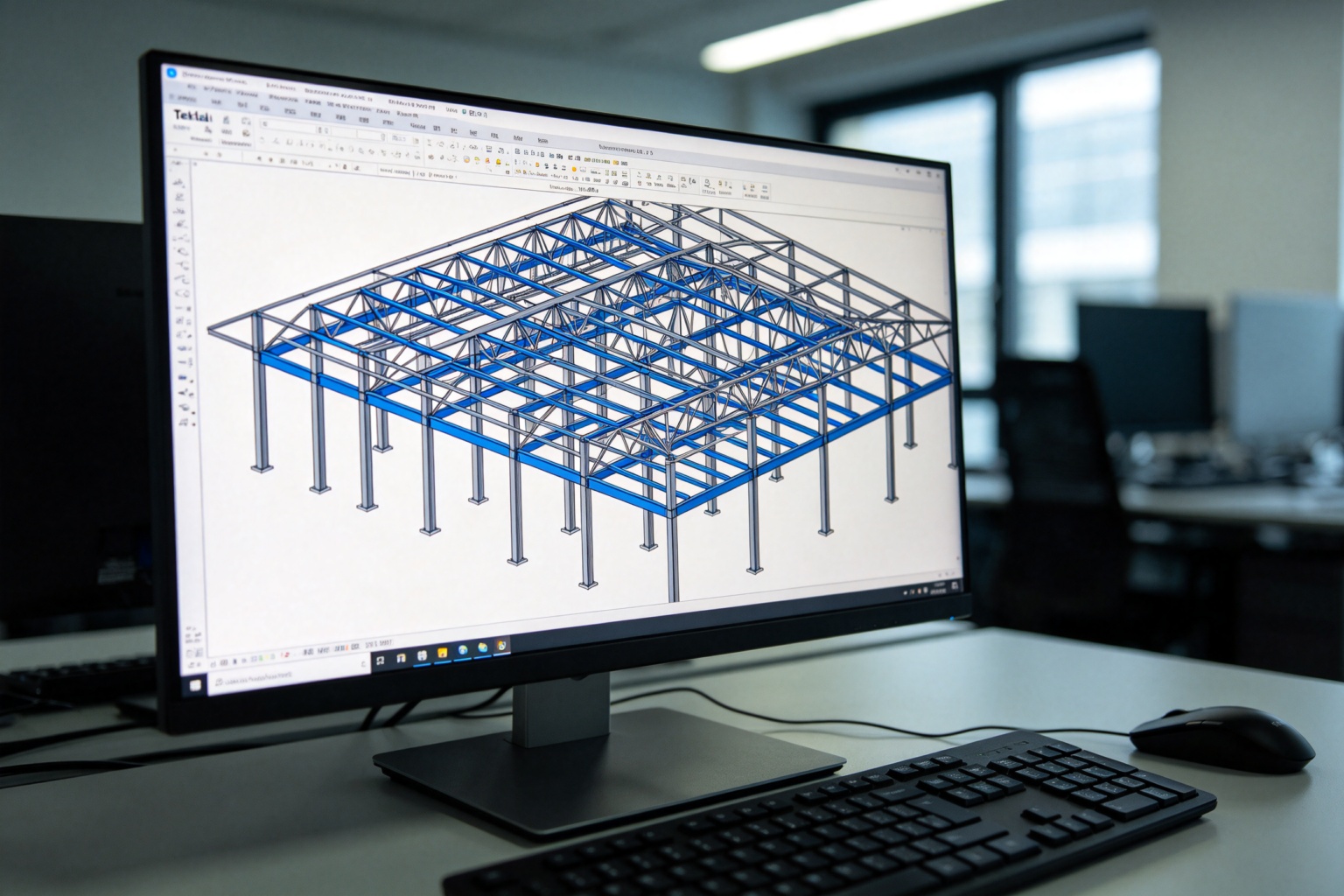
While no two grades are identical, the following mapping is commonly used for cross-code comparison. Actual substitution requires engineering approval and may require mill certificate review.
| GB (China) | ASTM (USA) | Euro Norm (Europe) | Nominal Yield |
|---|---|---|---|
| Q235B | A36 | S235JR | 235 / 250 / 235 MPa |
| Q355B | A572 Gr.50 | S355JR | 345–355 MPa |
| Q390B | A572 Gr.55 / A633 | S355NL / S420 | 390 MPa |
| Q420B | A572 Gr.60 | S460NL | 420 MPa |
Important: yield strength values are nominal and vary by plate thickness. Q355 and S355 both specify 355 MPa yield for thinner sections, but the thickness ranges and chemical composition limits differ. Always confirm grade equivalence with the project’s structural engineer.
Key Differences in Practice
Load Combinations
Each code combines loads differently:
- GB 50009 uses partial factors on loads (e.g., 1.3 × dead + 1.5 × live for the fundamental combination) and considers wind and seismic loads specific to Chinese regions.
- ASCE 7 / LRFD uses load factors such as 1.2D + 1.6L and includes specific wind load procedures (MWFRS, C&C) and seismic load procedures.
- EN 1990 / EN 1991 uses combinations such as 1.35Gk + 1.5Qk and allows national annexes to modify factors.
The result: a structure designed for the same site under different codes may have different member sizes, especially for wind- and seismic-controlled designs.
Connection Design
Connection design is where codes diverge most visibly:
- GB 50017 provides formulas for bolt shear, bearing, and weld capacity based on nominal strengths.
- AISC 360 Chapter J distinguishes between LRFD and ASD, uses nominal strengths with resistance factors, and has detailed requirements for bolt slip-critical connections and weld groups.
- EN 1993-1-8 uses a component method for joint design, explicitly modelling the stiffness and resistance of each joint component (e.g., column web in shear, end plate in bending).
For simple shear connections, the differences are often minor. For moment connections and complex joints, the detailing and capacity calculations can differ significantly.
Welding Standards
- GB 50661 governs welding for steel structures in China, including WPS qualification and welder certification.
- AWS D1.1 is the US structural welding code, with specific requirements for prequalified WPS, welder qualification, and NDT (UT, MT, PT).
- EN ISO 15614 specifies WPS qualification in Europe, and EN ISO 9606 covers welder qualification.
A weld procedure qualified under one standard is not automatically valid under another. If the project requires AWS D1.1 welding, the manufacturer must have WPS and welder qualifications under that standard — or arrange for third-party qualification.
Deflection Limits
Serviceability limits differ:
- GB 50017 specifies deflection limits such as L/250 for roof beams and L/400 for crane girders (varies by use).
- AISC references deflection limits from the IBC and project specifications, commonly L/240 for roofs and L/360 for floors.
- EN 1993 does not specify mandatory deflection limits; these are typically set by the project specification or national annex, often L/250 to L/360.
For buildings with overhead cranes, sensitive equipment, or architectural finishes, deflection limits should be explicitly agreed in the design brief regardless of code.

How Code Choice Affects Procurement
The design code affects your procurement in several concrete ways:
- Engineering cost and timeline — If the manufacturer normally works in GB but the project requires AISC or Eurocode, additional engineering time is needed for cross-code calculations, connection rechecks, and drawing revisions.
- Steel grade availability — Q235 and Q355 are readily available in China. ASTM A572 and EN S355 may require specific mill orders or grade equivalence documentation.
- Welding qualification — AWS D1.1 or EN ISO qualifications may require additional WPS preparation and welder testing.
- Third-party review — Many projects require a locally licensed engineer to review and stamp the design. This is separate from the fabricator’s calculations.
- Inspection and documentation — Different codes require different inspection test plans (ITP), NDT procedures, and material traceability documentation.
Discuss the code requirement at the RFQ stage so the quotation includes the correct engineering scope.
What Buyers Should Confirm
Before placing an order, confirm the following with both your structural engineer and the manufacturer:
| Item | What to Confirm |
|---|---|
| Governing code | Which code edition and year applies (e.g., AISC 360-16, GB 50017-2017, EN 1993-1-1:2005+A1:2014) |
| Load code | Which load standard applies (GB 50009, ASCE 7, EN 1991) and site-specific wind/seismic data |
| Steel grades | Exact grade specification and whether Chinese equivalents are accepted |
| Connection standard | Which connection design provisions apply |
| Welding standard | WPS qualification standard and welder certification requirements |
| Engineer of record | Who will review and stamp the design — manufacturer, local engineer, or third party |
| Deflection criteria | Project-specific serviceability limits, especially for cranes and floors |
| National annexes | For Eurocode projects, which country’s national annex applies |
| Inspection plan | Required NDT percentage, hold points, and third-party inspection scope |
Common Mistakes
Assuming all codes produce the same design. They don’t. A GB-designed building may not meet AISC connection detailing requirements or ASCE wind load procedures.
Changing the code after fabrication starts. Re-engineering connections and recalculating members mid-project causes delays and cost overruns. Confirm the code at quotation stage.
Accepting grade equivalence without engineer approval. Q355 ≈ S355 ≈ A572 Gr.50 is a common mapping, but the project engineer must approve the substitution in writing.
Forgetting the welding standard. The design code and welding code are separate documents. A project under AISC 360 typically requires AWS D1.1 welding; a Eurocode project requires EN ISO qualifications.
Ignoring national annexes. Eurocode projects in different countries may use different partial factors and deflection limits. Always check which national annex applies.
Responsibility Boundary
In a typical overseas steel structure procurement:
| Party | Responsibility |
|---|---|
| Client / Project owner | Specify the governing code, load criteria, and performance requirements |
| Local structural engineer | Design under the specified code, obtain permits, review and stamp calculations |
| Steel manufacturer (ZhongSai) | Detail, fabricate, and inspect per the approved design and specified code; provide fabrication drawings for approval |
| Local contractor | Foundation, civil works, erection, and local code compliance |
ZhongSai can produce fabrication drawings and calculation reports under GB 50017 as standard. For projects requiring AISC or Eurocode, we coordinate with the project’s engineer of record to ensure the detailing and fabrication meet the specified code requirements. We do not substitute a different code without written approval from the project engineer.
FAQ
Which code should I use for my project? The governing code is determined by the local building authority where the project is located, the structural engineer of record, or the client’s specification. If you are unsure, ask your local engineer which code they will design and permit under.
Can a Chinese manufacturer design under AISC or Eurocode? Many Chinese manufacturers, including ZhongSai, can produce fabrication drawings and coordinate calculations under AISC or Eurocode when the project requires it. However, the final design review and stamping typically must be done by a licensed engineer in the project’s jurisdiction.
Is Q355 the same as S355? Q355 and S355 have the same nominal yield strength (355 MPa) for comparable thicknesses, but their chemical composition limits, thickness ranges, and certification requirements differ. They are commonly treated as equivalents, but the project engineer must approve the substitution.
Do I need to specify the welding code separately? Yes. The design code (AISC 360, GB 50017, EN 1993) and the welding code (AWS D1.1, GB 50661, EN ISO 15614) are separate documents. Specify both in your purchase order or design brief.
What if my project is in a country that doesn’t have its own steel code? Many countries adopt one of the three major codes by reference. Common practice: Middle East and Africa often use Eurocodes; Southeast Asia varies between Eurocode and AISC; the Philippines and US territories use AISC/IBC. Confirm with your local engineer.
How much extra does it cost to use AISC or Eurocode instead of GB? The additional cost depends on the project complexity and whether the manufacturer already has cross-code experience. It typically includes extra engineering time for calculation conversion, connection rechecks, and possibly third-party welding qualification. Request this as a separate line item in your quotation.
Send Project Requirements
If you have a project with a specific design code requirement, send your drawings, specifications, and code reference to ZhongSai. We will review the requirements, confirm our scope under the specified code, and provide a quotation that includes the correct engineering, detailing, and inspection scope.