
High-Strength Bolt Installation: How Steel Structure Bolts Are Tightened
High-strength bolts are tightened to a defined tension, not just to a snug fit. This guide covers bolt grades, snug-tight vs preloaded connections, torque and turn-of-nut methods, tension-control bolts, common errors and the site inspection checklist.
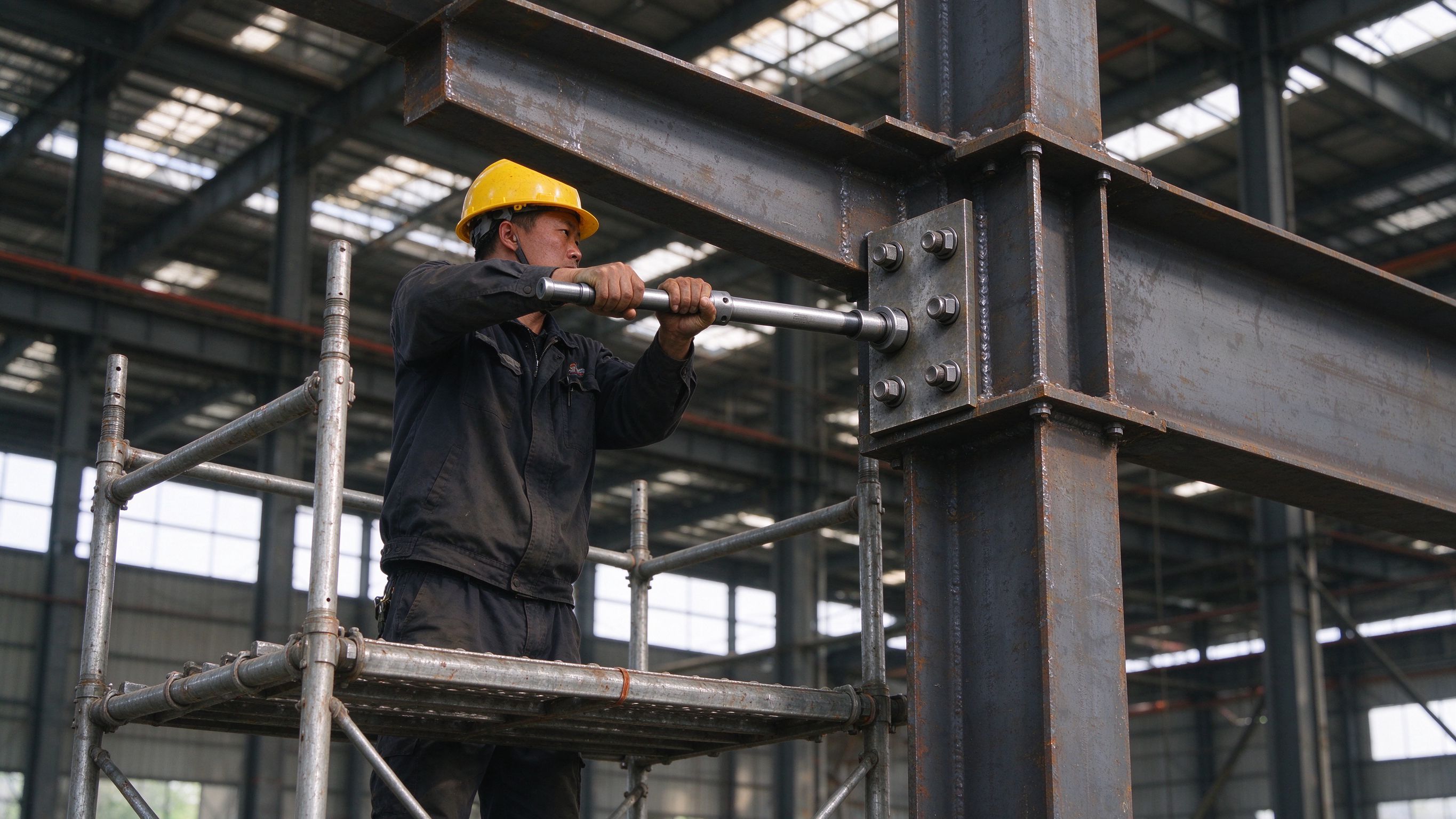
High-strength bolts are tightened to a defined bolt tension, not merely to a snug fit. The installation method — snug-tight or preloaded — and the tightening procedure (torque method, turn-of-nut, or tension-control bolts) are specified by the design and the applicable code, and they determine whether the connection carries load by friction or by bearing. Correct installation matters because under-tightened bolts can loosen and slip, while over-tightening can damage the bolt or the connection. The procedure depends on the bolt grade, connection type and local code, so the site team must follow the approved drawings and the fabricator’s guidance. Buyers should confirm the bolt specification and tightening method before fabrication and verify installation on site.
This guide explains bolt grades, the difference between snug-tight and preloaded connections, the main tightening methods, common installation errors, and what to check after bolting.
Part 1: Why bolt tension matters
A high-strength bolt works by clamping the connected plates together. The clamping force (bolt tension) is what resists slip in friction-type connections and prevents loosening under vibration and repeated loading.
- Friction-type connection — load is transferred by friction between the plates; the bolt must be preloaded to the specified tension.
- Bearing-type connection — load is transferred by bearing of the bolt against the plate holes; the bolt still needs correct tightening but preload requirements may differ.
- Loose or under-tightened bolts — allow slip, loosen under vibration, and reduce the connection’s stiffness.
- Over-tightening — can yield the bolt, strip threads, or distort the connection.
The tightening requirement is set by the design and the applicable code, and the same connection can behave differently if the procedure is not followed.
Part 2: Bolt grades and markings
| Bolt grade | Typical standard | Typical use | Marking |
|---|---|---|---|
| 8.8 | ISO / GB 1228 class | General high-strength bolting | Property class 8.8 marked on head |
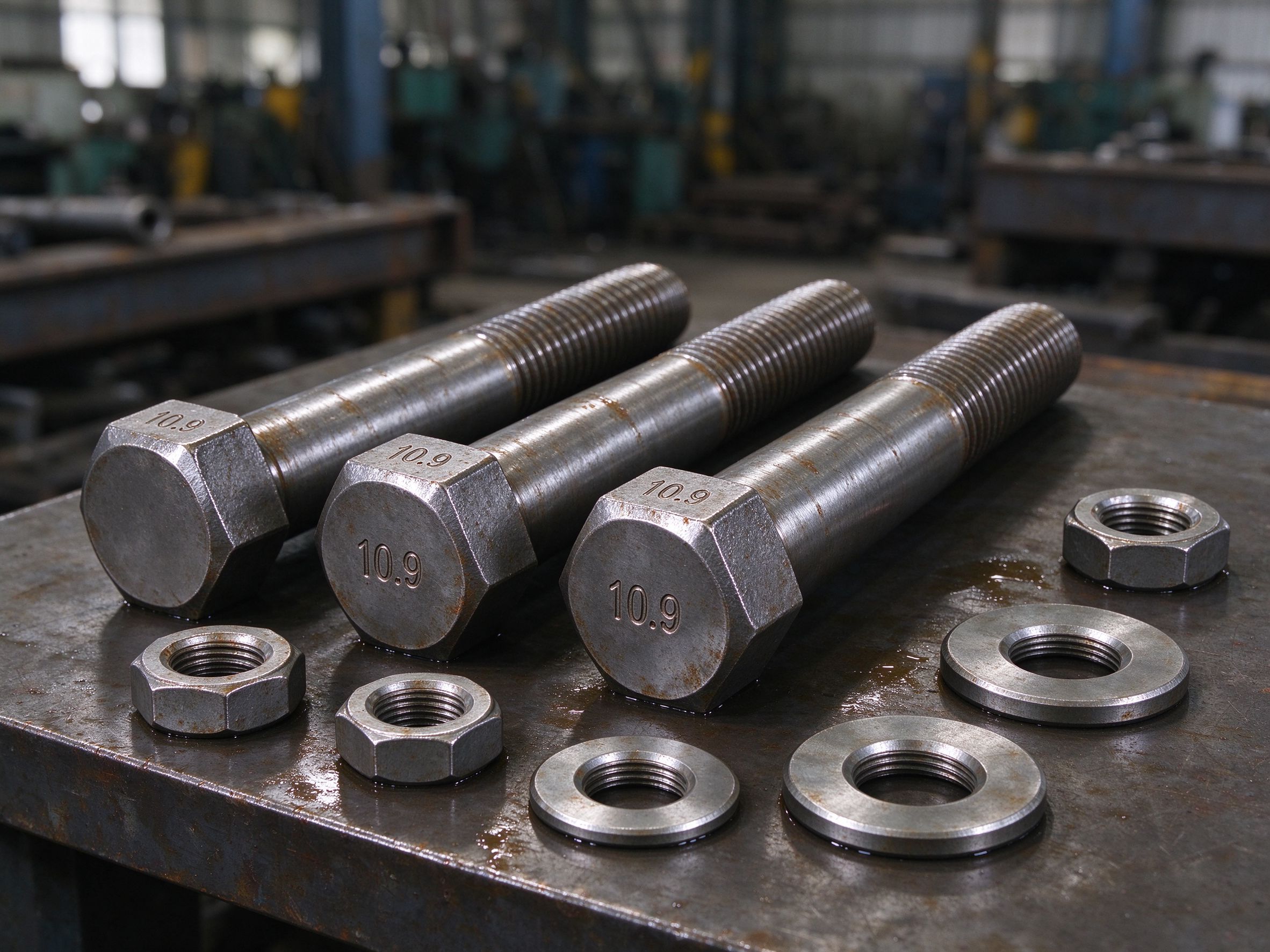
| 10.9 | ISO / GB 1228 class | Higher-strength connections | Property class 10.9 marked on head |
| A325 | ASTM | Structural steel (North America) | A325 marked on head |
| A490 | ASTM | Higher strength (North America) | A490 marked on head |
| Grade 8.8 / 10.9 equivalents | EN 14399 (Europe) | Preloaded bolting systems | Head markings per standard |
The grade and the matching nut and washer must be verified against the approved drawings. Mixing bolts of different grades in one connection should not be accepted.
Part 3: Snug-tight vs preloaded connections
| Aspect | Snug-tight connection | Preloaded connection |
|---|---|---|
| Tightening level | Bolts pulled to snug (firm contact), no defined tension | Bolts tensioned to a defined preload |
| How it carries load | Bearing of bolt in the hole | Friction between plates (or bearing, per design) |
| Typical use | Most static, bearing-type connections | Slip-critical connections, dynamic loads, large spans |
| Inspection | Visual snug check | Torque or turn-of-nut verification |
| Cost | Lower, faster | Higher, more controlled procedure |
The connection type is shown on the approved drawings; the site team must follow it, because the same bolt installed by the wrong procedure can fail the design intent.
Part 4: Tightening methods compared
| Method | How it works | Suited for | Key points |
|---|---|---|---|
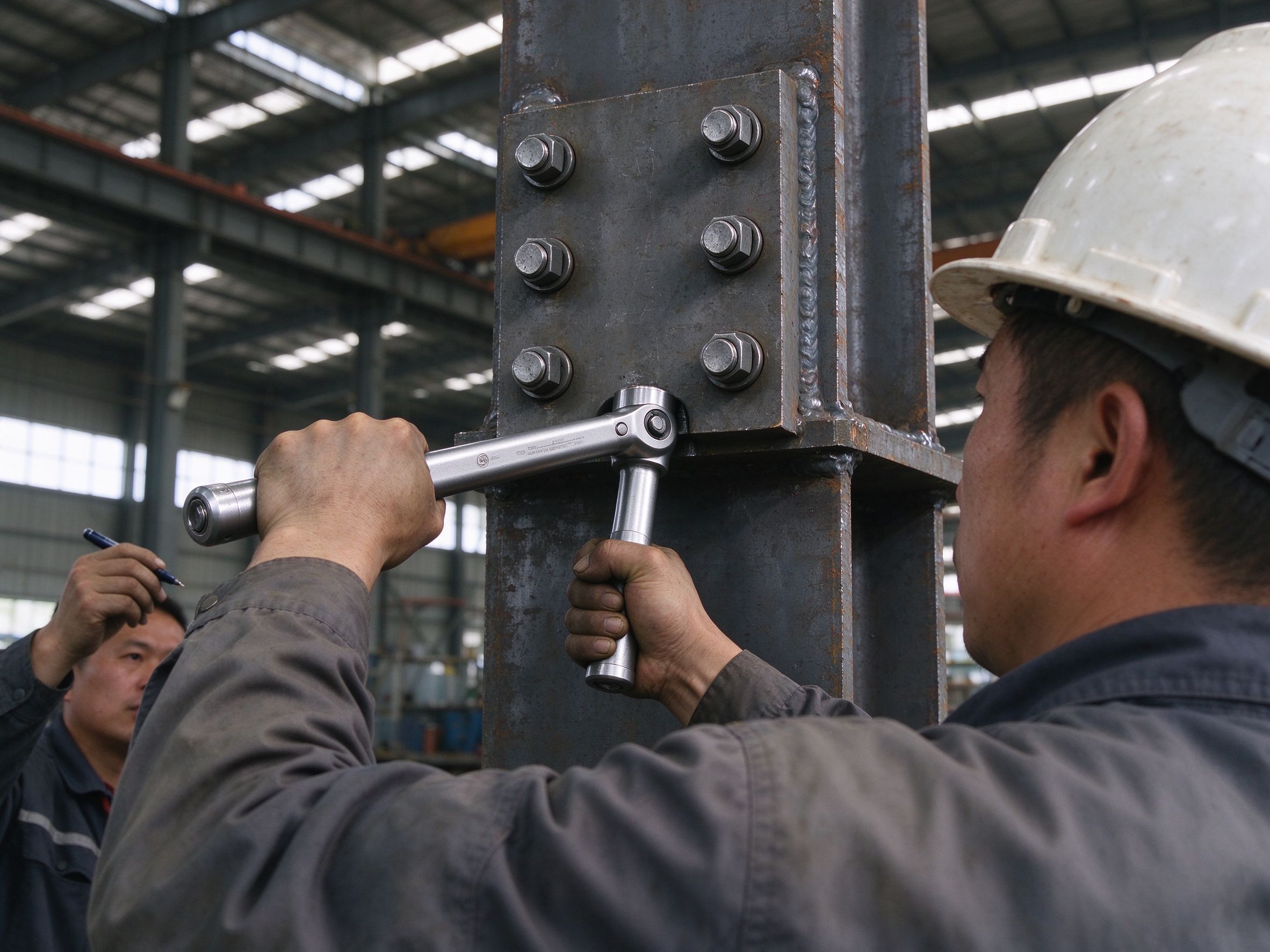
| Torque method | Apply specified torque with a calibrated torque wrench | General preloaded connections | Torque-tension relationship must be verified; re-calibrate wrenches |
| Turn-of-nut | Tighten snug, then rotate nut a specified additional angle | Common structural bolting | Removes torque-tension uncertainty; measured in degrees/hex flats |
| Tension-control (TC) bolts | Splined end breaks off at design tension | Fast, reliable preloading | No torque wrench needed; sheared spline confirms tension |
| Direct tension indicator | Washer with bumps flattens at design tension | Verification-oriented projects | Visual check of washer gaps |
The chosen method is specified by the design and code. Whatever the method, the procedure must be done in the correct sequence: start from the stiffest point and work outward, tightening to partial torque in stages where required.
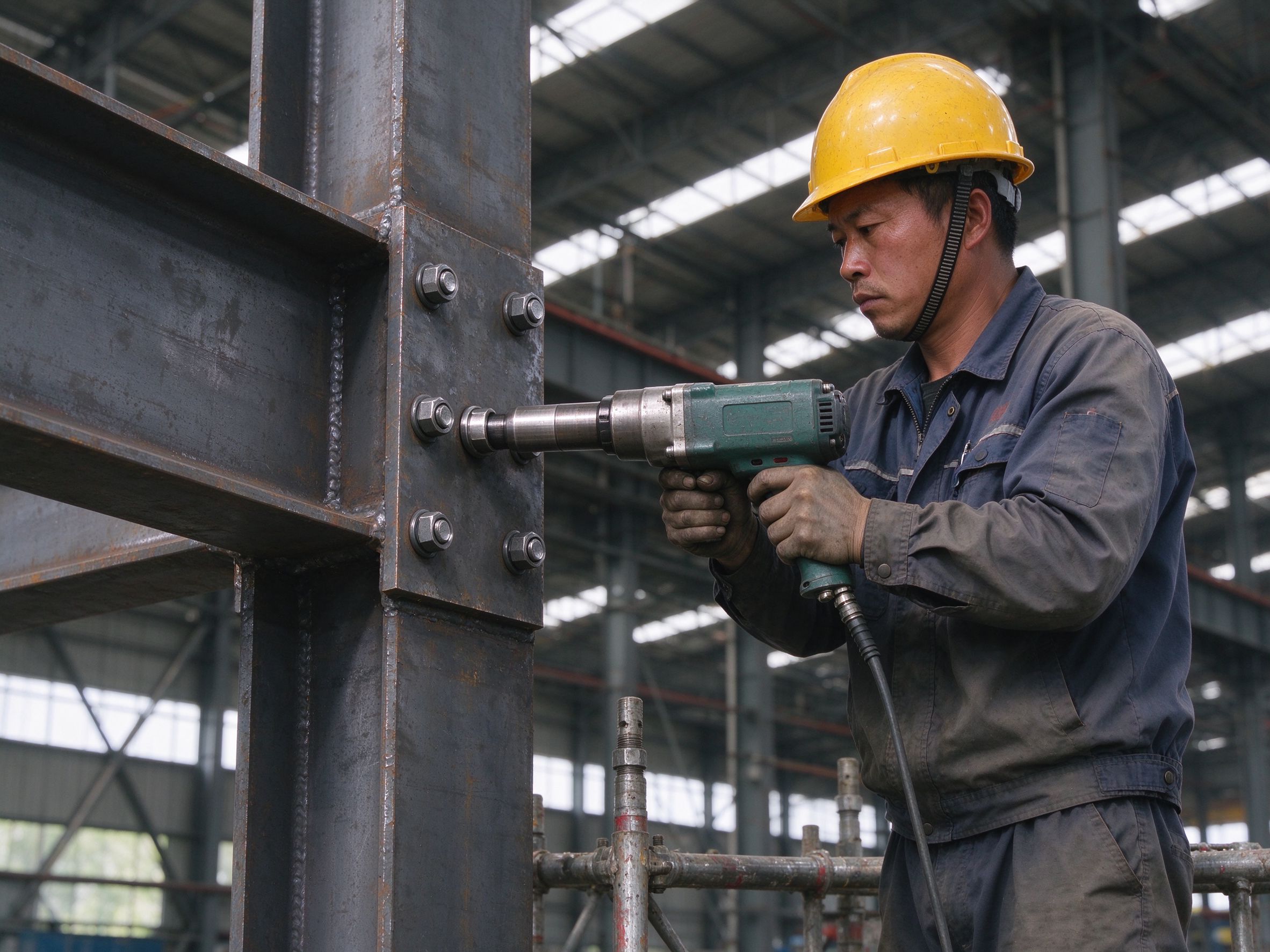
Part 5: Installation steps and checklist
- Verify bolt grade, size, length and nut/washer match the approved drawings.
- Clean the bolt threads and the faying surfaces as specified (for friction-type connections, the friction surface must meet the specified slip factor).
- Align the connection and insert bolts, with washers positioned as detailed.
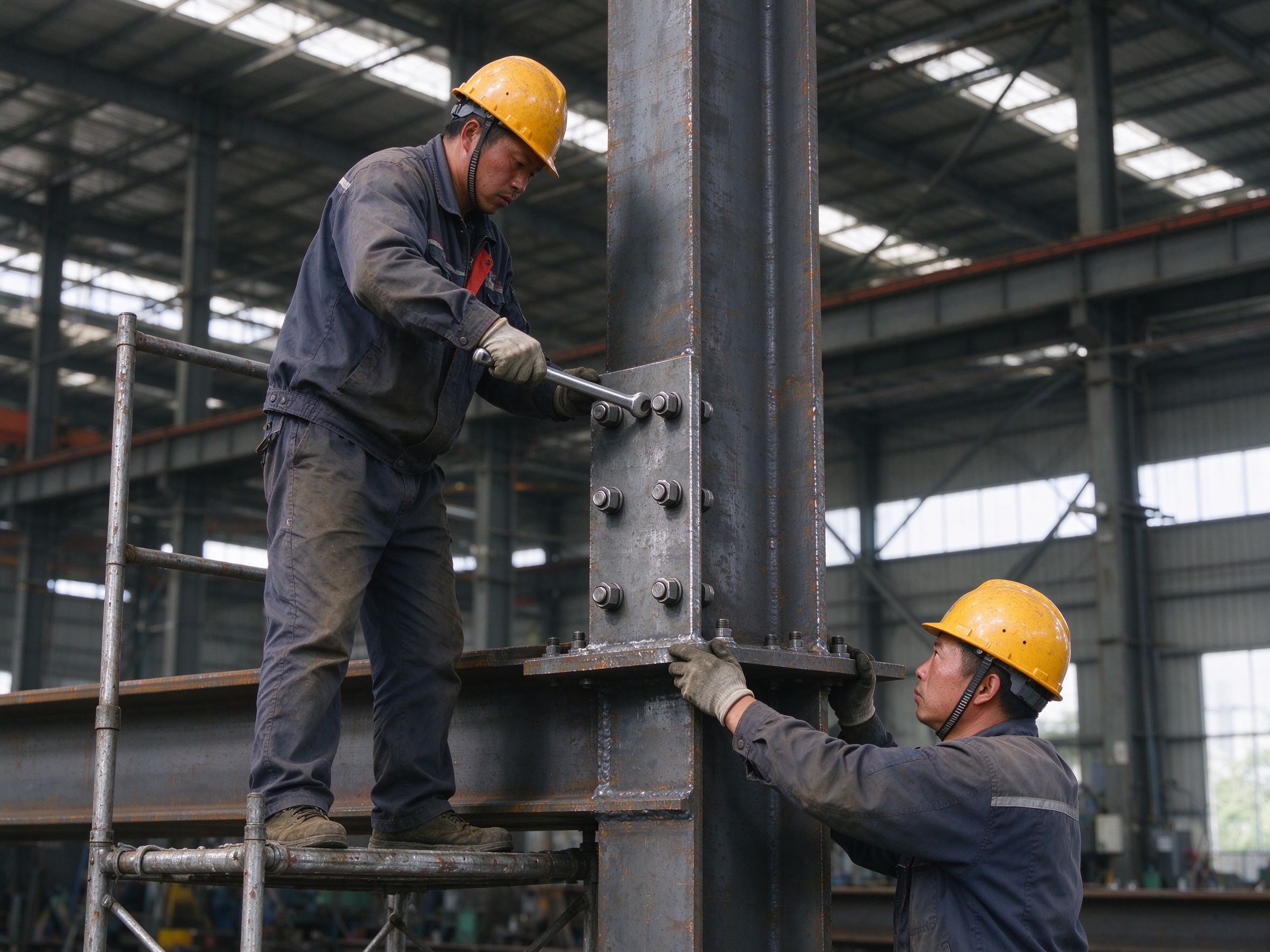
- Snug-tighten all bolts in the connection first.
- Apply the final tightening method (torque, turn-of-nut or TC bolts) in the specified sequence and stages.
- Mark or record completed bolts for inspection.
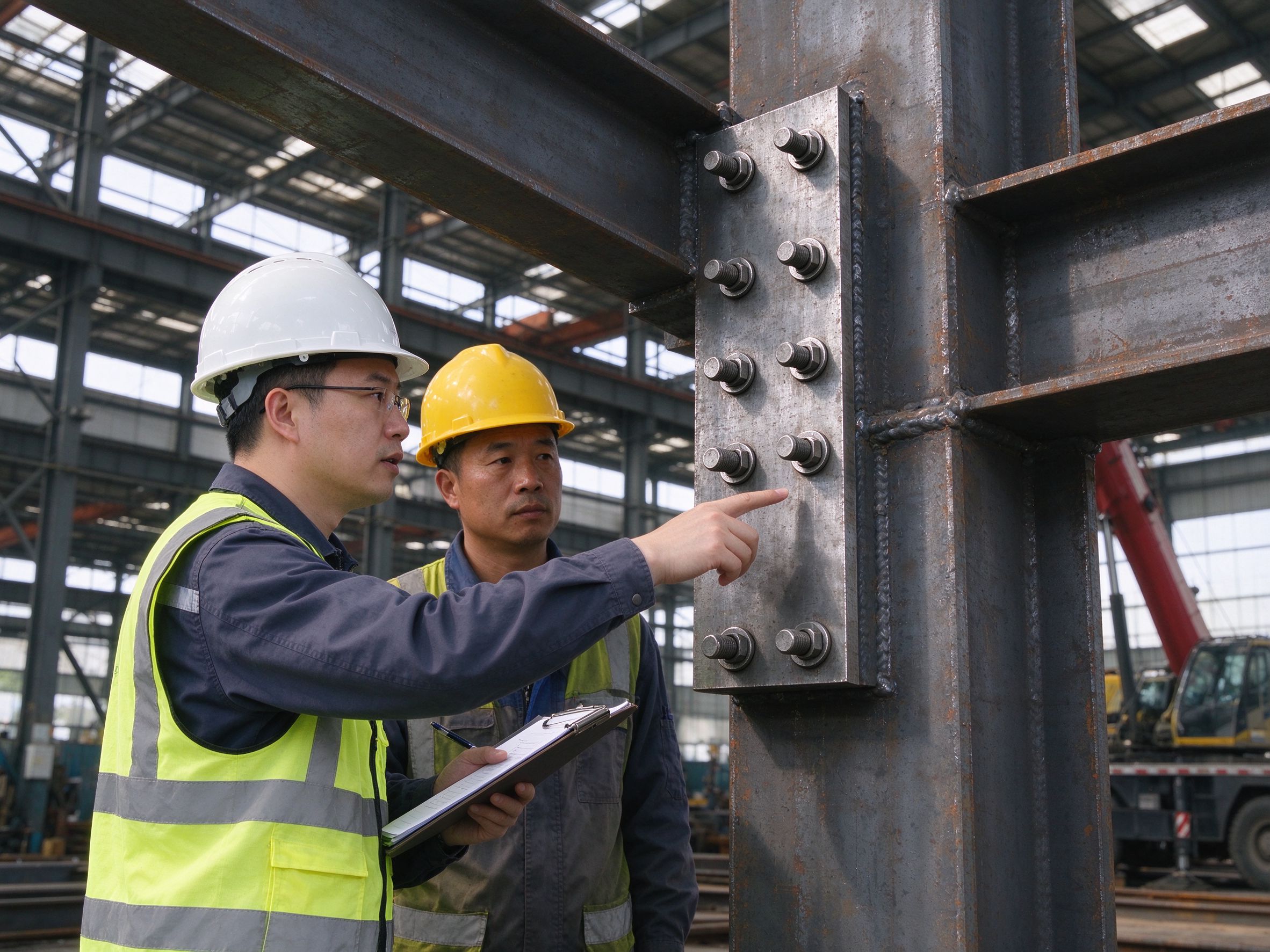
- Verify with the specified inspection method and keep records.
Site inspection checklist:
- Bolt grade markings match the drawings
- Nut and washer types and orientation correct
- Snug-tight before final tightening, correct sequence
- Final torque/turn-of-nut/TC verification within tolerance
- No missing, loose or damaged bolts
- Records completed and traceable to the connection
Part 6: Common bolting errors
- Using the wrong bolt grade or length — the connection strength changes.
- Skipping snug-tight stage — final tension becomes uneven across the connection.
- Tightening in the wrong sequence — plates can distort and tension varies.
- Reusing damaged or corroded bolts — threads and tension are compromised.
- Lubricating threads without approval — changes the torque-tension relationship.
- Accepting bolts that are not fully engaged — insufficient thread engagement reduces strength.
- No inspection records — the connection cannot be verified later.
Part 7: Responsibility boundary — supplier vs local team
| Stage | ZhongSai (steel supplier) | Local team |
|---|---|---|
| Specification | Confirms bolt grade, size and connection type in shop drawings; supplies bolts per the approved spec | Approves bolt specification; provides design intent for the connection |
| Fabrication | Fabricates holes and faying surfaces to the specified class | — |
| Installation | Provides installation technical guidance; supports interpretation of the tightening method | Physical installation by local labour; site tools and torque verification |
| Inspection | Provides documentation of supplied materials | Performs final inspection; keeps records |
| Corrections | Supplies replacements per spec if bolts are found defective | Reports issues promptly with photos and measurements |
FAQ
How are high-strength bolts tightened?
The connection is first snug-tightened, then final-tightened by the specified method — torque method, turn-of-nut, or tension-control bolts. The procedure, sequence and stages are defined by the design and code, and the final tension is verified by the matching inspection method.
What is the difference between snug-tight and preloaded bolts?
Snug-tight bolts are pulled to firm contact without a defined tension and carry load mainly by bearing. Preloaded bolts are tensioned to a specified preload and are used for slip-critical or dynamic connections where friction or controlled tension is required.
Which bolt grade is used for steel structures?
Common grades are 8.8 and 10.9 under ISO/GB standards, A325 and A490 under ASTM, and their EN 14399 equivalents in Europe. The required grade is shown on the approved drawings and depends on the design loads and connection type.
What is the torque method for bolt tightening?
The torque method applies a specified tightening torque with a calibrated torque wrench to achieve the design bolt tension. Because the torque-tension relationship varies with lubrication and surface condition, it should be verified, and wrenches must be calibrated.
What are tension-control (TC) bolts?
TC bolts have a splined end that shears off at the design tension during tightening, confirming the preload without a torque wrench. They provide fast, reliable preloading and are commonly used in structural steel erection.
Does ZhongSai supply bolts with its steel structures?
ZhongSai supplies bolts, nuts and washers per the approved specification as part of the steel supply, and provides installation technical guidance. The bolt grade and tightening method must be confirmed in the contract, and the local team performs the physical installation.
What happens if bolts are over-tightened?
Over-tightening can yield the bolt, strip threads or distort the connection. The specified tightening procedure and tolerance exist to prevent this; exceeding them should be reported and the affected bolts evaluated before acceptance.
What should be checked after bolting on site?
Verify bolt grade markings, nut and washer position, correct tightening sequence and final tension within tolerance, and that no bolts are missing, loose or damaged. Inspection records should be completed and traceable to each connection.
Ready to coordinate bolting on your steel project?
Send your project drawings and connection details, and ZhongSai will confirm the bolt specification, tightening method and inspection plan with your site team.