
How to Write a Technical Specification for Steel Building Procurement
A technical specification turns design intent into a file that can be quoted, fabricated and accepted. It is not a substitute for drawings; it is the summary of drawings, acceptance criteria and responsibility boundaries. The content depends on the project size, the local code and the acceptance requirements, so there is no single template, but every spec should cover design loads, materials, coatings, tolerances, acceptance and supplier duties. ZhongSai has built steel structures for 20 years and focused on exports for 15, and coordinates engineering and detailing on the buildings we fabricate.
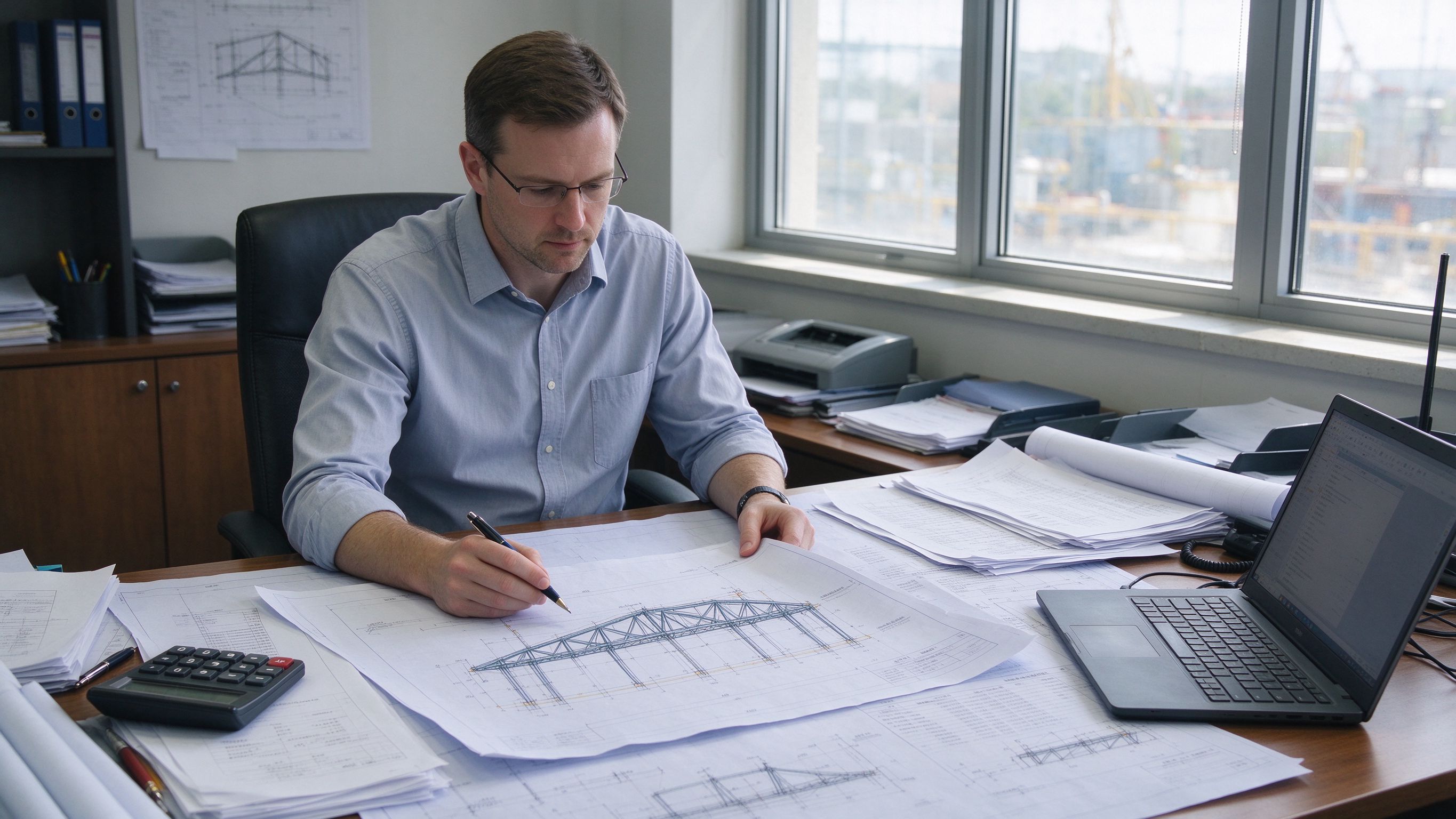
A technical specification turns design intent into a file that can be quoted, fabricated and accepted. It is not a substitute for drawings; it is the summary of drawings, acceptance criteria and responsibility boundaries. The content depends on the project size, the local code and the acceptance requirements, so there is no single template, but every spec should cover design loads, materials, coatings, tolerances, acceptance and supplier duties. ZhongSai has built steel structures for 20 years and focused on exports for 15, and coordinates engineering and detailing on the buildings we fabricate.
This guide lists the sections a buyer can put into the spec so the fabricator quotes the same building the designer intended.
Part 1: What a specification is in the procurement flow
| Document | What it does | What it is not |
|---|---|---|
| Drawings | Define geometry and connections | Do not state acceptance criteria |
| Technical specification | State loads, materials, coatings, tolerances, acceptance | Not a replacement for drawings |
| RFQ / inquiry | Ask for price and lead time | Not a design document |
| Supply contract | Fix scope, price, lead time, warranty | Built on the spec |
Part 2: Sections a steel building spec should cover
- Design basis: the design code, the site, the loads (wind, snow, seismic, crane, equipment), the building use and the required design life
- Materials: steel grade, bolts, welding consumables, and whether standards like ASTM or EN are required
- Coatings and fire protection: surface preparation, coating system, dry film thickness and fire rating where required
- Fabrication: tolerances, weld categories, inspection and testing requirements
- Erection: responsibility for installation, sequence and site requirements
- Acceptance: what will be checked before shipment and at handover, and who approves
Part 3: Responsibility boundary
| Stage | Buyer / designer | Supplier (ZhongSai) |
|---|---|---|
| Design | Engage the registered engineer, fix loads and local code | Engineering coordination and detailing per the spec |
| Materials | State grades and standards | Fabrication, QC, marking and packing |
| Approval | Approve drawings and shop details | Provide fabrication and detail drawings for review |
| Site | Permits, foundations, civil works, local labour | Installation technical guidance and export coordination |
Part 4: Specification vs quotation
| Aspect | Good specification | Vague inquiry |
|---|---|---|
| Design code | Named (e.g. AISC, EN 1993, GB 50017) | Not stated |
| Loads | Wind/snow/crane/equipment loads given | “Standard design” |
| Materials | Grade and standard named | “Good quality steel” |
| Coatings | System and DFT stated | “Anti-corrosion” |
| Acceptance | Inspection points and standards listed | Not defined |
| Result | Comparable quotes, fewer claims | Misquotes and disputes |
Part 5: Checklist before you send the spec
- Design code and load conditions written down
- Steel grade, bolts and welding consumables named
- Coating system and dry film thickness stated
- Fire rating or fire protection requirement defined
- Tolerance and inspection requirements listed
- Erection responsibility and site conditions described
- Approval workflow for shop drawings agreed
FAQ
What is a technical specification for a steel building?
A document that states the design basis, materials, coatings, tolerances, inspection and acceptance for the building, so the fabricator builds what the designer intended.
What information does a steel fabricator need?
Drawings plus a spec with the design code, loads, steel grade, coating system, tolerances and acceptance criteria.
Which standards should the spec reference?
The code that applies at the project site, for example AISC, EN 1993 or GB 50017; the spec should name it rather than saying “standard design”.
Who writes the specification?
Usually the buyer’s designer or registered engineer. ZhongSai can coordinate and review the detailing, but the design basis comes from the project’s engineer.
What happens if the spec and the drawings conflict?
The conflict should be resolved in writing before fabrication, usually by the buyer’s engineer, because it changes scope and cost.
Does the spec affect the price?
Yes. Named grades, coating systems and inspection requirements make quotes comparable and reduce claims after shipment.
Do you fabricate to the buyer’s specification?
ZhongSai fabricates to the agreed spec and drawings, and coordinates detailing, QC, marking, packing and export per the supply contract.
What should I do if I have drawings but no specification?
Send the drawings together with the design loads and code; ZhongSai can help list the open points before quoting.
Writing the spec for your steel building?
Send the drawings, the design code and the load conditions; ZhongSai will list the open points and confirm scope before quoting.