
Lightning Protection and Grounding for Steel Buildings
Steel buildings generally need lightning protection, but the steel itself can form part of the system: a qualifying metal roof can act as an air terminal, steel columns as down conductors, and foundations or ground electrodes as the earth. The lightning protection level, grounding resistance and SPDs are set by a local electrical engineer to the local code.
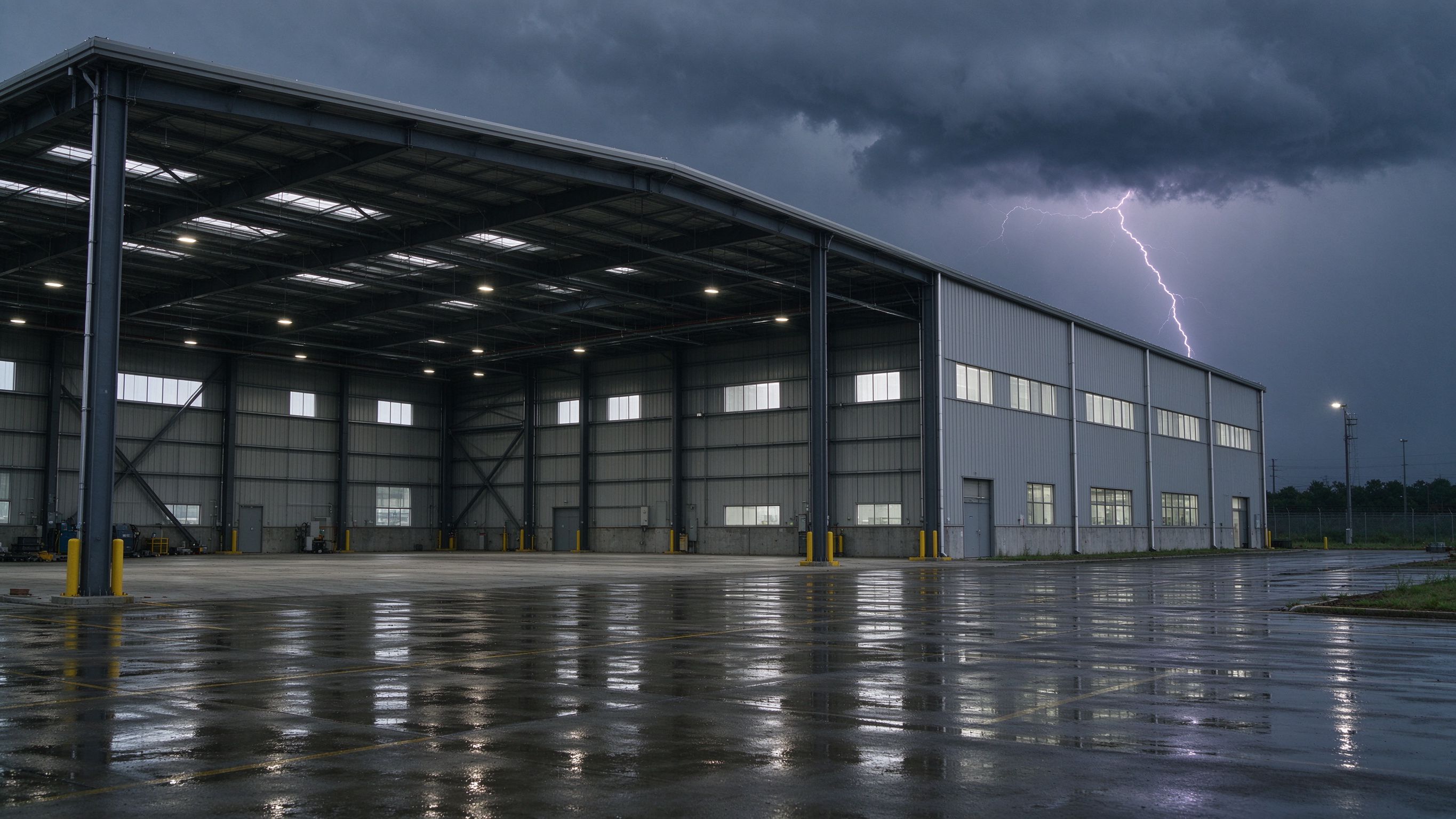
Steel buildings generally need lightning protection, but the steel itself can form part of the system: a qualifying metal roof can act as an air terminal, steel columns as down conductors, and foundations or ground electrodes as the earth. The lightning protection level, grounding resistance and surge protective devices are set by a local electrical engineer to the local code.
This guide explains how the steel structure participates, rather than giving fixed values.
Is a steel building safe in a lightning storm
A steel frame is not a danger by itself. When the frame is electrically continuous and properly grounded, it can carry lightning current to the earth. The protection level still depends on the building use, contents and local code.
Parts of a lightning protection system
| Part | Role |
|---|---|
| Air terminal | Intercepts the strike |
| Down conductor | Carries current downward |
| Ground electrode | Disperses current into earth |
| Bonding | Connects metal parts to one potential |
| Surge protective device | Limits surges on cables and equipment |
Can a metal roof act as an air terminal
A metal roof may be used as an air terminal when it meets the conditions in the local code, commonly involving panel thickness, secure electrical continuity and no combustible layer beneath. These conditions should be confirmed by the local electrical engineer, not assumed.
Can steel columns act as down conductors
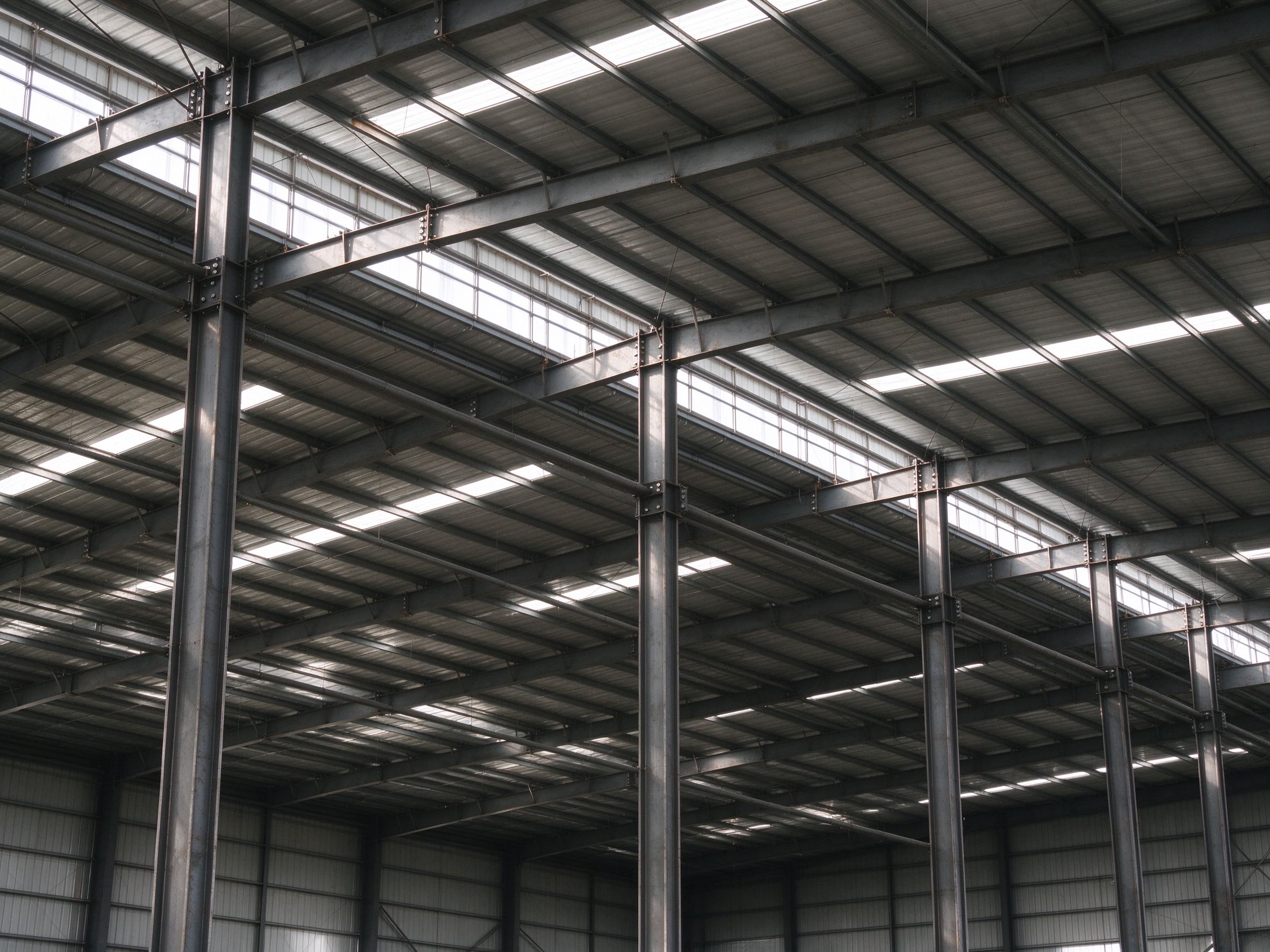
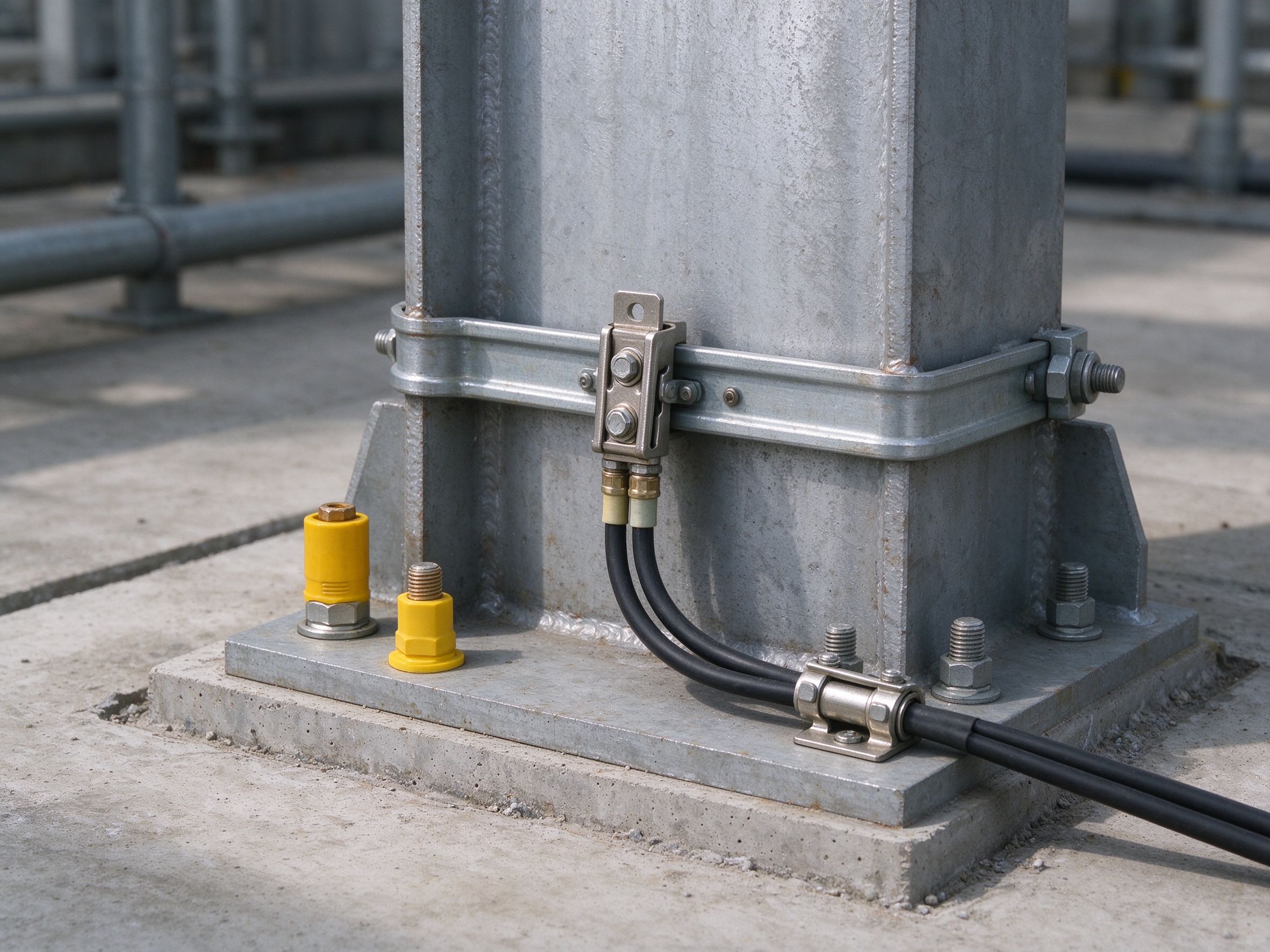
Steel columns can act as down conductors when the joints provide electrical continuity. Connections, coatings and any insulating layers are reviewed so the current path is not broken.
Grounding and bonding
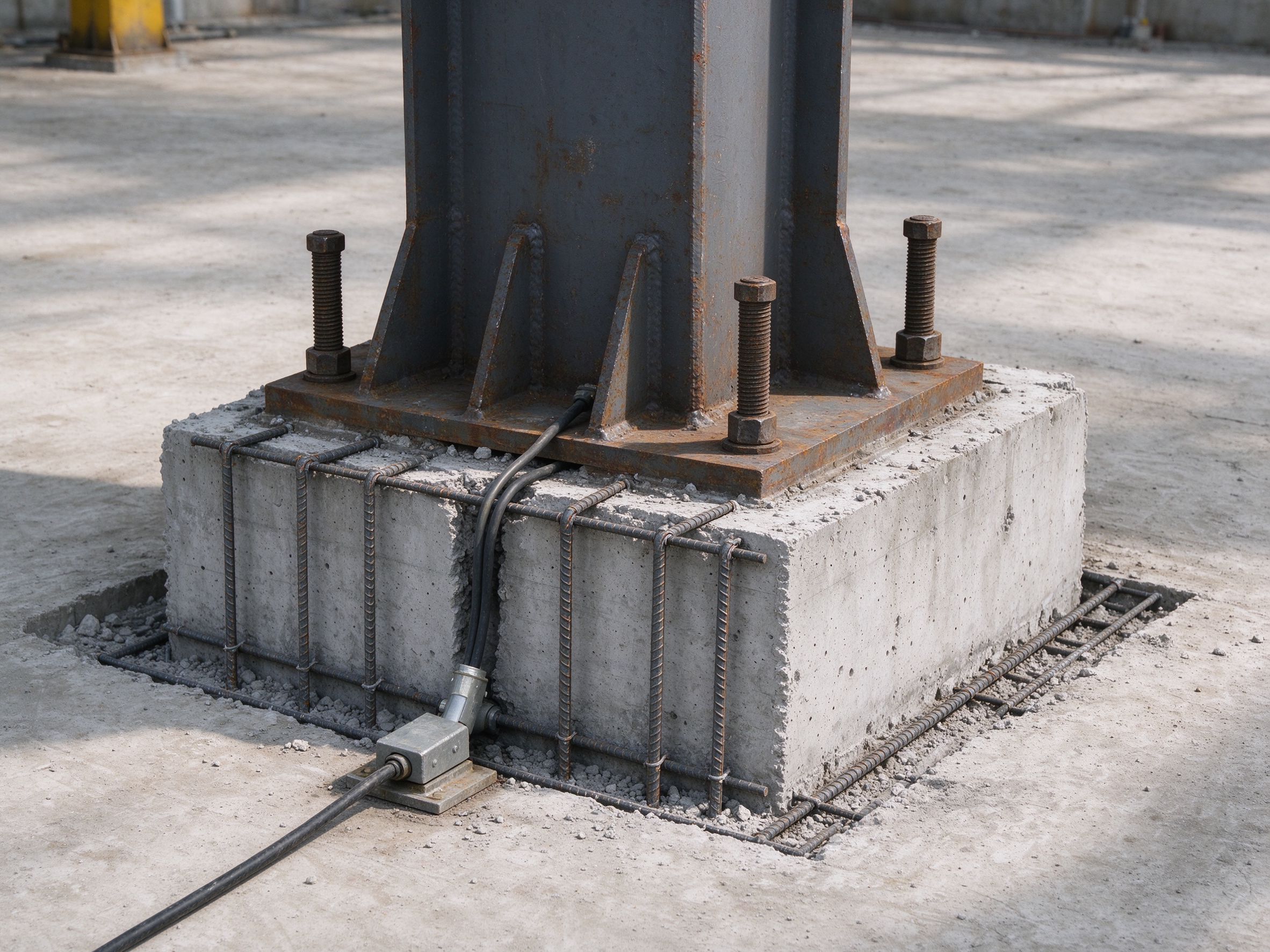
The earth connection may use foundation steel, driven rods or other electrodes depending on the soil and local code. Bonding connects the frame, metal pipes, cable trays and equipment to one potential. The required grounding resistance is set by the local code, not a universal number.
What depends on what
The design depends on the lightning protection level, building use and contents, roof and column continuity, soil conditions, and the local electrical code.
Responsibility boundary
| Stage | ZhongSai | Buyer / local party |
|---|---|---|
| Data | Coordinate continuity and grounding points | Provide use, contents and local code |
| Detailing | Model connections and bonding provisions | Confirm electrical requirements |
| Fabrication | Fabricate and QC in the manufacturing bases | Engage a local electrical engineer |
| Shipping | Coordinate export and documents | Arrange clearance and duty |
| On site | Provide technical guidance | Design and install grounding and SPDs |
Checklist
- Lightning protection level is confirmed to the local code
- Metal roof air-terminal conditions are checked
- Column and joint continuity is reviewed
- Grounding points and bonding are provided
- Soil and electrode conditions are assessed
- Surge protective devices are specified locally
- Metal pipes and trays are bonded
- A local electrical engineer signs off the design
FAQ
Do steel buildings need lightning protection?
Usually yes, but the level depends on the use, contents and local code.
Can a metal roof be used as an air terminal?
When it meets the local code conditions for thickness and continuity.
Can steel columns carry lightning current?
Yes, when the joints give electrical continuity.
What is the required grounding resistance?
It is set by the local code, so there is no universal number.
Are surge protective devices needed?
They are specified by the local electrical engineer for cables and equipment.
Is a steel building unsafe in a storm?
A continuous, grounded frame can carry current safely to earth.
Does the coating break continuity?
Connections and grounding points are reviewed to keep the path continuous.
Who designs the grounding?
A local electrical engineer, following the local code and permits.
Planning a steel building project?
Send your use, contents and project requirements; ZhongSai will coordinate the structural continuity and grounding points, while the local electrical engineer sets the protection level and grounding to the local code.