
How to Choose a Steel Structure Manufacturer in China
Practical criteria for evaluating Chinese steel structure manufacturers: engineering capability, welding and QC, export experience, delivery reliability, pricing transparency, and red flags.
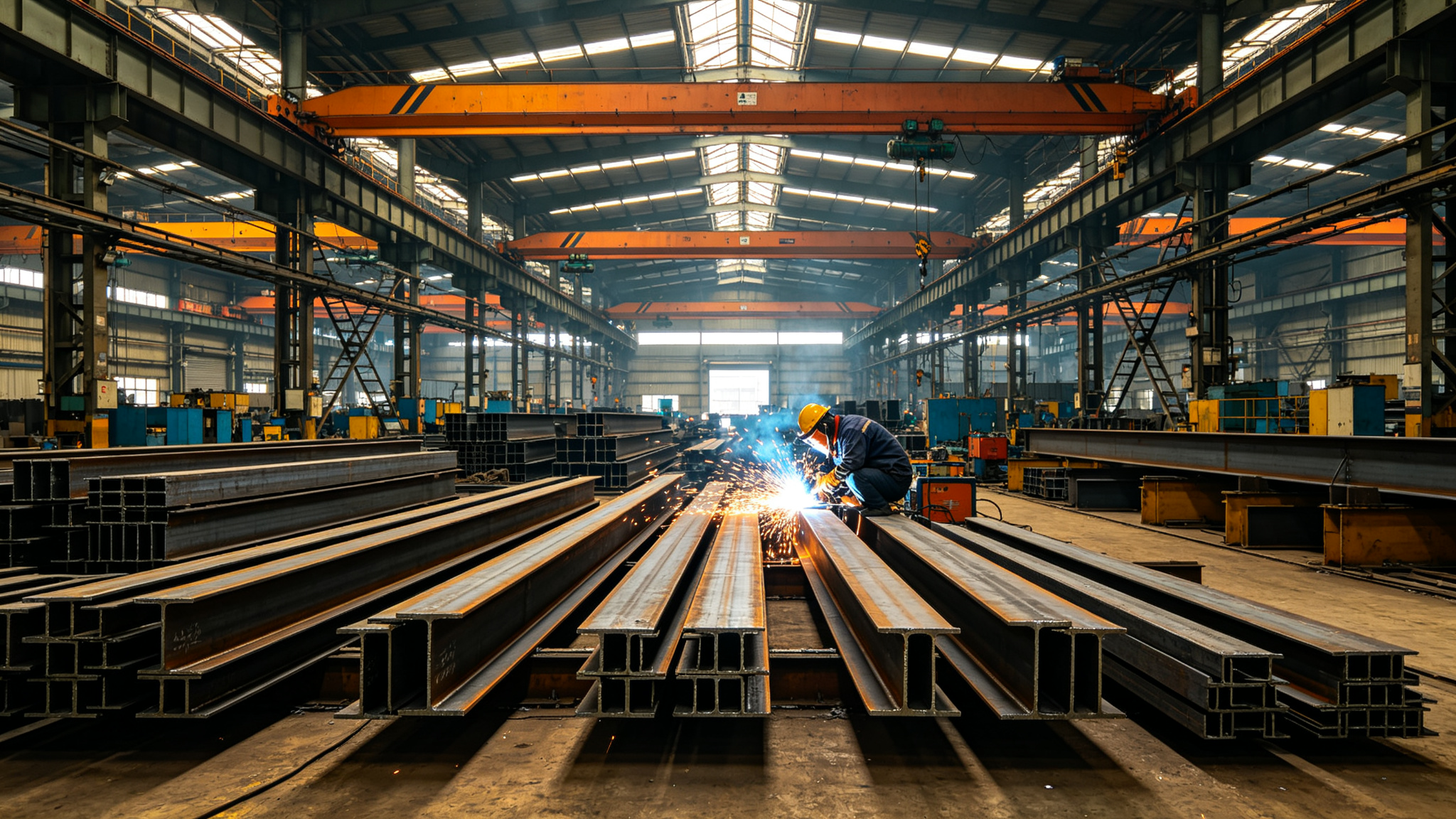
Choosing a steel structure manufacturer in China is one of the most important decisions for an overseas project. The market is large, and quality, delivery, and communication vary widely. This guide focuses on practical criteria you can verify yourself, not marketing claims.
1. Engineering and Detailing Capability
A manufacturer that only fabricates to someone else’s drawings has limited ability to catch design issues before fabrication begins.
What to verify:
- In-house structural engineers or detailing team
- Experience with the codes relevant to your project (GB, AISC, Eurocode, ASCE)
- Ability to review your drawings and flag dimensional, connection, or load concerns
- Use of Tekla, AutoCAD, or equivalent detailing software
- Whether they produce shop drawings for your approval before cutting steel
Red flag: A supplier that quotes immediately without asking about loads, site conditions, or local code requirements.
2. Welding and Fabrication Quality
Welding is where steel structure quality is won or lost. Ask specifically about:
- Welding procedure specifications (WPS) and welder qualifications
- Whether welders are certified per AWS, ISO, or equivalent standards
- Non-destructive testing (NDT): ultrasonic testing (UT), magnetic particle testing (MT), or dye penetrant (PT) used on critical connections
- Welding inspection during fabrication, not just final visual
- Whether welders work under controlled shop conditions (not outdoors)
A manufacturer that cannot describe its WPS, welder certification, or NDT practice is a quality risk regardless of price.
3. Quality Control and Inspection
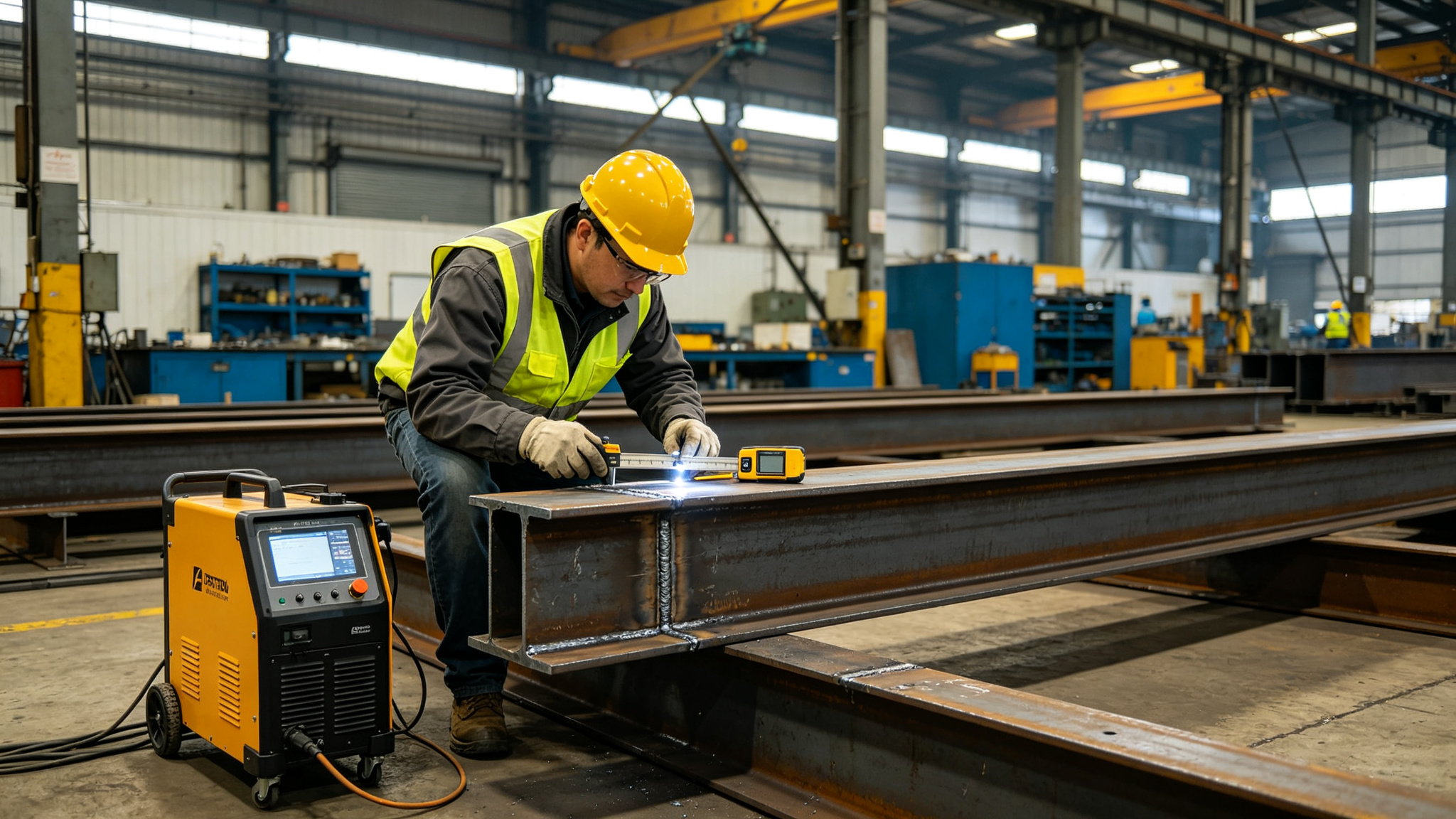
Ask to see actual QC records or photos, not just a list of certifications on a website.
What a real QC process looks like:
- Material test certificates (Mill Test Certificates / MTC) for steel grades
- Dimensional checks after fabrication
- Weld inspection reports
- Surface preparation and coating thickness verification
- Final inspection checklist before shipment
Red flag: The supplier sends photos of a tidy workshop but cannot produce inspection reports, MTCs, or coating thickness records for a recent order.
4. Export Experience
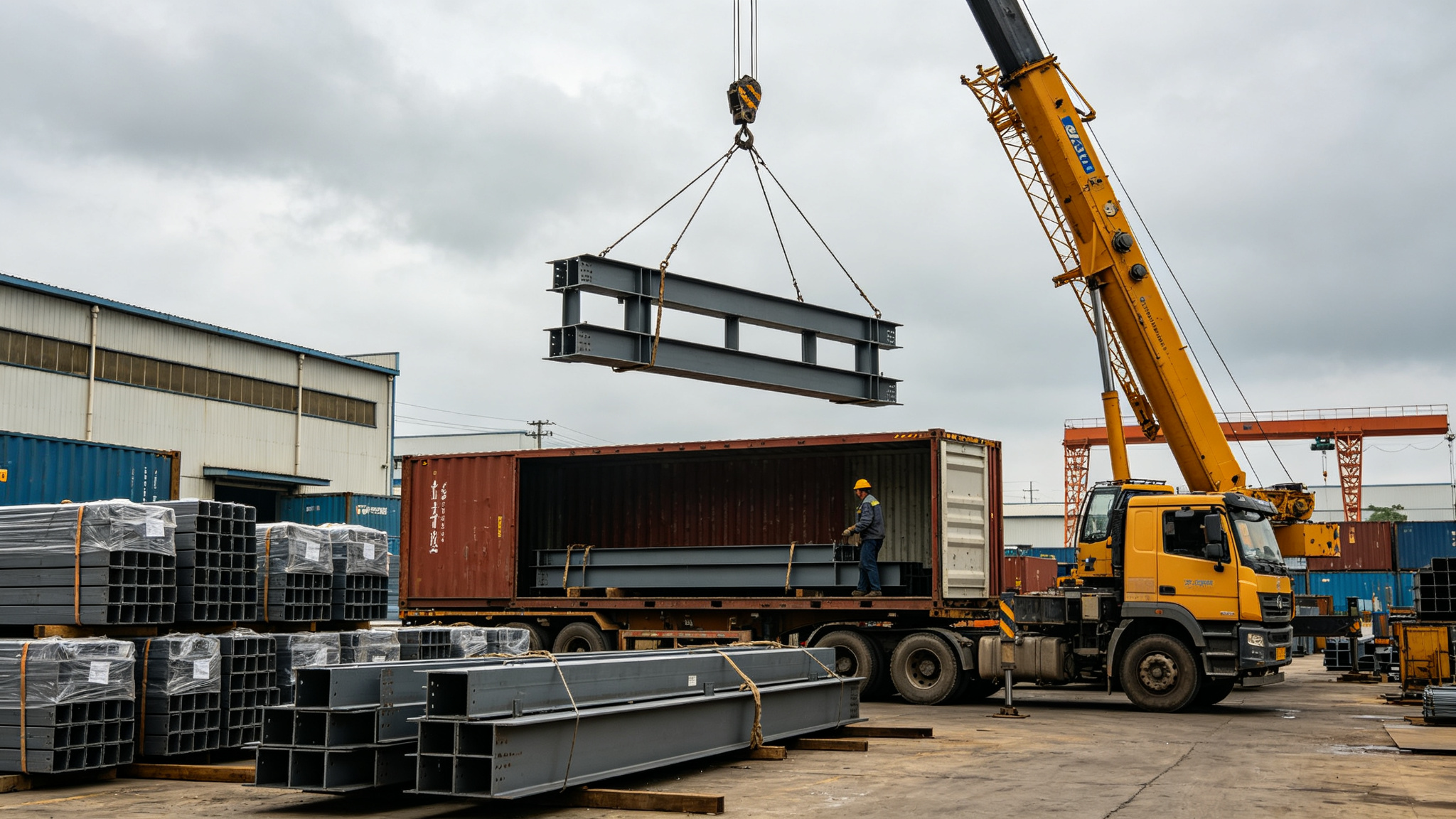
A manufacturer that has never exported may struggle with documentation, packing, container loading, and communication with foreign clients.
What to ask:
- Which countries have you shipped to in the past 2–3 years?
- Can you handle FOB, CIF, or DDP terms?
- Do you have experience with SASO/SABER, CE marking, or other destination requirements?
- Who coordinates ocean freight and container loading?
- How are components marked for site identification?
Export experience reduces the risk that fabricated steel arrives at site unmarked, poorly packed, or without proper documents.
5. Delivery Reliability
Steel structure projects are often on tight schedules. Ask concrete questions:
- Typical fabrication lead time for a warehouse of your size
- How delays are communicated and managed
- Whether they commit to a written delivery schedule
- What happens if material or production delays occur
A supplier that gives only a vague “30–45 days” without understanding your project scope may be quoting optimistically.
6. Pricing Transparency
Low unit prices can hide problems later. Understand what the quotation includes:
- Is steel supply included, or only fabrication labor?
- Are bolts, welds, and connection plates included?
- Is surface treatment and primer included?
- Is packing for export included?
- Are shipping and documentation included (FOB vs CIF)?
- Is there a clear scope of supply, or are key items omitted to make the price look lower?
Red flag: A quotation that is dramatically cheaper than others with no explanation of what is excluded.
7. Communication and Responsiveness
Language and communication matter across time zones.
- How quickly does the supplier respond to technical questions?
- Can they explain engineering trade-offs in writing?
- Do they send drawings for approval, or start fabrication without confirmation?
- Is there a single project contact, or do messages pass between salespeople?
A supplier that is hard to reach during quoting will be harder to manage during fabrication.
8. Factory Audit (If Possible)
If the project is large enough, visit the factory or request a video audit. Look for:
- Actual workshop size and crane capacity
- Steel storage and handling
- Welding stations and spark extraction
- Surface treatment and blasting area
- Current projects on the floor
- Finished components ready for shipment
If you cannot visit, ask for a live video walkthrough of a current project.
9. Red Flags to Avoid
- No English-speaking engineer, only sales staff
- Promises the lowest price before understanding your project
- Cannot produce MTCs, inspection reports, or weld records
- Avoids questions about export documentation or destination requirements
- Uses stock photos that do not match their actual facility
- Pressures you to pay a large deposit before drawing approval
- Offers “all-inclusive pricing” without a detailed scope
10. Why ZhongSai?
ZhongSai has been manufacturing steel structures for 20 years and exporting for 15 years. Our process includes engineering review, shop drawing approval, certified welding, material and weld inspection, surface treatment, export packing, and installation technical guidance. We do not promise the lowest price; we work to deliver a project that fits your scope, schedule, and destination requirements.
FAQ
Is the cheapest Chinese manufacturer always a bad choice? No, but a very low price often means a narrower scope, lower-grade material, or limited QC. Compare what is included, not just the total number.
How many manufacturers should I compare? Three to five qualified suppliers. More than that becomes hard to evaluate fairly, because scopes are usually not identical.
Should I visit the factory before ordering? For large or repeat projects, yes. If you cannot travel, request a live video tour and references from projects in your region.
What is the most important single question to ask? “Can you send a recent inspection report and MTC for a project similar to mine?” The answer tells you a great deal about how they work.
Have a project and comparing Chinese steel manufacturers? Send your drawings or project requirements for an engineering-based discussion. We will review scope, loads, code requirements, and export considerations before quoting.