
Crane Runway Beam Guide for Steel Buildings
A crane runway beam carries the crane wheel loads, impacts and braking forces to the building columns; the beam type and section depend on the crane capacity, span, wheel loads and fatigue class — not fixed global values. ZhongSai fabricates the runway beams and co-ordinates them with the crane supplier data and structural drawings.

A crane runway beam carries the crane wheel loads, impacts and braking forces to the building columns; the beam type and section depend on the crane capacity, span, wheel loads and fatigue class — not fixed global values. ZhongSai fabricates the runway beams and co-ordinates them with the crane supplier data and structural drawings.
This guide explains the beam types, the design inputs, and who does what.
Part 1: What a crane runway beam does
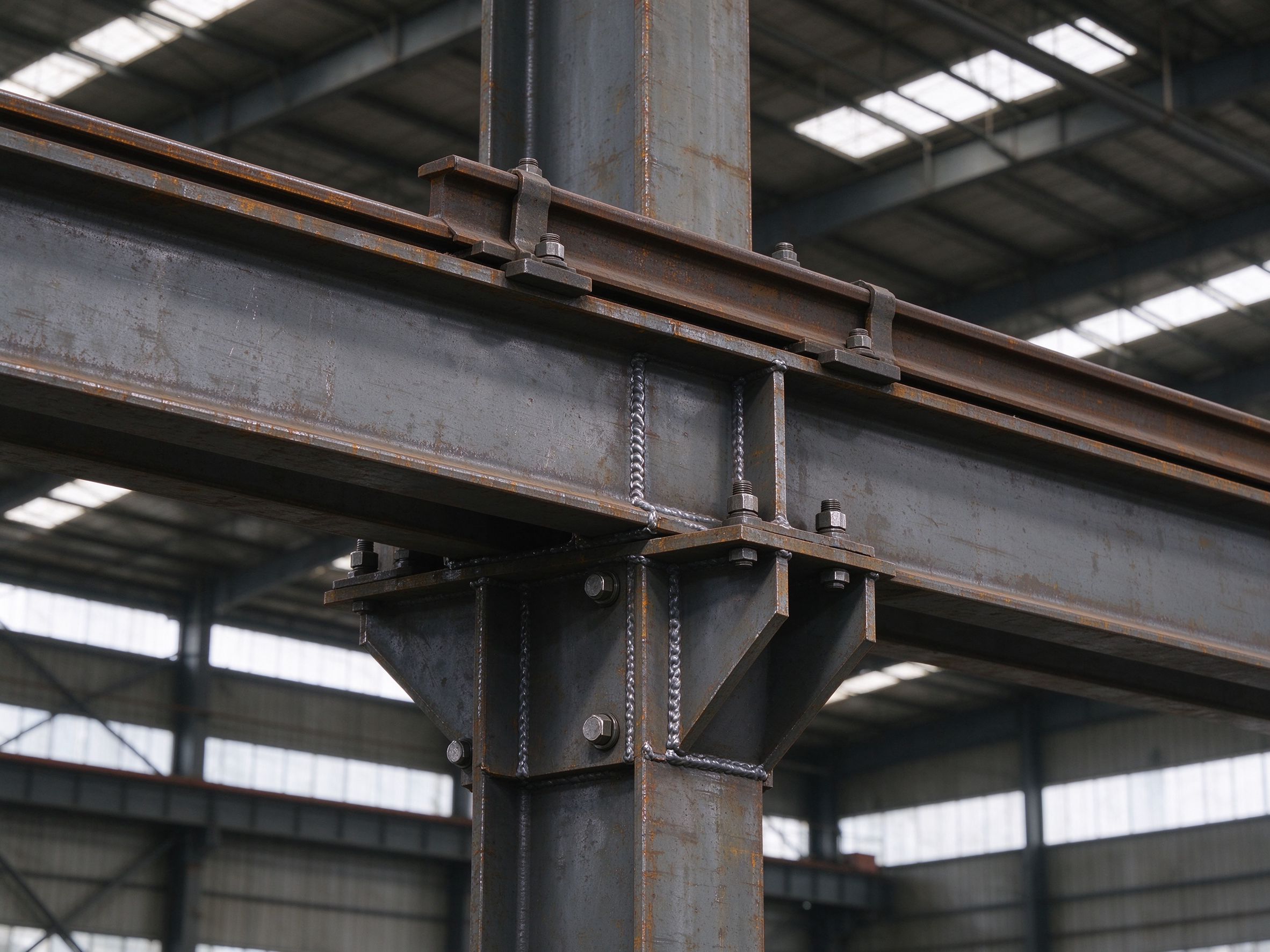
The runway beam (or crane girder) sits on a column bracket or a column step and carries the crane:
- It resists the crane wheel loads, vertical and lateral.
- It takes braking and impact forces along the runway.
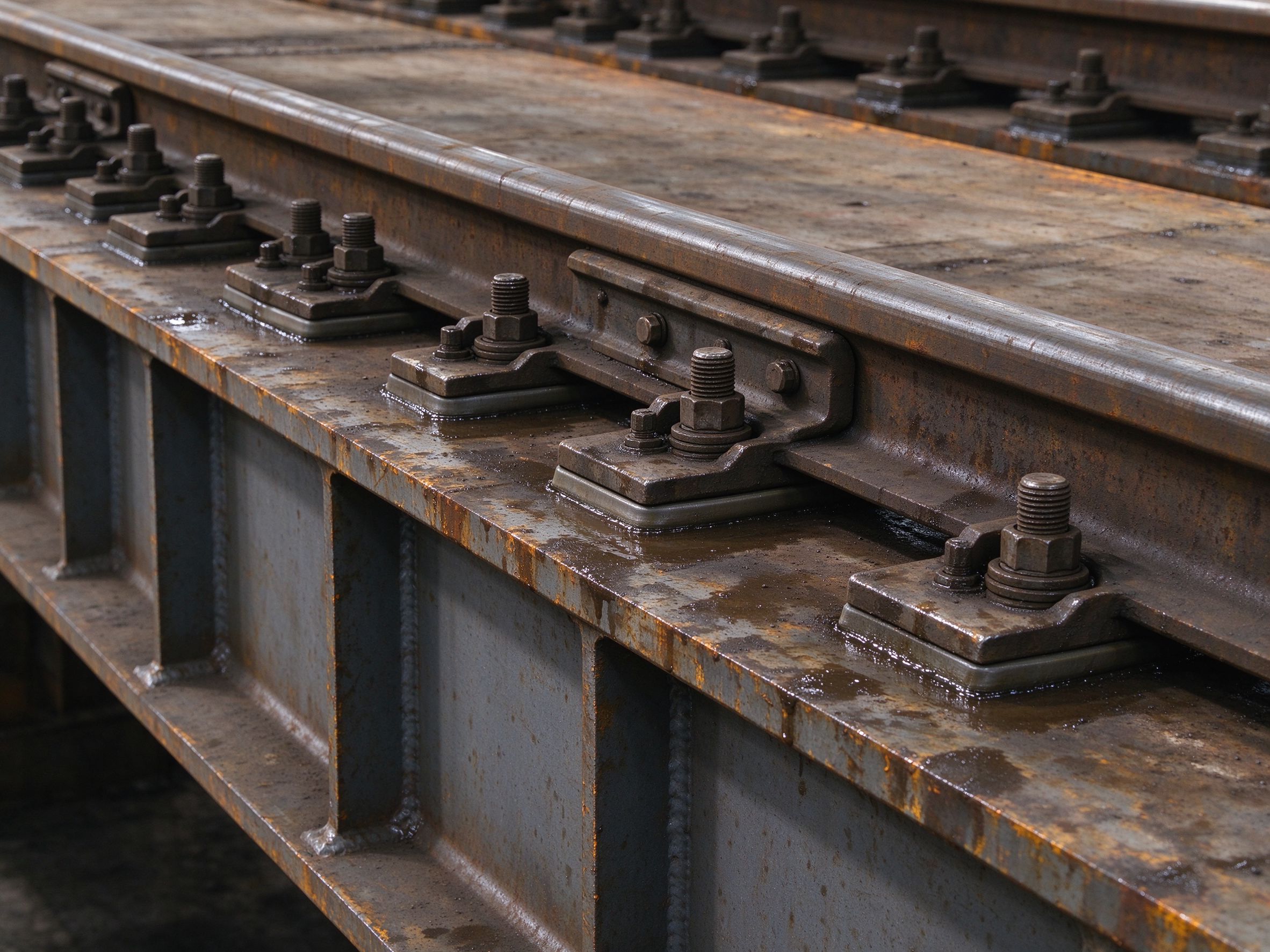
- It supports the rail, which the crane wheel travels on.
- The whole assembly must be aligned: the two runway beams, the rail and the end stops form the crane track.
Part 2: Beam types compared
| Beam type | Typical construction | Typical use |
|---|---|---|
| Rolled beam | Single I-section, welded stiffeners | Light and medium cranes, shorter spans |
| Plate girder | Built-up web and flanges | Medium and heavy cranes, longer spans |
| Truss girder | Lattice girder with a top rail | Very long spans, reduced weight |
| Box girder | Enclosed section | Heavy cranes, torsion resistance |
The crane capacity, span, wheel spacing and fatigue class decide the type — confirm with the structural engineer and the crane supplier.
Part 3: Design inputs to collect before quoting
- Crane type, capacity and duty class (work group)
- Wheel loads, wheel spacing and number of wheels
- Crane span and required hook clearance
- Rail section and crane supplier data sheet
- Building column spacing and runway length
- Local code requirements for fatigue and deflection
- Environment: corrosion, dust, temperature range
Part 4: Checklist before ordering
- Crane data sheet confirmed by the crane supplier
- Beam type and section from the structural calculation
- Rail and rail fixings (clips, fishplates, pads) listed
- End stops and bumpers detailed
- Column brackets or steps detailed with anchor bolts
- Fatigue details for the weld class confirmed
- Marking, packing and container loading planned
Part 5: Responsibility boundary — supplier vs local team
| Stage | ZhongSai (steel supplier) | Local team |
|---|---|---|
| Design | Fabricates runway beams to the drawings and co-ordinates with crane data | Confirms crane type and loads; the registered engineer designs the beam |
| Supply | Supplies beams, brackets, rails and fixings, marked and packed | Organizes transport, offloading and storage |
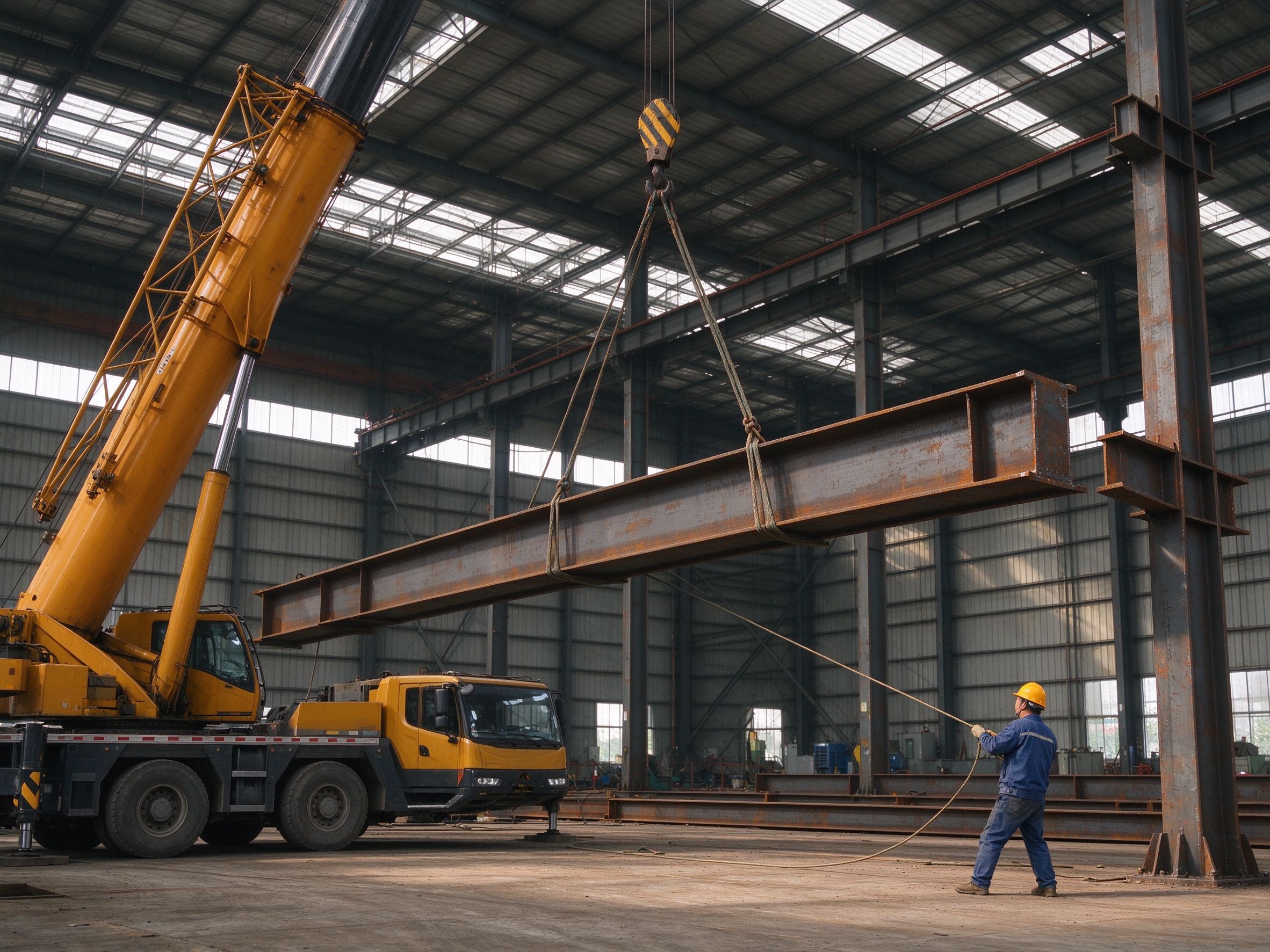
| Installation | Provides erection sequence and technical guidance | Installs beams, aligns the rail and fixes end stops with local labour |
| Alignment | Provides fabrication tolerances and QC records | Checks rail alignment, level and crane operation after installation |

FAQ
What is a crane runway beam?
It is the beam that carries the crane wheel loads along the runway and transfers them to the building columns, usually via a bracket or column step.
Which beam type should I use for my crane?
It depends on the crane capacity, span, wheel loads and fatigue class. Rolled beams suit light cranes; plate or box girders suit heavier cranes. Confirm with the structural engineer.
What loads act on a crane runway beam?
Vertical wheel loads, lateral loads from crane travel and braking, and impact loads. These come from the crane supplier data sheet and local code.
Who supplies the rail and fixings?
The rail, clips, fishplates and pads can be supplied with the steel package. Confirm the rail section with the crane supplier.
Do I need to align the runway beams?
Yes. The two beams, the rail and the end stops must be aligned and level for the crane to run correctly. Alignment is normally checked on site after erection.
What is the typical crane beam span?
It follows the building column spacing, which is set by the building design — there is no fixed global value.
Does the supplier design the runway beam?
The registered engineer designs the beam from the crane data; ZhongSai fabricates it to the drawings and co-ordinates the details with the crane supplier.
How are fatigue details handled?
Fatigue class and weld details follow the structural calculation and local code. Confirm the details before fabrication.
Need a crane building package?
Send the crane type, capacity and building layout, and ZhongSai will co-ordinate the runway beams with the crane data.