
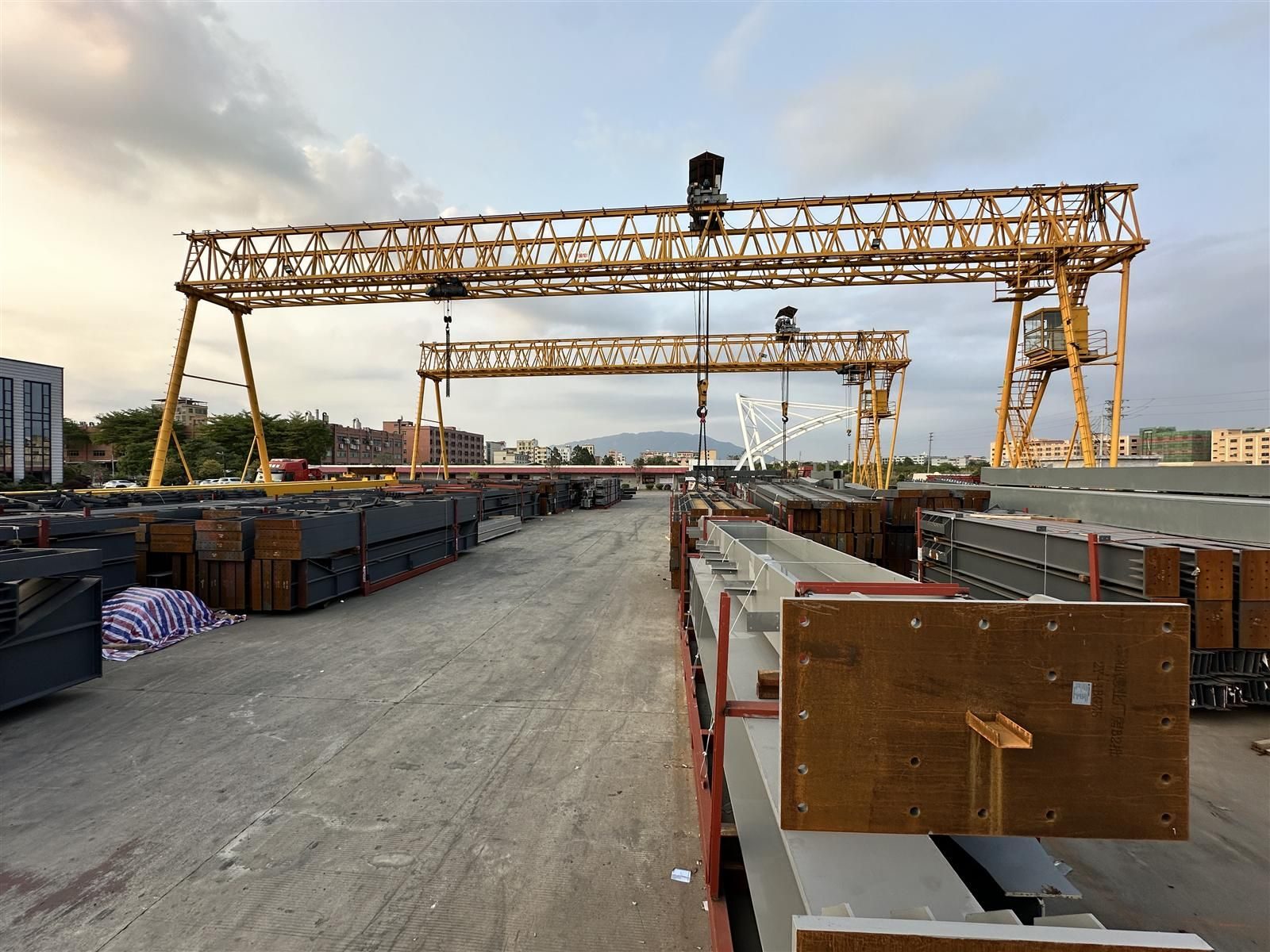
1. Container Types and Loading Capacity
| Container Type | Internal Dimensions | Max Payload | Typical Steel Load | Best For |
|---|---|---|---|---|
| 40HQ (High Cube) | 12.03m × 2.35m × 2.69m | 28-30 tons | 22-28 tons | Most steel structure shipments (90% of our orders) |
| 40GP (Standard) | 12.03m × 2.35m × 2.39m | 28-30 tons | 22-26 tons | Standard height members, cladding |
| 20GP | 5.90m × 2.35m × 2.39m | 28 tons | 18-24 tons | Small orders, heavy plates, short members |
| 40OT (Open Top) | 12.03m × 2.35m × 2.39m | 28-30 tons | 20-25 tons | Members over 12m, oversized sections |
| 40FR (Flat Rack) | 12.03m × 2.35m × 2.0m | 30-40 tons | 25-35 tons | Very long beams (>12m), heavy columns |
2. Packaging Methods by Component Type
2.1 Main Frame Members (Columns, Beams)
- Surface protection: Shop primer (20-30μm) + anti-rust oil on machined surfaces + VCI film wrapping
- Edge protection: Cardboard or foam edge protectors on flange edges to prevent transit damage
- Loading method: Stacked horizontally on wooden skids, with 50mm timber dunnage between layers
- Blocking: Wooden blocks at both ends to prevent shifting, steel banding to secure stacks
- Marking: Paint mark or steel stamp with part number (e.g., C1, B2, BR3)
2.2 Purlins and Girts (C/Z Sections)
- Bundle size: 50-100 pieces per bundle, length-matched to minimize waste
- Wrapping: Anti-rust oil + VCI film + woven outer wrap for ocean freight
- Band spacing: 4-6 steel bands per bundle, with cardboard under bands to prevent cutting
- Wooden skids: 100×100mm timber skids at 1.5m intervals for forklift access
- Bundle tags: Metal tag showing bundle number, part numbers, quantities, project code
2.3 Roof and Wall Cladding Sheets
- Stacking: Flat stacks of 20-50 sheets, separated by foam strips at 1m intervals
- Protection: Top and bottom plywood sheets to prevent edge damage, plastic wrapping
- Length optimization: Sheets cut to exact required lengths to minimize on-site cutting
- Loading position: Loaded last (on top) for first unloading, as cladding is installed after frame
- Color matching: All sheets from same production batch to ensure color consistency
2.4 Bolts, Nuts, and Small Accessories
- Packaging: Sealed plastic bags by size/type, then packed in wooden crates
- Quantity: 5% extra bolts provided free of charge for loss/damage allowance
- Crate labeling: Detailed packing list on crate exterior showing contents by compartment
- Weight limit: Each crate under 30kg for manual handling, or with forklift slots for heavier
- Galvanized: All structural bolts are hot-dip galvanized per ISO 4014/4017 standard
3. Rust Protection for Ocean Shipping
Steel structures typically spend 20-45 days in transit on ocean vessels, exposed to high humidity and salt air. Our multi-layer protection system ensures parts arrive in good condition:
- Shop primer: All steel members receive 20-30 micron shop primer during fabrication (red oxide or zinc-rich)
- Anti-rust oil: Machined surfaces, bolt holes, and connection areas coated with removable anti-rust oil
- VCI film: Volatile Corrosion Inhibitor film wrapping creates a protective vapor layer inside sealed packages
- Desiccant: Silica gel packets inside sealed bundles and crates (1kg per 5m³ of package volume)
- Elevation: All steel stacked on wooden skids minimum 100mm off container floor to prevent contact with condensation
- Ventilation: Spacing between bundles allows air circulation, preventing moisture trapping
- Climate-specific upgrades: For high-humidity destinations (West Africa, Southeast Asia), we add extra VCI film, increased desiccant, and wax wrapping for critical connection surfaces
4. Container Loading Optimization
4.1 Loading Sequence
- Heavy items first: Columns and large beams loaded at front (nose) of container for weight distribution
- Medium items middle: Smaller beams, bracing, crane beams in center
- Light items last: Purlins, cladding, accessories at rear (door end) for first unloading
- Installation order: Items needed first on site loaded last (at doors) for easy access
4.2 Weight Distribution
- Front 1/3 of container: 40-45% of total weight
- Middle 1/3: 30-35% of total weight
- Rear 1/3: 20-25% of total weight
- Maximum weight concentration: No more than 8 tons per linear meter
- Center of gravity: Within 10% of container center point
4.3 Securing and Blocking
- Timber dunnage: 100×100mm hardwood skids under all steel stacks, spaced at 1.5m
- End blocking: 50×100mm timber blocks nailed to container floor at both ends of each stack
- Steel banding: 32mm wide steel bands, 2-4 bands per stack, tightened with tensioner
- Air bags: Inflatable dunnage bags in gaps between stacks to prevent lateral movement
- Lashing: Nylon lashing straps from container lashing rings for tall stacks
5. Part Identification and Marking System
Our unique marking system ensures your installation team can quickly identify and sort every piece:
| Member Type | Marking Format | Example | Location |
|---|---|---|---|
| Columns | C + number | C1, C2, C3 | Paint mark on column flange, 500mm from base |
| Main beams | B + number | B1, B2, B3 | Paint mark on beam web, at mid-span |
| Purlins | P + row + number | P1-01, P2-15 | Bundle tag + individual sticker |
| Bracing | BR + number | BR1, BR2 | Paint mark or steel tag |
| Crane beams | CB + number | CB1, CB2 | Paint mark on top flange |
| Bolts/accessories | Box + compartment | Box 3 / Compartment A | Label on crate exterior + inside list |
6. Documentation Package
Every shipment includes a comprehensive documentation package:
- Commercial invoice: Detailed value breakdown for customs clearance
- Packing list: Container-by-container, package-by-package detailed list with weights and dimensions
- Bill of materials (BOM): Complete material list with part numbers, quantities, weights, steel grades
- Mill test certificates: EN 10204 3.1 certificates for all steel materials
- Installation drawings: Erection drawings with part numbers matching physical markings
- Container loading plan: Visual diagram showing placement of each package in each container
- Parts sorting guide: Step-by-step guide for unloading and sorting parts on site
- Certificate of origin: For preferential tariff treatment under trade agreements (Form E, Form A, etc.)
- Insurance certificate: Marine cargo insurance covering 110% of invoice value
7. Typical Container Requirements by Project Size
| Project Size | Building Area | Steel Weight | 40HQ Containers | Production Time |
|---|---|---|---|---|
| Small | 500-1,000 m² | 15-30 tons | 1-2 | 2-3 weeks |
| Medium | 1,000-3,000 m² | 30-90 tons | 3-6 | 4-5 weeks |
| Large | 3,000-8,000 m² | 90-240 tons | 7-14 | 6-8 weeks |
| Very large | 8,000+ m² | 240+ tons | 15+ | 8-12 weeks |
8. Common Packaging Mistakes to Avoid
- Insufficient dunnage: Steel directly on container floor causes condensation rust and makes forklift access impossible
- Poor weight distribution: All weight at front causes container nose-heavy, risk of axle overload and handling accidents
- Inadequate blocking: Missing end blocks allow steel to shift during rough seas, potentially breaking container doors
- No VCI protection: Bare steel in ocean environment develops surface rust within 2 weeks
- Missing markings: Unmarked parts cause 2-3x longer sorting time and installation delays
- Overloading: Exceeding container weight limit (30 tons for 40HQ) risks container damage and port penalties
- Wrong loading order: Items needed first on site buried at back causes unnecessary double-handling
Need Expert Packaging for Your Steel Shipment?
15+ years export experience | 700+ containers shipped | Optimized 40HQ loading | Complete documentation package
Get Shipping Quote