
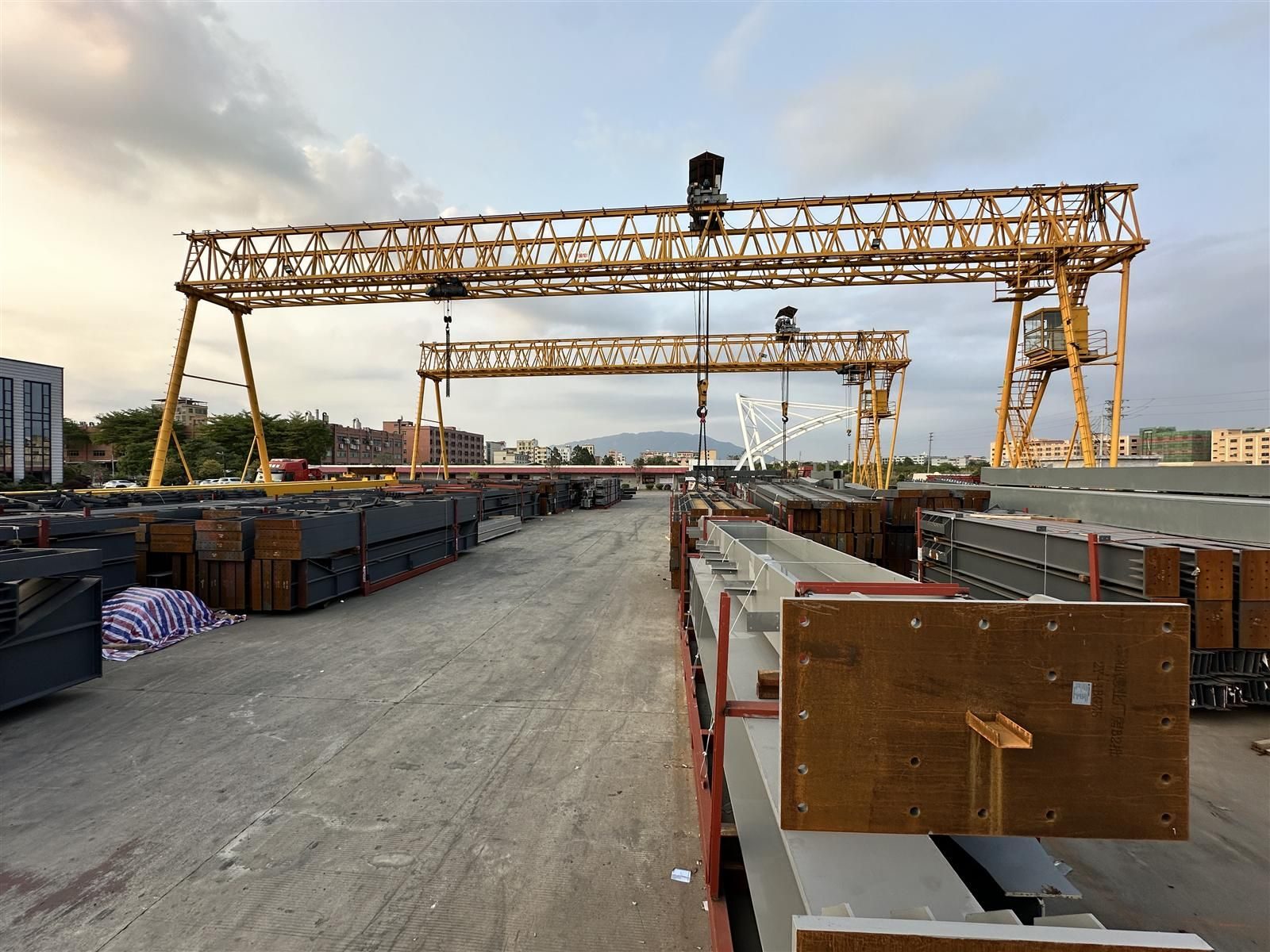
1. Quick Comparison Summary
| Property | Q235B | Q355B | Winner |
|---|---|---|---|
| Yield strength | 235 MPa | 345 MPa | Q355B (+47%) |
| Tensile strength | 375-460 MPa | 470-630 MPa | Q355B |
| Elongation | ≥26% | ≥21% | Q235B (more ductile) |
| Price per ton (2026) | $580-$650 | $630-$720 | Q235B (cheaper/ton) |
| Steel weight for same load | 100% (baseline) | 75-85% | Q355B (lighter) |
| Total material cost | 100% (baseline) | 85-95% | Q355B (usually cheaper total) |
| Weldability | Excellent | Good | Q235B (slightly easier) |
| Availability in China | Universal | Universal | Tie |
| ASTM equivalent | A36 | A572 Gr 50 | - |
| EN equivalent | S235JR | S355JR | - |
2. Understanding the Naming Convention
Chinese steel grade names follow a logical pattern:
- Q: Yield strength (Qu fu dian in Chinese pinyin)
- 235 / 355: Minimum yield strength in MPa (N/mm²)
- B: Quality grade indicating impact test temperature (B = +20°C, C = 0°C, D = -20°C, E = -40°C)
So Q355B means steel with minimum 355 MPa yield strength, tested at +20°C. For most building applications in normal climates, B grade is sufficient. For cold climate projects (Canada, Northern Europe, Russia), we recommend Q355D or Q355E for better low-temperature toughness.
3. Strength and Structural Performance
3.1 Load-Bearing Capacity
Q355B's 47% higher yield strength means it can carry significantly more load with the same cross-section. In practical terms:
- A Q355B column with 300x300mm section can carry the same load as a Q235B column with 350x350mm section
- Q355B allows longer spans without intermediate columns (up to 36m for single span, vs 30m for Q235B)
- Q355B is essential for crane buildings (5-ton+ cranes) and multi-story structures
3.2 Deflection Control
Both grades have the same modulus of elasticity (E = 206,000 MPa), so deflection behavior is identical for the same section size. However, because Q355B allows smaller sections, deflection may govern design for long-span beams. Our engineers always verify both strength and deflection in structural calculations.
3.3 Seismic Performance
Q235B has slightly better ductility (elongation ≥26% vs ≥21%), which can be beneficial in high seismic zones. However, Q355B still meets all seismic design requirements for building structures. For high seismic zones (Zone 3+), we recommend Q355B with proper ductile detailing, or Q235B for very high ductility requirements.
4. Cost Analysis
4.1 Per-Ton Price
As of 2026, typical Chinese domestic steel prices (FOB mill):
- Q235B plates and sections: $580-$650 per ton
- Q355B plates and sections: $630-$720 per ton
- Price difference: $50-$80 per ton (8-12% premium for Q355B)
4.2 Total Project Cost Comparison
Here's where it gets interesting. While Q355B costs more per ton, its higher strength reduces the total steel weight needed:
| Project Type | Q235B Total Cost | Q355B Total Cost | Savings with Q355B |
|---|---|---|---|
| Small warehouse (500 m², no crane) | $35,000 | $34,500 | $500 (1.4%) |
| Standard factory (2,000 m², 5T crane) | $180,000 | $168,000 | $12,000 (6.7%) |
| Large industrial (5,000 m², 20T crane) | $520,000 | $468,000 | $52,000 (10%) |
| Multi-story (3,000 m², 3 floors) | $380,000 | $335,000 | $45,000 (11.8%) |
4.3 Additional Cost Benefits of Q355B
- Lower shipping cost: Less steel weight means fewer containers, saving $1,000-$5,000 on ocean freight
- Lower foundation cost: Lighter building loads mean smaller concrete foundations, saving 5-10% on foundation work
- More usable space: Smaller columns mean more floor space, especially valuable for high-value factory floor area
- Faster installation: Lighter members are easier to handle and erect, potentially reducing installation time
5. Weldability and Fabrication
5.1 Welding
Both grades have excellent weldability with carbon equivalent (CEV) typically under 0.40%:
- Q235B: Use E43 series electrodes (J422, J427) or ER49-1 wire
- Q355B: Use E50 series electrodes (J506, J507) or ER50-6 wire
- Dissimilar welding (Q235B + Q355B): Use E43 series (match lower strength)
- Preheating: Generally not required for plates under 25mm at temperatures above 0°C
5.2 Cold Forming
Q235B has better cold forming capability due to lower strength and higher ductility. For cold-formed purlins and girts, Q235B is the standard choice. Q355B can also be cold-formed but requires more careful handling and may need stress relief for tight bends.
5.3 Galvanizing and Coating
Both grades galvanize equally well. Hot-dip galvanizing produces similar coating thickness and adhesion on both grades. For painted surfaces, surface preparation and coating performance are identical.
6. Application Recommendations
| Application | Recommended Grade | Reason |
|---|---|---|
| Main frame columns and beams | Q355B | Higher strength reduces weight and cost |
| Crane beams (5T+) | Q355B (mandatory) | High fatigue and load requirements |
| Multi-story buildings | Q355B | Column size reduction critical for floor space |
| Long span (>30m) | Q355B | Required for economical long-span design |
| Purlins and girts | Q235B | Cold-formed, lower strength sufficient, cheaper |
| Bracing members | Q235B | Tension-only members, lower strength sufficient |
| Small simple buildings (<500m²) | Q235B or Q355B | Cost difference minimal, either works |
| Cold climate (-20°C+) | Q355D or Q355E | Low-temperature impact toughness required |
| High seismic zone | Q355B (with ductile detailing) | Strength + ductility balance |
7. International Standard Equivalents
| Chinese Grade | ASTM (USA) | EN (Europe) | JIS (Japan) | AS (Australia) |
|---|---|---|---|---|
| Q235B | A36 | S235JR | SS400 | AS3678 Grade 250 |
| Q355B | A572 Grade 50 | S355JR | SM490 | AS3678 Grade 350 |
Note: These are approximate equivalents. For projects requiring specific international standards, we can source ASTM A572, EN S355, or other grades directly. However, Chinese Q355B is widely accepted globally and certified by ISO 9001, CE, and other international bodies.
8. Quality Control and Certification
At ZhongSai Steel Structure, all steel materials come with:
- Mill test certificates (MTC) per EN 10204 3.1, showing chemical composition and mechanical properties
- Material traceability: heat number marked on every piece, tracked through production
- Third-party inspection available: SGS, BV, or TUV inspection at additional cost
- ISO 9001:2015 certified quality management system
- CE certification for European market projects
- Ultrasonic testing (UT) for welded connections per project requirements
9. Our Recommendation
Based on 15+ years of manufacturing and exporting steel structures to 60+ countries, our standard practice is:
- Main frame (columns, beams, crane beams): Q355B for 90% of projects
- Secondary members (purlins, girts, bracing): Q235B (cost-effective, sufficient strength)
- Cold climate projects: Upgrade to Q355D or Q355E
- Small simple buildings: Either grade works, we optimize based on current market pricing
This hybrid approach (Q355B main + Q235B secondary) provides the optimal balance of strength, cost, weight, and constructability for most prefab steel building projects.
Need Help Choosing the Right Steel Grade?
Our engineering team provides free material selection advice based on your project requirements, location, and budget.
Get Free Engineering Consultation